
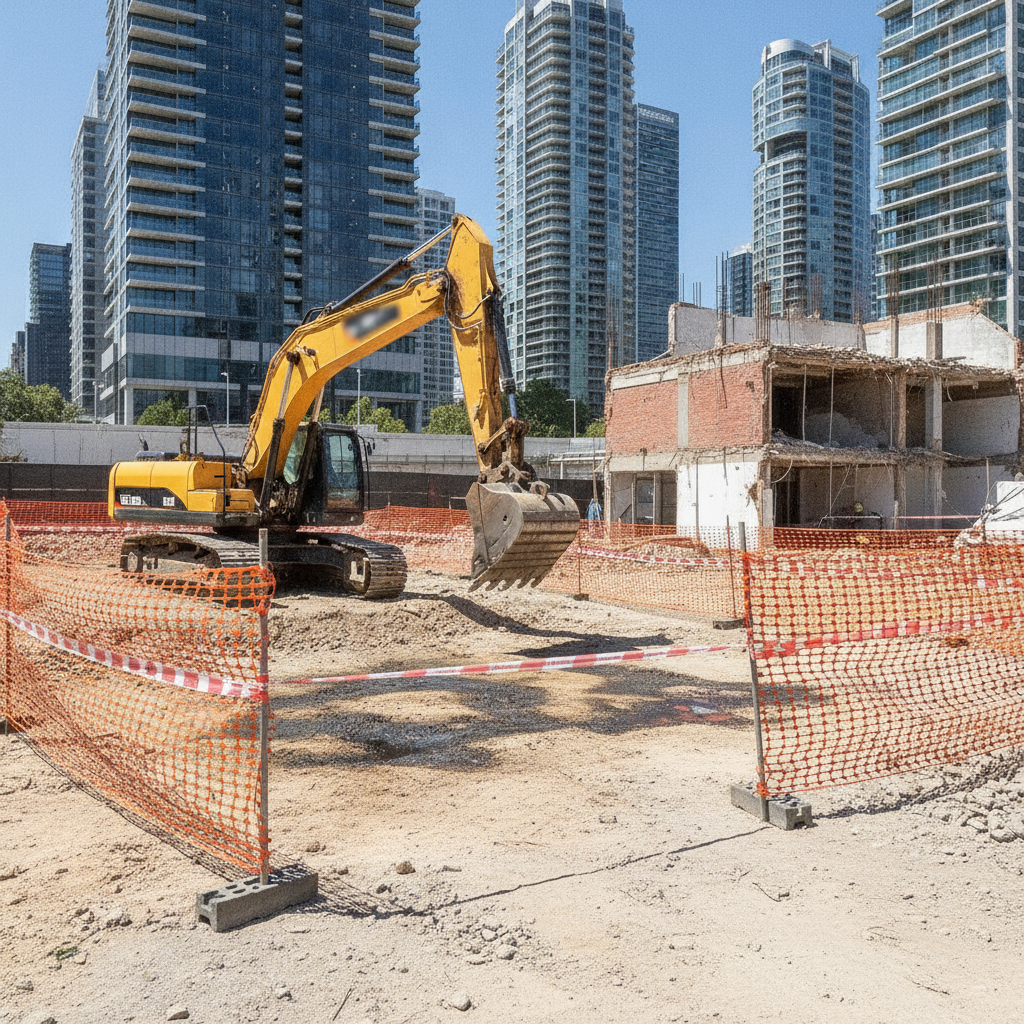
What should you do when you find unexpected contamination during construction?
Stop all works in the affected area immediately. Secure the zone, document what you have found, notify your site manager and principal contractor, and check whether your state EPA must be notified. In Queensland notification is generally required within 24 hours; in NSW, Victoria and South Australia it is required as soon as practicable once the relevant threshold is met. Do not disturb, remove or cover the material until an environmental consultant has assessed it.
Why Unexpected Contamination Finds Happen More Often Than You’d Think
Every experienced site manager knows the feeling: the excavator breaks through a layer of clean fill and the distinct smell of hydrocarbons rises from the bucket, or the spoil pile reveals the telltale fibrous texture of bonded asbestos sheeting. Unexpected contamination finds, meaning materials not identified during pre-construction environmental assessments, are a routine reality on Australian construction sites, particularly in urban areas with industrial heritage.
They happen for predictable reasons. Preliminary site investigations (PSIs) are desk-based assessments of historical land use, and detailed site investigations (DSIs) involve targeted sampling, but neither can characterise every cubic metre of soil beneath a site. Heterogeneous fill, poorly documented historical land uses, clandestine dumping and migration from adjacent properties all create blind spots. Projects on brownfield land, near former fuel stations, dry cleaners, manufacturing facilities or railway corridors face the highest exposure.
Regulators in every state treat late notification, inadequate site controls and earthworks that continue around a find as serious failures, and these are exactly the shortcuts that attract clean-up notices and penalty infringement notices. The financial and schedule consequences of non-compliance usually dwarf the cost of doing it right.
The Unexpected Finds Protocol: Why Your CEMP Should Include One
An Unexpected Finds Protocol (UFP), sometimes called an Unexpected Contamination Finds Procedure, is a pre-prepared, site-specific document that sets out exactly who does what, and in what order, when contamination is discovered during construction. It is a standard component of a well-prepared Construction Environmental Management Plan (CEMP) and is frequently required by planning approval conditions in NSW, Victoria, Queensland and South Australia.
A well-drafted UFP covers:
- Recognition criteria: observable indicators of contamination such as odour, dark staining or a sheen (typical of petroleum hydrocarbons), black tarry material (coal tar), white or grey fibrous fragments (possible asbestos), abnormal soil colour or texture, buried drums, remnants of underground infrastructure, ash layers or unusual fill.
- Immediate response actions: who has authority to stop works, how the exclusion zone is to be established, and minimum standoff distances.
- Notification chain: the order of contact (site manager, principal contractor, environmental manager, then the relevant regulators), with required timeframes and contact details.
- Documentation requirements: photographs, GPS coordinates, descriptions of material, volumes affected and equipment involved.
- Management pathways: how material is to be characterised, sampled, classified and either managed on site or disposed of lawfully.
- Worker health and safety provisions: PPE requirements, air monitoring triggers and medical surveillance.
Where a project does not already have a UFP in place, a qualified environmental consultant can prepare one in one to two days. Retrofitting a UFP mid-project, after a find has already been made, is significantly more difficult and offers less protection.
Step by Step: What to Do in the First 24 Hours
The actions taken in the first 24 hours after a contamination find set the trajectory for everything that follows: regulatory response, project delay, liability exposure and remediation cost. The sequence below applies broadly across Australian jurisdictions, with state-specific notification obligations covered separately below.
1. Stop works and secure the area
Immediately cease excavation, grading or any earthworks within and adjacent to the suspect area. Establish a physical exclusion zone, typically a minimum of five metres around the affected area, or further if volatile organic compounds or asbestos fibres may be present. Restrict access to essential personnel wearing appropriate PPE.
Do not instruct operators to cover the material or move it to a stockpile area. This is a common impulse driven by schedule pressure and it is almost always the wrong call. Moving uncharacterised material spreads contamination, creates new disposal liability, and signals to regulators that you have attempted to conceal the find.
2. Document everything
Photograph the material from multiple angles before anything is moved. Note the GPS coordinates, excavation depth, approximate volume affected, and the sensory characteristics of the material. Record the plant operator’s name, plant type, and the time of discovery. This contemporaneous documentation is your primary protection against later disputes about the nature and extent of the find.
3. Notify your environmental consultant
Contact your project environmental consultant or, if none is engaged, engage one immediately. A qualified environmental professional will assess the nature of the contamination, advise on whether EPA notification is required, arrange field screening and laboratory sampling, prepare a characterisation report, and provide advice on appropriate management measures.
Turnaround times for urgent laboratory analysis of common contaminants (total petroleum hydrocarbons, BTEX, heavy metals and asbestos identification) typically range from 24 to 72 hours at reputable NATA-accredited laboratories, with same-day results available for some analytes at a premium. Treat these timeframes as indicative.
4. Assess EPA notification obligations
This is the step most commonly handled incorrectly. See the state-by-state summary below.
5. Prepare a brief unexpected finds report
Once preliminary characterisation is complete, prepare a short technical report documenting the find, the extent of contamination identified, the laboratory results and the proposed management pathway. This report forms the basis for regulatory notifications and gives the construction team clear direction on how to proceed.
EPA Notification Obligations by State
Notification requirements vary meaningfully between Australian jurisdictions, and getting them wrong in either direction can be costly. Notifying unnecessarily can trigger a formal investigation, while failing to notify when required can attract significant penalties.
New South Wales
Under section 60 of the Contaminated Land Management Act 1997 (CLM Act), landowners and those whose activities have contaminated land must notify the NSW EPA as soon as practicable after becoming aware that the contamination is significant enough to warrant regulation. The EPA’s guidelines on the duty to report contamination explain how that threshold is assessed. The investigation and screening levels in the National Environment Protection (Assessment of Site Contamination) Measure 1999 (as amended 2013) are a common reference point, considered together with how people or the environment could be exposed. Consent conditions for a development frequently add their own notification requirements to the consent authority, so check the conditions for your project as well.
Victoria
Victoria’s Environment Protection Act 2017 imposes a general environmental duty (GED) requiring anyone whose activities may give rise to risks of harm from pollution or waste to minimise those risks so far as reasonably practicable. The GED applies from the moment of discovery. Contamination that meets the threshold for notifiable contamination must be reported to EPA Victoria as soon as practicable. The Act also imposes a duty to manage contaminated land, which includes not taking actions that make the contamination worse or hinder future assessment.
Queensland
Under the Environmental Protection Act 1994, there is a duty to notify of environmental harm. Where contamination discovered during construction causes or threatens serious or material environmental harm, notification to the Department of the Environment, Tourism, Science and Innovation (DETSI) is generally required within 24 hours, by calling the Pollution Hotline and providing written notice where applicable. Queensland’s timeframe is the tightest of the four states, so build it into your protocol and make sure the site team knows who makes the call.
South Australia
South Australia’s Environment Protection Act 1993 establishes a duty to notify the EPA of environmental harm caused by pollution incidents. For site contamination specifically, section 83A requires notification to EPA SA where site contamination affects or threatens to affect underground water. EPA SA’s Guidelines for the assessment and remediation of site contamination set out the expected approach to assessment and reporting, and development approval conditions may impose additional notification requirements for individual projects.
Common Types of Unexpected Finds and What They Mean for Your Project
The type of contamination found dictates the urgency, management pathway and likely cost of resolution. The cost ranges below are indicative only.
- Asbestos-containing materials (ACM): the most common unexpected find on urban residential and commercial sites. Bonded asbestos (fibro sheeting, corrugated cement sheet) in intact form carries lower immediate risk but must be managed under work health and safety requirements and disposed of at a licensed asbestos waste facility. Indicative costs run from $5,000 to $80,000 or more depending on volume and degree of fragmentation. Friable asbestos triggers higher-tier management and is significantly more expensive.
- Petroleum hydrocarbons (TPH/BTEX): characteristic of former service stations, vehicle workshops and bulk fuel storage sites. Smear zone contamination above investigation levels will typically require characterisation, risk assessment, and either excavation and off-site disposal or in-situ remediation. Indicative costs run from $20,000 to $500,000 or more depending on the extent of the impact.
- Heavy metals: common at former industrial, smelting or orchard sites. Elevated lead, arsenic or chromium in fill may push the material into a higher waste classification requiring specialist disposal, or support capping and on-site management under a site-specific risk assessment.
- PFAS: increasingly encountered at sites near former fire training areas, airports or stormwater infrastructure. PFAS-impacted soil and groundwater is subject to the guideline values in the PFAS National Environmental Management Plan 3.1 (June 2026) and typically requires specialist management. Disposal options are limited, and treatment-based approaches are emerging but costly.
- Unexploded ordnance (UXO) and historical artefacts: trigger immediate cessation of works, notification of police and the relevant authority, and engagement of a specialist UXO assessor. Not strictly a contamination matter, but handled under unexpected finds frameworks.
Frequently Asked Questions
Can we keep working in other areas of the site while the find is being assessed?
Generally yes, provided the affected area is adequately secured and works in unaffected zones do not risk disturbing or spreading the contaminated material. Your environmental consultant will define the exclusion zone and confirm what can continue. Keep detailed records of which areas are active during the assessment period in case a dispute later arises about the extent of the original find.
Who is liable for the cost of managing unexpected contamination?
Liability depends on the contract structure and what was known (or knowable) at the time of contracting. In most commercial construction contracts, contamination discovered during works will be treated as a latent condition if it is materially different from what was reasonably foreseeable, particularly where a geotechnical or environmental report was provided at tender. This can entitle the contractor to a time and cost claim, but the analysis is highly fact-specific, so engage a legal adviser early, in parallel with the environmental response. Property owners and occupiers retain ongoing statutory liability for contamination on their land regardless of contractual arrangements.
How much will it cost and how long will the delay be?
As an indicative guide only: for a contained find of limited volume, the process from discovery through characterisation, regulatory notification and clearance to resume works typically takes three to ten business days and costs $8,000 to $30,000 for consultant fees, sampling and laboratory analysis (excluding any remediation or disposal). Larger or more complex finds involving PFAS, friable asbestos or extensive hydrocarbon plumes can extend delays to weeks or months and add hundreds of thousands of dollars. This underscores the value of thorough pre-construction investigation and a well-prepared CEMP with a well-drafted UFP: the cost of prevention is almost always a fraction of the cost of an unmanaged find.
How iEnvi Can Help
iEnvi’s contaminated land team responds rapidly to unexpected finds across Queensland, New South Wales, Victoria and South Australia. We provide same-day site attendance for urgent situations, field screening, representative sampling and coordination with NATA-accredited laboratories, and we prepare the regulatory notification documentation and characterisation report your team needs to get back on schedule.
We also prepare Construction Environmental Management Plans and Unexpected Finds Protocols for projects of all scales, before a find occurs. A well-prepared UFP, integrated into your CEMP and understood by your site team, is the most effective tool available for managing the schedule and cost risk of unexpected contamination.
Standing over a suspect stockpile right now, or want a UFP written into your CEMP before the excavators start? Call iEnvi on 1300 043 684 or send us the details online and we will scope the response the same day.
Contaminated land assessment | Remediation services | CEMPs and Unexpected Finds Protocols | Contact iEnvi
Need advice on this issue? iEnvi provides practical, senior-led environmental consulting across contaminated land, remediation, ecology and environmental risk.
PSI services DSI services Environmental management plans Contaminated land advice Talk to iEnvi