

Project summary
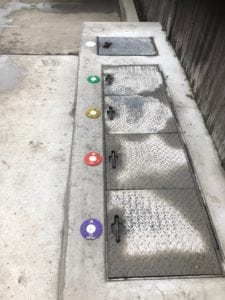
Client: Family-run restaurant and residence in the Wide Bay region, QLD. Scope: Rapid UPSS (underground petroleum storage system) soil and groundwater investigation and reporting to support sale settlement and lender due diligence.
Background
The property was listed on Queensland’s Environmental Management Register (EMR) because of historical use of underground fuel tanks. A purchaser’s lender required environmental reporting ahead of settlement. The client required a fast, accurate and cost‑effective investigation and report; bank-recommended consultancies had provided over-scoped and expensive options.
Investigation approach
iEnvi provided a targeted soil and groundwater investigation with rapid turnaround and a concise technical report appropriate for lender review. The focus was to determine whether historical UPSS use had resulted in hydrocarbon contamination of surface soils or the shallow aquifer and to satisfy the purchaser’s due diligence timeframe.
Findings
- No hydrocarbons, staining or odour were reported at detectable concentrations in the surrounding soils sampled during the investigation.
- The investigation concluded there was no detectable impact to surface soils or the local aquifer from the UPSS at the time of assessment.
- The report was issued prior to settlement and enabled completion of the sale.
Post-sale work
Following settlement, iEnvi were engaged by the new owner to provide decommissioning services for the UPSS. The decommissioning work aims to meet regulator requirements and support an application to remove the site from the EMR.
Practical implications for sellers, buyers and lenders
- Sellers: A targeted investigation and clear report can remove a sale obstacle where lender conditions require environmental evidence. Fast delivery reduces settlement risk.
- Buyers and lenders: A well-scoped assessment focused on the actual risk can be more cost‑effective than broad, conservative scopes that delay transactions.
- Developers: Early, risk‑based assessment informs remediation or decommissioning scope and costs, and helps plan timing for approvals and register removals.
Key takeaways
- UPSS on a site does not always equate to current soil or groundwater contamination; targeted investigation can confirm risk quickly.
- Fit-for-purpose scope and rapid reporting can be commercially important in time‑sensitive property transactions.
- Post‑sale decommissioning is commonly required to remove sites from regulatory registers. This is a separate staged scope that should be budgeted and scheduled.
Next steps / Contact
If you have UPSS issues or require environmental assessment for a sale, redevelopment or due diligence, contact iEnvi for a practical and flexible approach:
Contact iEnvi or call 13000 43684.
iEnvi: Contaminated Land, Ecology & ESG Consulting
Related services for this project. iEnvi links delivered project work back to the service pathways clients use for similar sites — investigation, remediation, ecology and environmental management.
UPSS investigation and validation Contaminated land services Remediation services Groundwater services Talk to iEnvi