
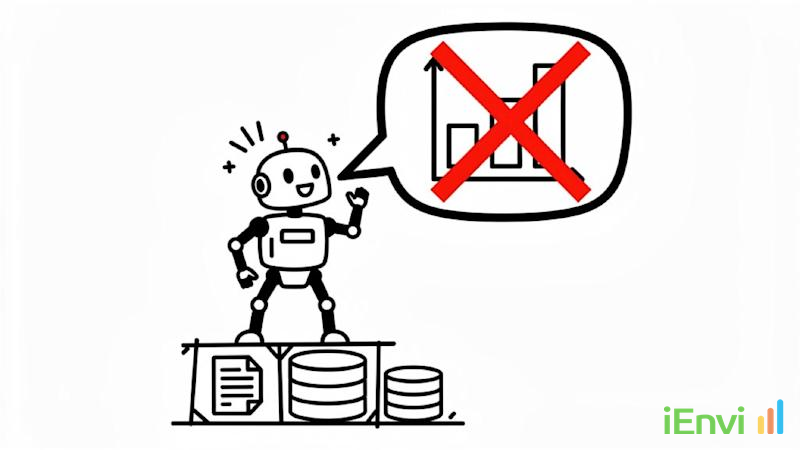
Understanding the Enterprise AI Agent Control Gap
A landmark survey published in June 2024 by VentureBeat Research has put hard numbers to what many technology leaders have been quietly experiencing for the past 18 months: enterprise AI deployment has dramatically outpaced the governance, security, and data infrastructure needed to support it. The study, which surveyed 573 enterprise technical leaders across a range of industries, identified what researchers are calling an “agentic control gap,” a structural mismatch between how aggressively organisations are deploying autonomous AI agents and how poorly equipped they are to manage those agents in production environments.
The findings carry weight well beyond the technology sector. For professional services firms (including engineering consultancies, legal practices, financial advisors, and environmental specialists) the survey exposes risks that are already materialising in client-facing workflows. Autonomous agents are being used to draft reports, answer client queries, synthesise regulatory guidance, and process large volumes of technical data. When those agents produce confidently incorrect outputs, the professional and liability consequences can be significant. The VentureBeat data suggests this is not an edge case: 57% of enterprises surveyed have already traced a “confidently wrong” agent response to missing or inconsistent business context.
The timing of this research coincides with a notable shift in tone from the AI industry’s most prominent voices. At the Allen and Co. Sun Valley Conference in Idaho, OpenAI chief executive Sam Altman stated plainly: “Everyone’s asking what we can do to help reduce spend or increase value. People are starting to care about efficiency and getting a good return on their AI investments.” That statement, from the leader of arguably the world’s most influential AI company, signals that the period of uncritical AI enthusiasm is giving way to a more disciplined focus on operational performance and accountability.
Key Findings from the VentureBeat Research Survey
The most striking finding from the VentureBeat survey is the scale of the hallucination problem in enterprise AI deployments. Fifty-seven per cent of organisations confirmed they had experienced an AI agent delivering a confidently incorrect answer to a customer or internal stakeholder, with the root cause traced to missing or inconsistent business context. The dominant retrieval architecture, Retrieval-Augmented Generation, commonly referred to as RAG, is implicated directly. Thirty-eight per cent of enterprises are still relying on document-based RAG as their primary method for grounding agent responses. The core problem is that many organisations selected these systems based on ease of data ingestion rather than retrieval accuracy, leaving agents prone to fabricating plausible-sounding but factually wrong responses when the underlying document corpus is incomplete, poorly structured, or out of date.
The infrastructure findings challenge a widely held assumption about the current technology landscape. Despite persistent narratives about GPU scarcity driving up costs and constraining AI capacity, the survey found that 86% of enterprise GPU operators report their high-end hardware is running at 50% capacity or less. This is not a hardware bottleneck; it is a software and governance bottleneck. Organisations have invested heavily in compute infrastructure but lack the software readiness, data pipelines, and operational frameworks to utilise that capacity productively. The implication is that enterprises are carrying significant stranded costs in their AI infrastructure, independent of whether they have deployed agents at all.
The security findings are equally concerning. Fifty-four per cent of enterprises reported experiencing an AI agent security incident or near-miss in the 12 months prior to the survey. The risk is compounded by a common practice that creates serious forensic blind spots: 69% of firms allow multiple AI agents to share API credentials. When agents share credentials, it becomes impossible to attribute a specific action, data access event, or error to any individual agent after the fact. In a regulated professional environment (whether that involves legal privilege, financial advice, environmental reporting, or health and safety) the inability to audit agent behaviour is not merely an IT governance issue; it is a professional liability issue.
Perhaps the most operationally instructive finding relates to the failure of internal testing to predict real-world performance. Fifty per cent of technical leaders reported that they had shipped an AI agent that fully passed internal testing and quality assurance processes, only to watch it fail when deployed in a live, customer-facing environment. This gap between controlled testing conditions and production behaviour reflects the inherent complexity of agentic systems, which interact with dynamic, real-world data environments that no internal test suite can fully replicate. In response to these compounding failures, approximately 60% of enterprises indicated they plan to add or switch vendors across their agent control layers within the next 12 months, a significant indication that the current generation of tooling is not meeting operational requirements.
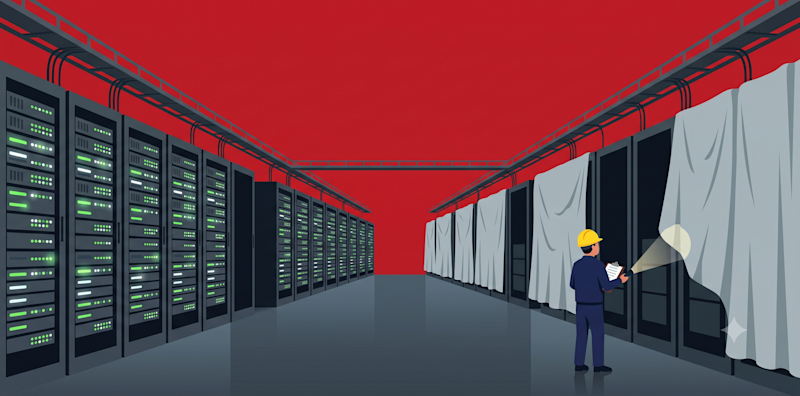
Australian context: what the agentic control gap means for professional services firms and consultancies
Australia’s professional services sector, spanning engineering and environmental consultancy, legal practice, accounting, and planning advisory, is adopting AI-assisted workflows at an accelerating pace. Large and mid-tier firms are deploying tools that use large language models to draft technical memoranda, summarise regulatory documents, respond to client queries, and process large datasets. The VentureBeat findings are directly relevant to this context because the failures documented in the survey are not confined to technology companies or large corporates with dedicated AI teams.
References and related sources
- Primary source: venturebeat.com
- venturebeat.com
- beri.net
- businessinsider.com
- indushtime.com
How iEnvi can help
iEnvi integrates technology and data-driven approaches into environmental consulting. We monitor AI and technology developments that affect how environmental professionals deliver services to clients.
This is an iEnvi Machete news summary. Prepared by iEnvi to summarise the source article for environmental professionals tracking AI, data, and technology developments that affect consulting and project delivery.
Published: 13 Jul 2026
Need advice on this topic? Speak to an iEnvi expert at info@ienvi.com.au or 1300 043 684, or contact us online.
Need advice on this issue? iEnvi provides practical, senior-led environmental consulting across contaminated land, remediation, ecology and environmental risk.
Contaminated land advice Remediation services Discuss your site Talk to iEnvi