
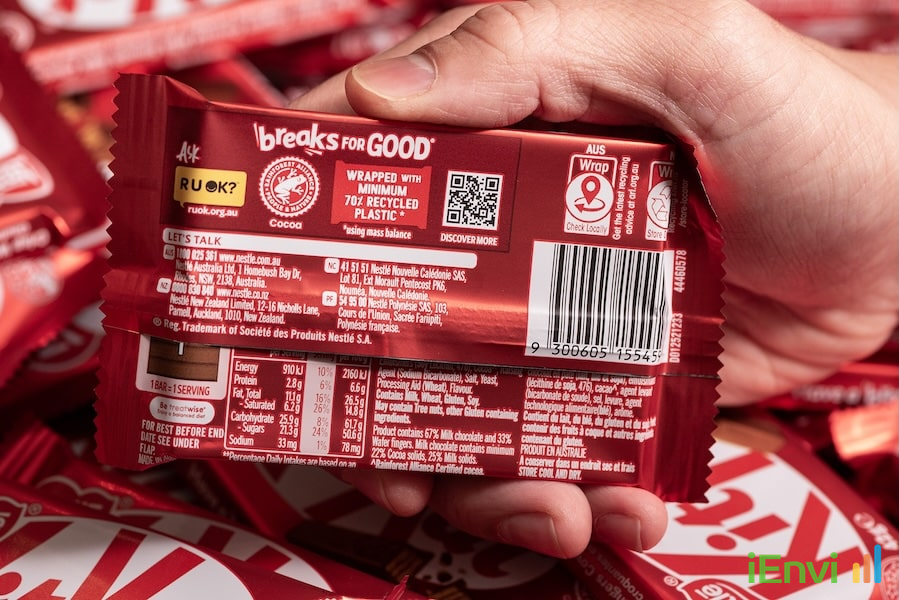
Viva Energy trial turns soft plastics into food-grade KitKat wrappers
Viva Energy has completed a proof-of-concept trial demonstrating that pyrolysis oil derived from post-consumer soft plastics can be converted into food-grade recycled polypropylene suitable for confectionery packaging, specifically KitKat wrappers. The trial, reported by Waste Management Review on 7 August 2025, represents a technical milestone for a waste stream that has proven notoriously difficult to recycle since the collapse of soft plastics kerbside collection schemes across Australia.
Soft plastics, including plastic film, bread bags, chip packets and confectionery wrappers, have long sat outside conventional recycling infrastructure because mechanical processing cannot separate mixed polymer types or remove contamination to the level required for food-contact applications. Mechanical recyclate from soft plastics typically ends up as low-grade plastic lumber or filler material, not packaging. Viva Energy’s approach uses chemical recycling, specifically pyrolysis, to break the polymer chains down to a molecular level and rebuild them into virgin-equivalent polypropylene.
For Australian environmental engineers, waste facility proponents, planning consultants and ESG advisors, this trial matters because it provides a working technical precedent for closing the loop on flexible plastic packaging at a time when state and federal governments are pushing hard on the National Waste Policy Action Plan and Australia’s 2025 National Packaging Targets. It also raises a fresh set of environmental compliance and site assessment questions for anyone advising on the next generation of chemical recycling infrastructure.
How pyrolysis converts soft plastic waste into food-grade polypropylene
The process begins with post-consumer soft plastics that are collected and sorted, then subjected to pyrolysis, a thermal decomposition process conducted in an oxygen-deprived environment. Rather than melting and reforming plastic as mechanical recycling does, pyrolysis breaks the polymer down into a naphtha-like liquid hydrocarbon feedstock at the molecular level. This monomer-level breakdown is what allows contaminants, additives and mixed polymer types in the original waste stream to be separated out during subsequent refining, rather than carried through into the final product.
Viva Energy processed this pyrolysis oil feedstock through its existing refining infrastructure, converting it into polypropylene that meets food-contact packaging standards. This is the critical technical achievement: recycled content produced through chemical recycling can be certified as equivalent to virgin polymer, meaning it can legally and safely be used in direct food-contact applications such as confectionery wrappers. This is a threshold mechanical recyclate from soft plastics has not been able to clear at commercial scale in Australia.
The trial used existing refining assets rather than requiring entirely new processing infrastructure, which is a significant point for anyone assessing scale-up feasibility. Integrating pyrolysis oil into an established refinery circuit reduces the capital burden of standing up parallel chemical recycling plants and suggests a pathway where existing petrochemical and refining sites could host circular feedstock streams alongside conventional fossil inputs.
Regulatory context sits primarily around the Commonwealth’s National Waste Policy Action Plan, Australia’s 2025 National Packaging Targets, and, in Victoria specifically, the Circular Economy (Waste Reduction and Recycling) Act 2021. None of the reporting suggests new emission thresholds or licence conditions have been established specifically for this trial. What the development does confirm is that food-grade circular polypropylene from soft plastics chemical recycling is technically achievable using established refining infrastructure, which changes the conversation for regulators and industry from “is this possible” to “how do we permit and scale it.”
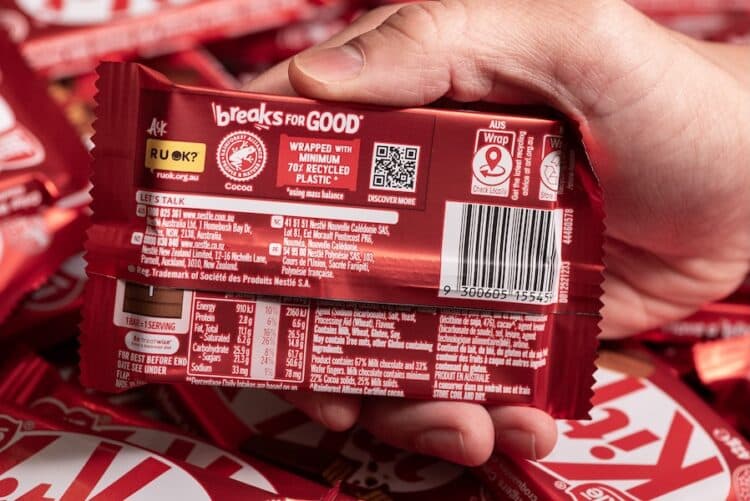
Soft plastics recycling in Australia: policy and regulatory context
Australia’s soft plastics recycling capability has been under acute pressure since the widely reported collapse of major kerbside soft plastics collection programmes, which left councils, retailers and consumers without a functioning collection and processing pathway for flexible film packaging. This gap sits directly against the ambitions set out in the National Waste Policy Action Plan and the 2025 National Packaging Targets, both of which push for higher recycled content and reduced reliance on virgin fossil feedstocks in packaging supply chains.
In Victoria, any commercial-scale expansion of pyrolysis-based chemical recycling will need to work within the Circular Economy (Waste Reduction and Recycling) Act 2021, which governs resource recovery facility licensing, waste classification and diversion reporting in that state. Other jurisdictions, including NSW and Queensland, have their own resource recovery and waste facility licensing regimes under their respective EPA frameworks, and proponents looking to replicate this model interstate will need to navigate separate approval pathways rather than assume Victorian precedent transfers directly.
This trial does not itself trigger changes to NEPM 2013 investigation levels or PFAS NEMP guidance, but it is directly relevant to the broader resource recovery and circular economy policy settings that Australian environmental consultants are increasingly asked to advise on, particularly where clients are assessing site suitability for new waste-to-resource infrastructure or seeking to validate recycled content claims for ESG and sustainability reporting purposes.
What the trial means for waste facility proponents and environmental consultants
For waste infrastructure proponents and industrial landholders considering hosting or co-locating pyrolysis-based chemical recycling capacity, the practical starting point is planning and environmental licensing. Commercial-scale pyrolysis facilities involve thermal processing of mixed waste feedstocks, which in most Australian jurisdictions places them within the more heavily regulated tiers of resource recovery licensing. Proponents should expect works approval or development licence requirements, air emissions assessment covering combustion by-products and fugitive volatile organic compounds, and scrutiny of feedstock storage, stormwater management and fire risk given the combustible nature of baled soft plastics.
Site selection and contamination assessment work will also be shaped by this development. Existing refining and petrochemical sites, many of which carry legacy contamination profiles, are the most likely hosts for integrated chemical recycling given the capital advantages the Viva Energy trial demonstrated. Consultants engaged on due diligence or site assessment for these facilities should factor in both the legacy conditions of the host site and the new material streams being introduced.
Feedstock supply remains the practical constraint. Without a functioning national collection system for soft plastics, chemical recycling capacity risks running short of the sorted, post-consumer material it needs. Advisors working with councils, retailers and packaging producers should watch the rebuilding of soft plastics collection schemes closely, because collection volumes will determine whether trials like this one can scale to commercial throughput.
Finally, for ESG and sustainability practitioners, the trial strengthens the evidence base for recycled content claims in flexible packaging, but claims should still be tied to certified mass-balance or equivalent chain-of-custody frameworks. The technical achievement is real; the reporting and verification obligations that sit around it have not gone away.
References and related sources
- Primary source: wastemanagementreview.com.au
- https://wastemanagementreview.com.au/viva-energy-converts-soft-plastics-into-rec
How iEnvi can help
iEnvi provides specialist consulting services relevant to this topic. Our team includes CEnvP Site Contamination Specialists with experience across contaminated land, groundwater, remediation, ecology, and regulatory compliance.
- iEnvi contaminated land services
- iEnvi remediation and validation services
- iEnvi expert services and independent review services
This is an iEnvi Machete news summary. Prepared by iEnvi to summarise the source article for contaminated land, groundwater, remediation, approvals and site risk professionals.
Published: 11 Aug 2026
Need advice on this topic? Speak to an iEnvi expert at info@ienvi.com.au or 1300 043 684, or contact us online.
Need advice on this issue? iEnvi provides practical, senior-led environmental consulting across contaminated land, remediation, ecology and environmental risk.
Team credentials Contaminated land advice Remediation services Groundwater services Talk to iEnvi