
Project overview
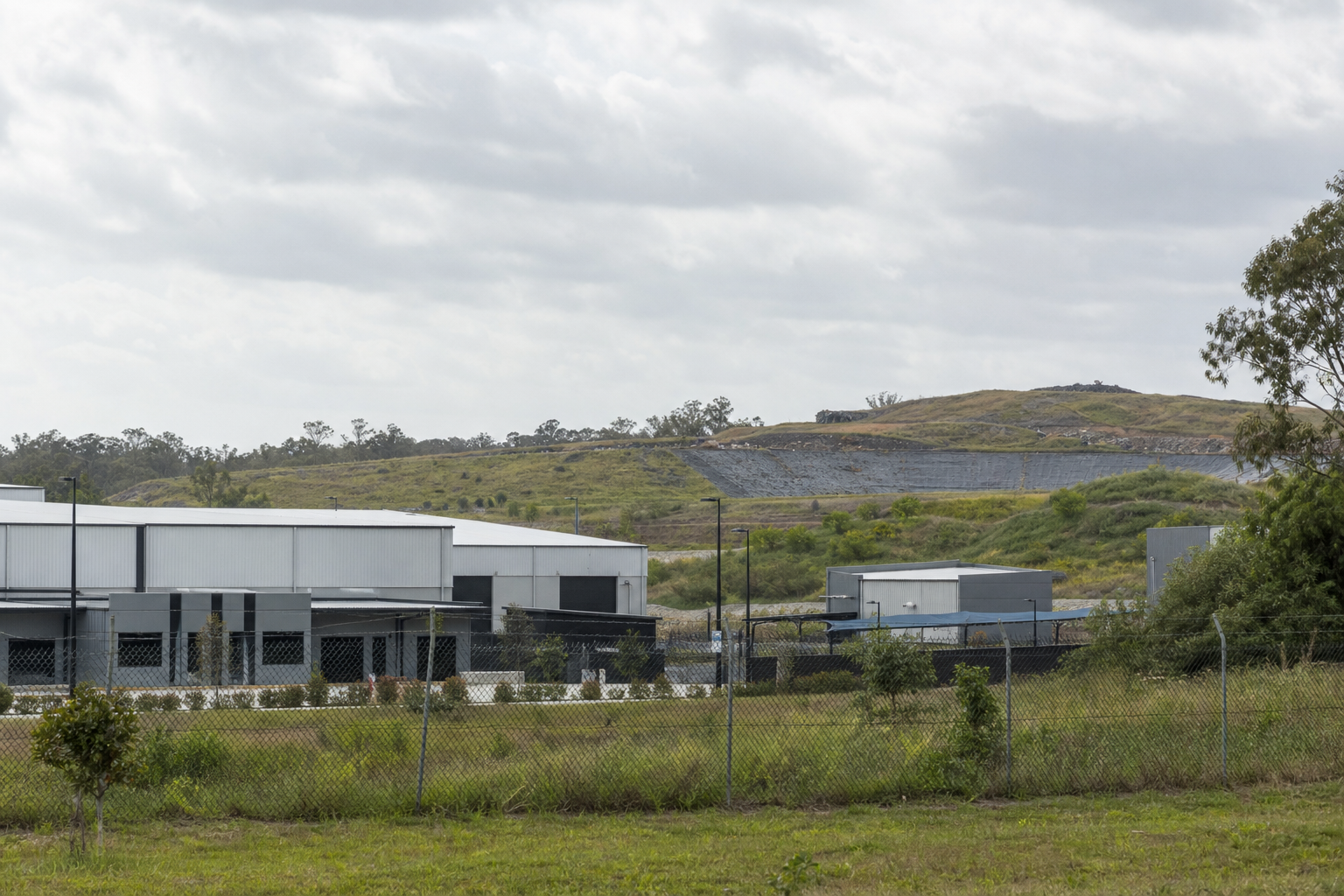
We completed a landfill gas preliminary site investigation and risk assessment at Willawong, Queensland, to support a warehouse development application next to a closed landfill and waste transfer station. The investigation was issued on 29 June 2026. Our work combined a desktop review with field monitoring so the development application could be supported by a clear, evidence-based ground-gas risk position.
The purpose of the assessment was to determine whether landfill gas, in particular methane, presented a risk to proposed slab-on-ground warehouses on the adjoining land. We structured the investigation around the NSW EPA 2020 ground-gas framework, which is widely applied in Australia for classifying characteristic situations and deciding whether gas protection measures are warranted.
What we did
Our desktop review considered the site setting, the neighbouring closed landfill and waste transfer station, and the proposed warehouse use. We then completed field monitoring at seven locations on 22 June 2026. The monitoring was designed to provide a practical snapshot of ground-gas conditions at the proposed warehouse land, rather than a theoretical assessment based only on proximity to former waste facilities.
- Desktop review of landfill gas sources, pathways and receptors for the proposed warehouse development application.
- Field monitoring at seven locations on 22 June 2026.
- Comparison of results against the NSW EPA 2020 ground-gas framework, including characteristic situation classification.
- Advice on whether gas protection or other mitigation would be required for slab-on-ground warehouses.
Findings
No detectable methane was recorded at the seven monitoring locations. On that basis we assigned an indicative characteristic situation CS1, which corresponds to very low risk under the NSW EPA 2020 ground-gas framework. CS1 is the lowest characteristic situation in that framework and is used where ground-gas concentrations and flow do not indicate a need for gas protection measures for typical commercial or industrial buildings.
The neighbouring closed landfill and waste transfer station remain relevant context for any development next to former waste facilities. Our investigation, however, found no detectable methane on the proposed warehouse land at the time of monitoring. The results support a conclusion that landfill gas is not driving an elevated risk for the proposed use.
Implications for the warehouse DA
We concluded that gas mitigation is not required for slab-on-ground warehouses on this land. That conclusion is tied to the indicative CS1 classification, the absence of detectable methane, and the proposed building form. Slab-on-ground warehouses typically present a lower internal exposure pathway than buildings with extensive sub-floor voids, and the monitoring results did not indicate a ground-gas regime that would justify membranes, venting or other protection measures.
The assessment is intended to sit with the development application as a concise technical attachment. It records the investigation date, the monitoring effort, the framework applied, and the resulting risk classification so assessment officers and the project team have a single, auditable statement of landfill gas risk.
Talk to our team
If you are planning warehouses, industrial buildings or other development next to closed landfills or waste facilities, we can complete landfill gas preliminary site investigations and risk assessments to the same standard. Call us on 1300 043 684 or visit https://ienvi.com.au/contact/ to discuss your site.
Related services for this project. iEnvi links delivered project work back to the service pathways clients use for similar sites — investigation, remediation, ecology and environmental management.