
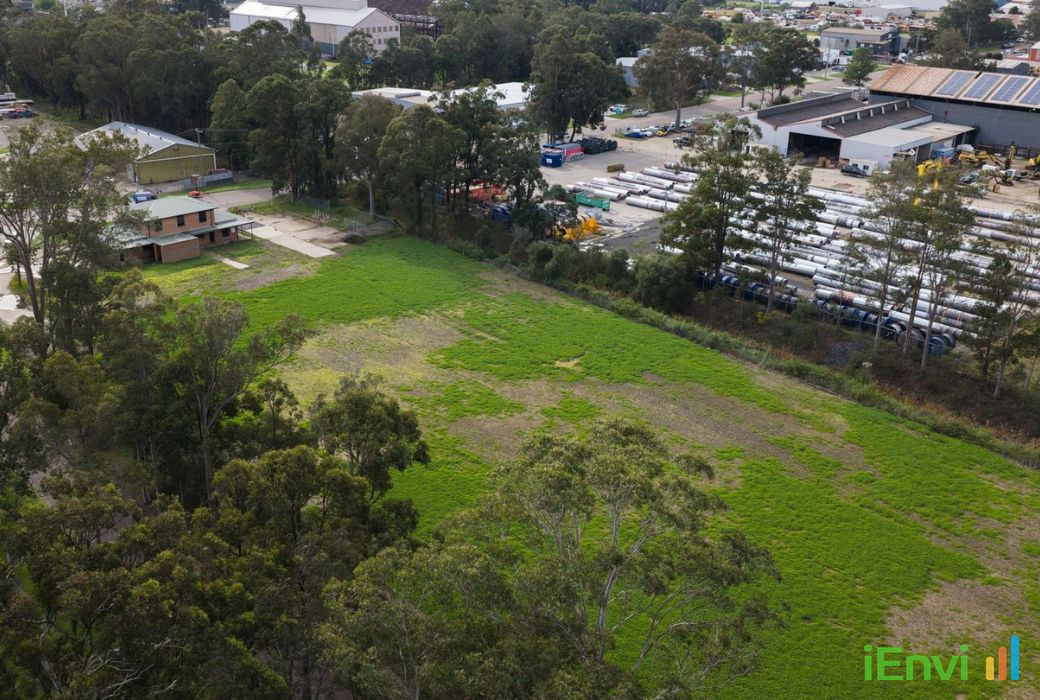
Overview of the Rutherford Truegain Site Remediation
The New South Wales Government has officially completed a $19 million, multi-stage remediation of the former Truegain waste oil processing plant in Rutherford, in the Lower Hunter region. The 1.2-hectare site, once regarded as one of the most severely contaminated industrial properties in the region, has now been declared suitable for future commercial or industrial reuse following the completion of Stage 2 works in July 2024. The project was delivered by Property and Development NSW through its Waste Assets Management Corporation (WAMC), representing one of the most significant state-funded legacy site cleanups in New South Wales in recent years.
The site’s history is a textbook example of regulatory failure and polluter insolvency converging to create a long-term public liability. Truegain Pty Ltd lost its trade waste permit and had its Environment Protection Licence (EPL) suspended under the Protection of the Environment Operations Act 1997 (NSW) before entering liquidation in 2016, leaving behind a heavily contaminated industrial footprint with no responsible party to fund or manage the cleanup. The burden fell to the state, which committed substantial public resources over several years to bring the site to a standard acceptable for reuse under NSW EPA-accredited auditing pathways.
For environmental consultants, property developers, legal advisers, and councils dealing with legacy industrial sites across New South Wales and nationally, the Truegain project carries important lessons. It demonstrates what a structured, phased approach to complex hydrocarbon remediation looks like in practice, and it reinforces the regulatory and financial exposure that can arise when site operators become insolvent before contamination liabilities are resolved. Understanding the scale, methodology, and regulatory pathway of this project is directly relevant to anyone involved in contaminated land transactions, development approvals, or EPA enforcement responses in the current market.
Key details of the Truegain remediation: volumes, methodology, and regulatory framework
The remediation was structured across two distinct stages, each targeting a different category of contamination liability. Stage 1, completed in late 2023, focused on immediate hazard reduction and the removal of above-ground infrastructure. WAMC oversaw the extraction and processing of more than 11,000 tonnes of industrial liquid waste and toxic sludge, along with the safe dismantling and removal of over 400 storage tanks and intermediate bulk containers. This phase was critical for eliminating ongoing source-zone release pathways and removing the immediate risk of spill or uncontrolled discharge from the site.
Stage 2, completed in July 2024, addressed the subsurface contamination profile. Contractors excavated and removed approximately 15,000 tonnes of contaminated soil from the site, cleared hydrocarbon-impacted concrete slabs that had absorbed and retained contaminants over decades of oil processing operations, and decommissioned underground infrastructure including a 50,000-litre underground storage tank (UST). The combined material volumes across both stages total in excess of 26,000 tonnes of waste and contaminated media removed from the 1.2-hectare footprint, placing this among the higher-intensity soil removal projects on a per-hectare basis seen in New South Wales.
The regulatory framework governing the remediation drew on three pieces of legislation. The Contaminated Land Management Act 1997 (NSW) provided the overarching mechanism for regulating the legacy contamination and requiring its management. The Protection of the Environment Operations Act 1997 (NSW) governed the original EPL suspension that triggered Truegain’s operational shutdown and established the waste management obligations applicable throughout the remediation. The National Environment Protection (Assessment of Site Contamination) Measure 2013 (NEPM 2013) supplied the soil investigation levels, health investigation levels, and validation criteria against which remediation outcomes were assessed and the site’s fitness for commercial and industrial reuse was determined.
The validation process is the critical final step in any remediation of this type. Achieving a sign-off under the NSW EPA-accredited auditing pathway requires that soil and groundwater sampling results satisfy the relevant NEPM 2013 criteria for the intended land use, and that ongoing groundwater monitoring demonstrates stabilisation or improvement in contaminant concentrations. For a former waste oil processing plant, the primary contaminants of concern would typically include total petroleum hydrocarbons (TPH) across the full carbon fraction range, benzene, toluene, ethylbenzene, and xylenes (BTEX), polycyclic aromatic hydrocarbons (PAH), and heavy metals associated with used oil handling. The site’s validation against commercial and industrial use criteria, rather than residential criteria, reflects the more permissive health-based screening levels applicable to that land use category under NEPM 2013.
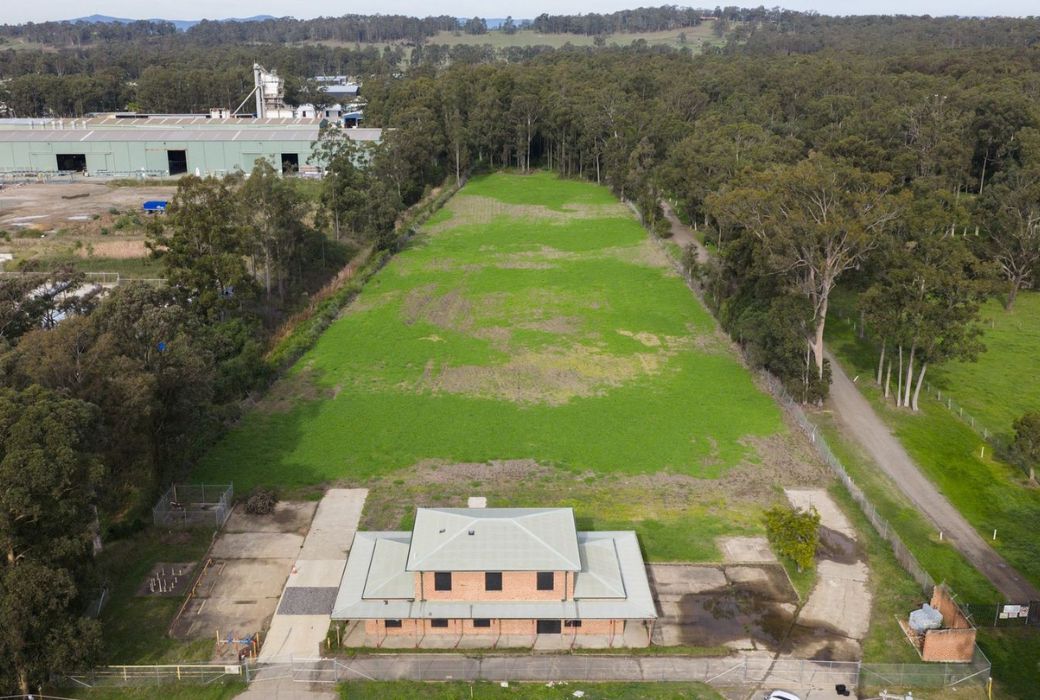
Australian context: state-led remediation, polluter insolvency, and contaminated land frameworks in NSW, QLD, VIC, and SA
The Truegain project sits at the intersection of two issues that surface repeatedly across Australian contaminated land practice: polluter insolvency and the financial gap it creates, and the state’s capacity and willingness to step in as remediation principal when private liability cannot be enforced. Under the Contaminated Land Management Act 1997 (NSW), the NSW EPA holds powers to issue regulatory orders and to recover remediation costs from responsible parties. However, when those parties have entered liquidation, cost recovery becomes practically impossible and the state must either accept ongoing risk or fund the cleanup directly from public resources. WAMC was established precisely to manage this category of orphaned liability — legacy sites where the polluter is gone and the contamination risk cannot be left unaddressed. The Truegain remediation is among the more complex and costly projects WAMC has delivered, and its completion sets a reference point for how the NSW government approaches large-scale hydrocarbon-impacted sites where conventional cost-recovery mechanisms have failed.
References and related sources
- Primary source: www.nsw.gov.au
- newcastleweekly.com.au
- nsw.gov.au
How iEnvi can help
iEnvi provides specialist consulting services relevant to this topic. Our team includes CEnvP Site Contamination Specialists with experience across contaminated land, groundwater, remediation, ecology, and regulatory compliance.
- iEnvi contaminated land services
- iEnvi remediation services
- iEnvi expert services and independent review services
This is an iEnvi Machete news summary. Prepared by iEnvi to summarise the source article for contaminated land, groundwater, remediation, approvals and site risk professionals.
Published: 29 Jul 2026
Need advice on this topic? Speak to an iEnvi expert at info@ienvi.com.au or 1300 043 684, or contact us online.
Need advice on this issue? iEnvi provides practical, senior-led environmental consulting across contaminated land, remediation, ecology and environmental risk.
UPSS and petroleum site services Team credentials Site remediation Contaminated land services Talk to iEnvi