

ACCC Launches Greenwashing Case Against Grill’d
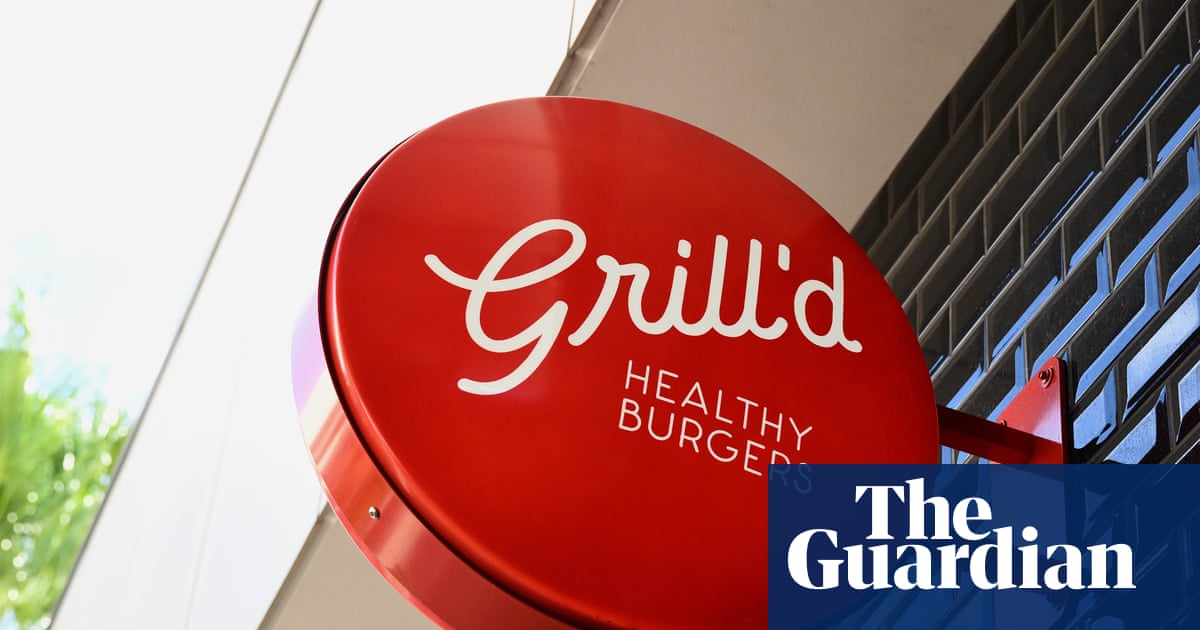
On 19 December 2024, the Australian Competition and Consumer Commission commenced proceedings in the Federal Court of Australia against Grill’d Pty Ltd, the national burger chain, over alleged greenwashing conduct connected to its “Tree Day Tuesday” promotional campaign. The ACCC alleges that Grill’d made false or misleading representations to consumers by claiming it would donate one dollar from every burger purchased on a Tuesday to Greenfleet Trust, an environmental non-profit organisation, for the purpose of planting native forests. The campaign ran for approximately three years, from January 2021 through to April 2024.
The core of the ACCC’s case is not that no donations were made, but that the breadth of the public claim was fundamentally disconnected from the operational reality. The regulator alleges that highly restrictive, undisclosed eligibility conditions meant that only a small fraction of Tuesday purchases actually triggered a donation. According to the ACCC, more than five million burgers were purchased on Tuesdays during the promotion period, yet only four per cent of those purchases qualified for a donation. ACCC Chair Gina Cass-Gottlieb described the conduct as depriving consumers of the ability to make an informed decision and potentially conferring an unfair competitive advantage on Grill’d over businesses making more honest environmental representations.
For environmental professionals and their clients, including property developers, corporate occupiers, local councils, and in-house legal counsel, this case is significant well beyond the food and beverage sector. It demonstrates that Australian regulatory enforcement of greenwashing has moved decisively beyond scrutiny of physical product labelling claims into the territory of corporate sustainability campaigns, environmental partnerships, and charitable donation representations. The Federal Court proceedings signal that any public-facing environmental claim, regardless of the industry or the apparent goodwill behind it, must be rigorously substantiated and accurately framed.
Key details of the ACCC’s Federal Court action against Grill’d
The ACCC has filed its proceedings under the Australian Consumer Law, which is Schedule 2 to the Competition and Consumer Act 2010 (Cth). The relevant provisions are Section 18, which prohibits misleading or deceptive conduct in trade or commerce, and Sections 29(1)(g) and 29(1)(m), which prohibit false or misleading representations regarding the sponsorship, approval, performance characteristics, benefits, or uses of goods and services. These are civil penalty provisions, meaning the Federal Court can impose substantial financial penalties if the conduct is established.
The eligibility conditions that the ACCC alleges were not adequately disclosed to consumers were numerous and cumulative. To qualify for the one-dollar donation, a purchase had to meet all of the following criteria simultaneously: the item purchased had to be a main item (specifically a burger or salad, not a side or drink); the order had to be placed dine-in rather than takeaway; the order had to be placed at the front counter rather than via a table QR code; and the customer had to be a registered member of Grill’d’s “Relish” loyalty programme who scanned their membership barcode at the time of the transaction. Purchases made via table QR codes, as takeaway, via online ordering platforms, or via third-party delivery services did not qualify under any circumstances.
The statistical outcome of these conditions is stark. Of more than five million Tuesday burger purchases across the promotion period, only four per cent triggered a donation. Among the subset of more than one million purchases made on Tuesdays by Relish loyalty programme members, the figure was higher but still only 17 per cent. The gap between the “every burger” framing of the public campaign and the four per cent qualification rate is the central factual allegation underpinning the ACCC’s case. The regulator has not published the total quantum of donations actually made versus the amount that would have been donated had the “every burger” claim been literally true, but the differential between four per cent and 100 per cent of qualifying purchases is self-evidently material.
The Greenfleet Trust, which was the named recipient of the donations and the environmental partner in the campaign, has not been named as a respondent in the proceedings. The ACCC’s action is directed solely at Grill’d as the party making the consumer-facing representations. This is a relevant distinction for environmental organisations and non-profits who enter into corporate partnership arrangements: the legal exposure under the Australian Consumer Law sits with the entity making the public claim, not the charitable beneficiary. However, the reputational consequences of being associated with a greenwashing finding can extend to both parties.
Australian context: greenwashing enforcement under the Australian Consumer Law and ESG disclosure obligations
The Grill’d proceedings fit within a broader and accelerating pattern of greenwashing enforcement by Australian regulators. The ACCC published its Greenwashing Guidance for Businesses in December 2023 following an internet sweep that identified concerning environmental claims across numerous sectors. The Australian Securities and Investments Commission has separately pursued greenwashing cases in the Federal Court against asset managers and superannuation funds, including its action against Mercer Superannuation and its proceedings involving Vanguard Investments Australia. The convergence of ACCC and ASIC enforcement activity confirms that greenwashing scrutiny in Australia is now a dual-regulator environment, covering both consumer-facing marketing and financial product disclosure.
For corporate landholders, developers, and councils, the Grill’d case is a practical reminder that environmental claims embedded in promotional campaigns carry the same legal risk as those made in product labelling or financial disclosures. Organisations that publicise tree-planting initiatives, carbon offset programmes, biodiversity commitments, or charitable environmental partnerships should ensure that the scope of any public claim is precisely matched by the underlying programme mechanics. Where eligibility conditions, exclusions, or limitations apply, these must be clearly and prominently disclosed to consumers rather than buried in fine print or left undisclosed entirely. As Australian regulators continue to expand their greenwashing enforcement activity, the standard expected of businesses is not good intentions but accurate and verifiable claims.
References and related sources
- Primary source: www.accc.gov.au
- accc.gov.au
- theguardian.com
- twobirds.com
- thenewdaily.com.au
How iEnvi can help
iEnvi provides specialist consulting services relevant to this topic. Our team includes CEnvP Site Contamination Specialists with experience across contaminated land, groundwater, remediation, ecology, and regulatory compliance.
- iEnvi ESG services
- iEnvi contaminated land investigation services
- iEnvi remediation and validation services
- iEnvi expert services and independent review services
This is an iEnvi Machete news summary. Prepared by iEnvi to summarise the source article for contaminated land, groundwater, remediation, approvals and site risk professionals.
Published: 22 Jun 2026
Need advice on this topic? Speak to an iEnvi expert at info@ienvi.com.au or 1300 043 684, or contact us online.
Need advice on this issue? iEnvi provides practical, senior-led environmental consulting across contaminated land, remediation, ecology and environmental risk.
Team credentials Contaminated land services Remediation services Groundwater services Talk to iEnvi