
Overview of the Lachlan River Environmental Flow
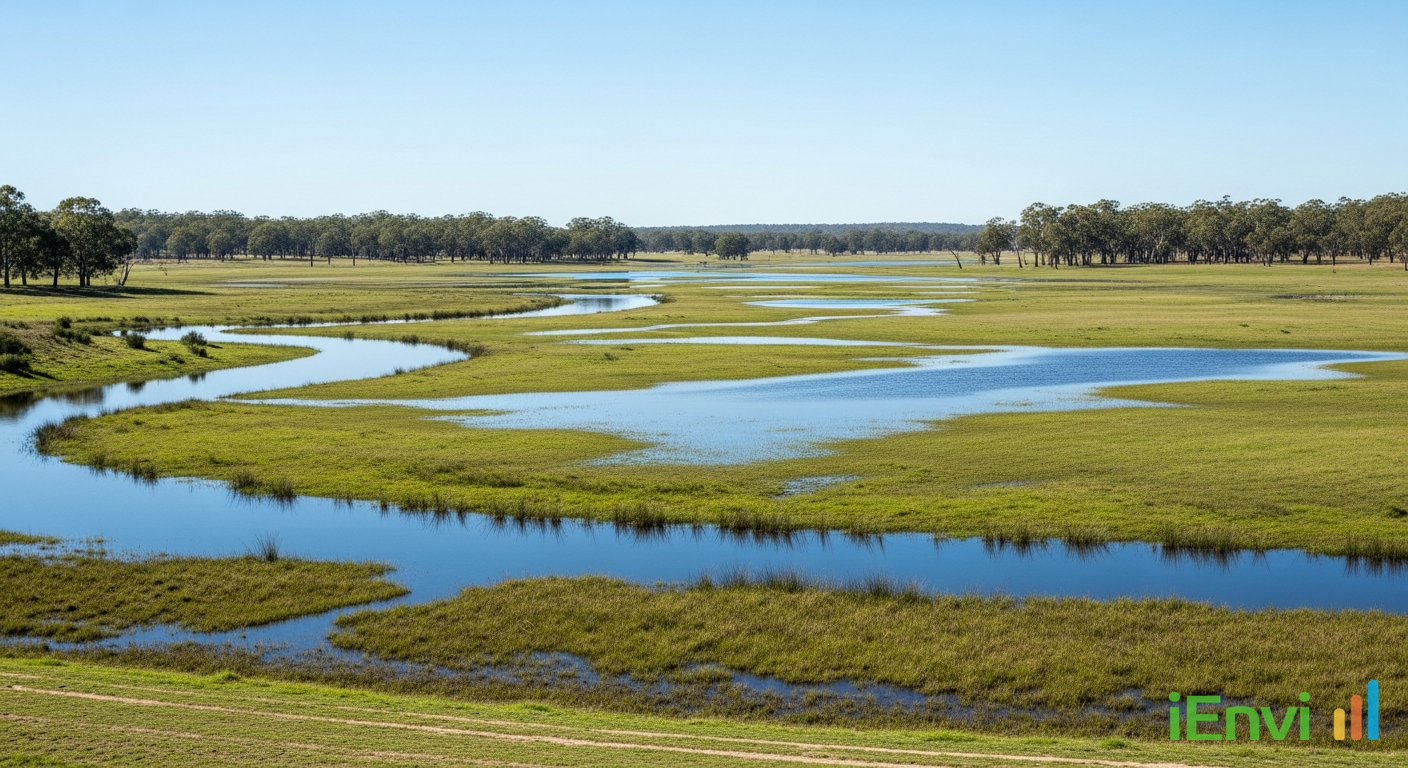
The New South Wales Department of Climate Change, Energy, the Environment and Water (DCCEEW) and the Commonwealth Environmental Water Holder have jointly launched one of the more substantial environmental watering events seen in the Lachlan River system in recent years. Up to 80,000 megalitres (ML) of environmental water is being released from Wyangala Dam, targeting the Lachlan Swamp wetland system and the Greater Cumbung region between Whealbah and Oxley. Releases commenced in mid-June 2024, with flow fronts expected to reach Willandra Weir by 2 July and Whealbah by 10 July 2024.
The event is significant because large parts of these water-dependent ecosystems have been dry for close to two years. For ecological consultants, hydrologists, and water resource managers, this is not simply a routine flow augmentation exercise. It represents a catchment-scale adaptive management intervention aimed at preventing irreversible ecological decline in floodplain communities that depend on periodic inundation to survive and regenerate. The volumes involved, the duration of the flow, and the diversity of threatened species that stand to benefit make this a notable case study in coordinated environmental water delivery under dual Commonwealth and state frameworks.
For developers, landholders, and councils operating in the broader Lachlan catchment, this event also has immediate practical consequences. Large-scale, sustained high-flow releases of this kind can temporarily alter local surface water and groundwater baselines, affect site access, and shift the context for any environmental assessments or monitoring programmes already underway in the region. Understanding the mechanics, regulatory underpinning, and ecological objectives of the event is essential for anyone with active projects near the affected waterways.
Key details of the 80,000 ML Lachlan River environmental flow event
The release from Wyangala Dam is structured to deliver controlled flow rates ranging between 2,000 and 3,000 ML per day from the dam itself. These upper-catchment volumes are calibrated to achieve a targeted peak flow averaging 1,600 ML per day at the Whealbah gauge for a sustained period of up to 44 days. The difference between the dam release volume and the gauge target reflects transmission losses, tributary contributions, and the management of flow attenuation across the catchment. The total volume of up to 80,000 ML is a substantial commitment of environmental water entitlement, drawn from allocations held under the Water Management Act 2000 (NSW) and managed in coordination with the Commonwealth Environmental Water Holder.
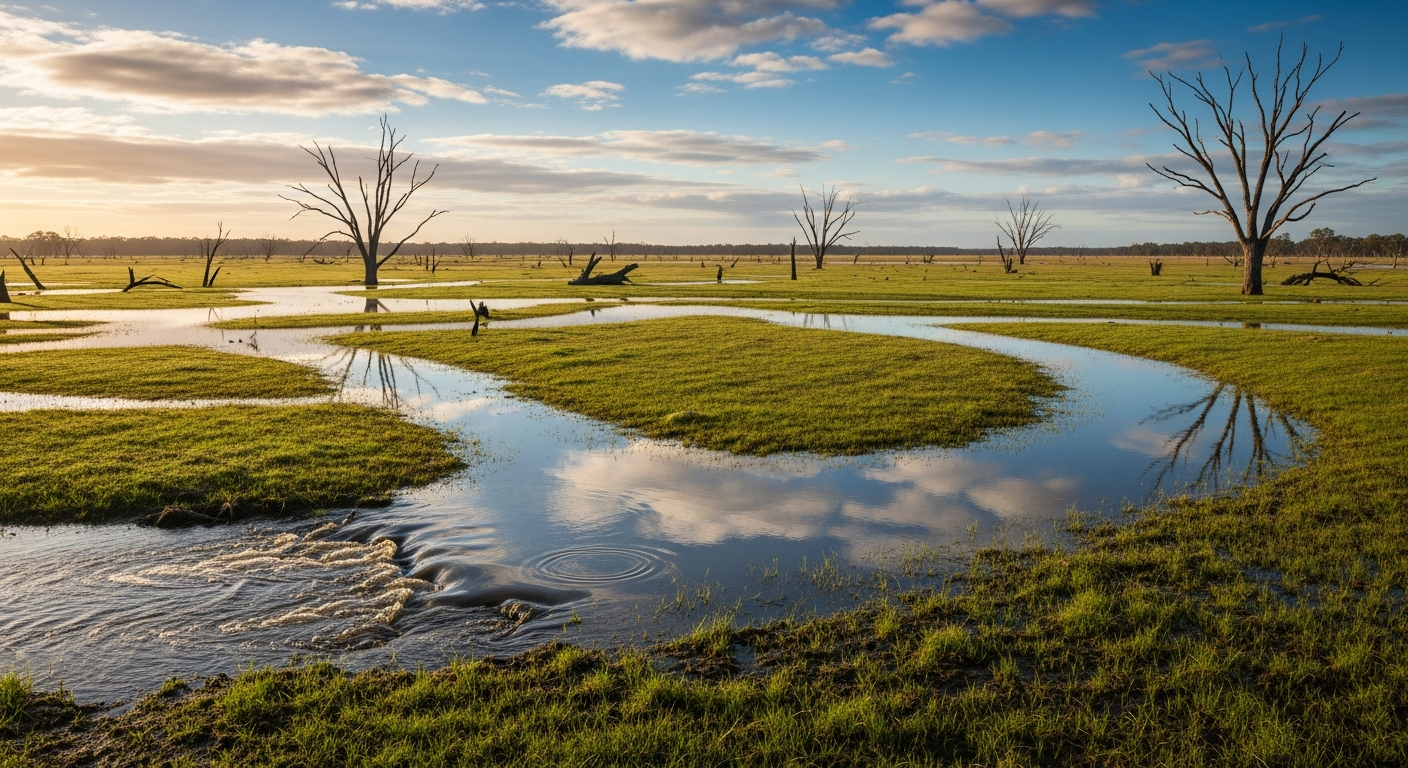
The inundation target is more than 25,000 hectares of wetland and floodplain. This area encompasses a range of native vegetation communities that are dependent on periodic flooding, including river red gum forests (Eucalyptus camaldulensis), river cooba, black box woodlands, and lignum shrublands. From an ecological standpoint, the timing is deliberate. Research indicates that river red gums should not remain without inundation for more than approximately three years before experiencing severe drought stress that threatens long-term canopy survival. With affected areas approaching the two-year dry mark, this winter flow is positioned within a narrow window of ecological opportunity.
Water quality monitoring is being conducted actively throughout the release, with parameters including salinity, water temperature, depth, dissolved oxygen, and pH tracked against standards consistent with the Australian and New Zealand Guidelines for Fresh and Marine Water Quality 2018 (ANZG 2018). The ANZG 2018 guidelines provide the current benchmark for assessing aquatic ecosystem health during high-flow events. Two specific water quality risks are being managed: cold-water pollution, which can occur when cold hypolimnetic water is released from deep storage reservoirs and thermal stratification is disturbed; and hypoxic blackwater events, which arise when large volumes of water rapidly inundate dry floodplains, leaching dissolved organic carbon and driving down dissolved oxygen concentrations to levels lethal to aquatic fauna.
The threatened species expected to benefit from this event include those listed under the Environment Protection and Biodiversity Conservation Act 1999 (EPBC Act), specifically the southern bell frog (Litoria raniformis), the Australasian bittern (Botaurus poiciloptilus), the freckled duck (Stictonetta naevosa), and the blue-billed duck (Oxyura australis). For each of these species, the inundation of wetland and floodplain habitat provides critical foraging and breeding conditions that are absent or severely degraded during extended dry periods. The flow event is therefore directly relevant to the species recovery objectives embedded in federal biodiversity legislation and any referrals, approvals, or conditions that may already be in force for projects intersecting with these habitats.
Australian regulatory context for Lachlan River environmental water delivery
Environmental water delivery of this scale sits at the intersection of two major regulatory frameworks in Australia. At the state level, environmental water rules in New South Wales are governed by the Water Management Act 2000 (NSW), which establishes the legal basis for water sharing plans and the allocation of water for environmental purposes. Environmental water entitlements held by the DCCEEW and managed in conjunction with the Commonwealth Environmental Water Holder represent dedicated water access licences specifically reserved for ecological outcomes. The winter 2024 Lachlan release is an exercise of those entitlements under the adaptive management provisions of the relevant water sharing plan for the Lachlan Regulated River.
The Commonwealth dimension is equally significant. The Commonwealth Environmental Water Holder operates under the Water Act 2007 (Cth) and holds water entitlements across multiple Murray-Darling Basin catchments, including the Lachlan. These entitlements are managed to deliver environmental outcomes consistent with the Basin Plan 2012, which sets long-term average sustainable diversion limits and environmental watering priorities across the Basin. The Lachlan River system forms part of the Murray-Darling Basin and is subject to both the Basin Plan’s environmental watering provisions and the state-level water sharing framework. The coordination between DCCEEW and the Commonwealth Environmental Water Holder for this release reflects the joint governance structure that applies across regulated rivers within the Basin, where decisions about timing, volume, and target outcomes must align with both state and Commonwealth obligations.
References and related sources
- Primary source: www.environment.nsw.gov.au
- pjra.com.au
- https://www.environment.nsw.gov.au/news/winter-environmental-flow-to-support-lac
- ANZG Water Quality Guidelines
How iEnvi can help
iEnvi provides specialist consulting services relevant to this topic. Our team includes CEnvP Site Contamination Specialists with experience across contaminated land, groundwater, remediation, ecology, and regulatory compliance.
- iEnvi groundwater services
- iEnvi remediation and validation services
- iEnvi expert services and independent review services
This is an iEnvi Machete news summary. Prepared by iEnvi to summarise the source article for contaminated land, groundwater, remediation, approvals and site risk professionals.
Published: 22 Jun 2026
Need advice on this topic? Speak to an iEnvi expert at info@ienvi.com.au or 1300 043 684, or contact us online.
Need advice on this issue? iEnvi provides practical, senior-led environmental consulting across contaminated land, remediation, ecology and environmental risk.
Team credentials Contaminated land services Remediation services Groundwater services Talk to iEnvi