
PFAS Leaching Risks in Utility-Scale Solar: A Scientific Review
A peer-reviewed study published in April 2026 by researchers from Michigan State University and Oak Ridge National Laboratory has systematically examined claims that commercially deployed solar photovoltaic (PV) panels leach per- and polyfluoroalkyl substances (PFAS) into surrounding soil and groundwater. The researchers found no confirmed evidence of mobile PFAS leaching from solar modules under normal field conditions. The finding is directly relevant to Australian environmental practitioners, developers, councils, and project financiers who are navigating the rapid expansion of utility-scale solar infrastructure and the growing regulatory scrutiny of end-of-life PV management.
The timing of the study is significant. Across Australia, solar farm approvals are accelerating at a pace that is outpacing the development of clear end-of-life waste frameworks, and community concern about the long-term environmental footprint of large-scale solar installations has been building. Some consultants, community groups, and even regulators have begun to treat utility-scale solar sites as potential PFAS contamination risks, drawing loose analogies with fire-fighting foam contamination at airfields and defence bases. The Michigan State and Oak Ridge research provides the first systematic scientific baseline to interrogate those concerns, and the answer is that the fear of solar-driven PFAS contamination currently lacks any empirical foundation.
Critically, the researchers surveyed industry professionals and found that 59 per cent believed PFAS use in solar PV was likely to result in environmental contamination. That level of misunderstanding, among professionals rather than the general public, points to a real knowledge gap in the sector. For contaminated land consultants, hydrogeologists, environmental lawyers, and project developers, understanding the precise chemistry underlying this issue is no longer optional. It is a baseline competency for defensible site assessments and accurate conceptual site models.
Key details: fluoropolymers versus mobile PFAS in solar PV components
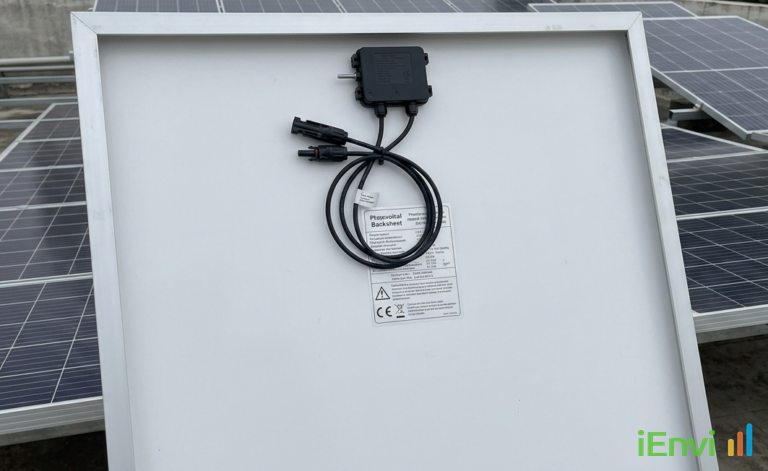
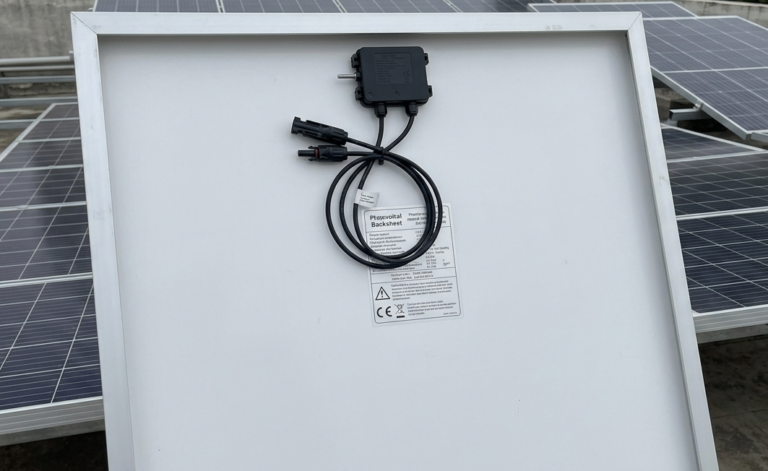
The central technical finding of the Michigan State University and Oak Ridge National Laboratory study is a chemical distinction that is frequently collapsed in public discourse. Solar PV modules do contain fluorine-based compounds. Specifically, fluoropolymers are used in backsheets, weather-resistant coatings, and wire insulation because of their exceptional thermal stability, UV resistance, and electrical insulating properties. The most commonly used fluoropolymer in this context is polyvinyl fluoride (PVF), sold commercially as Tedlar, and polyvinylidene fluoride (PVDF). These are high-molecular-weight polymer chains that are structurally and behaviourally distinct from the short-chain and long-chain perfluoroalkyl acids that drive PFAS contamination in soil and groundwater.
The PFAS compounds that are associated with confirmed environmental and human health harm, including perfluorooctane sulfonate (PFOS), perfluorooctanoic acid (PFOA), and perfluorohexane sulfonic acid (PFHxS), are small, mobile, water-soluble, and persistent. They travel readily through soil profiles, partition into groundwater, and bioaccumulate through food chains. Fluoropolymers, by contrast, are insoluble in water, have very low mobility in the environment, and do not break down into the shorter-chain PFAS compounds that trigger guideline exceedances under standard screening frameworks. The researchers confirmed that under normal operating and weathering conditions, there is no established mechanism by which the fluoropolymers in solar panels would transform into or release mobile PFAS at concentrations relevant to environmental contamination assessments.
The study also addressed the end-of-life scenario, which is the point most often raised in regulatory discussions. Mechanical shredding, thermal processing, and acid leaching used in some e-waste recycling operations can theoretically break down polymer matrices. However, the researchers found no confirmed evidence that even these processes generate mobile PFAS at concentrations comparable to the contamination levels seen at aqueous film-forming foam (AFFF) impacted sites. The distinction matters enormously for site assessors: an intact deployed solar panel presenting a fluoropolymer-containing backsheet to rainfall infiltration is not analogous to a fire training pit where PFOS-containing foam concentrate was applied directly to soil over decades.
The researchers also noted that the solar industry’s transparency regarding the specific chemical composition of components is inconsistent, and they called for improved disclosure of manufacturing chemicals across the supply chain. This recommendation is not about confirmed harm but about preventing the kind of regulatory uncertainty that arises when assessors cannot verify what compounds are present. The inability to obtain clear material composition data from manufacturers was identified as a genuine barrier to definitive risk characterisation, and it is a practical problem that Australian consultants are already encountering when preparing waste management plans for decommissioning projects.
Australian context: NEPM 2013, PFAS NEMP 3.0, and renewable energy site assessments in Australia
Australia’s regulatory framework for contaminated land is built on risk-based assessment principles, most formally expressed in the National Environment Protection (Assessment of Site Contamination) Measure 2013 (NEPM 2013). Under that framework, the starting point for any site assessment is an accurate conceptual site model (CSM) that correctly identifies the source, pathway, and receptor linkages for any potentially hazardous substance. The Michigan State and Oak Ridge study directly reinforces this approach. If fluoropolymers in solar panels are not a mobile contaminant source under normal field conditions, there is no credible pathway to a receptor, and the contamination risk to soil and groundwater does not meet the threshold for further assessment under a NEPM 2013-compliant framework.
References and related sources
- Primary source: www.pv-magazine-australia.com
- PFAS National Environmental Management Plan (NEMP)
- NEPM Assessment of Site Contamination
How iEnvi can help
iEnvi provides specialist consulting services relevant to this topic. Our team includes CEnvP Site Contamination Specialists with experience across contaminated land, groundwater, remediation, ecology, and regulatory compliance.
- iEnvi contaminated land services
- iEnvi remediation and validation services
- iEnvi expert services and independent review services
This is an iEnvi Machete news summary. Prepared by iEnvi to summarise the source article for contaminated land, groundwater, remediation, approvals and site risk professionals.
Published: 23 Apr 2026
Need advice on this topic? Speak to an iEnvi expert at hello@ienvi.com.au or 1300 043 684, or contact us online.
Need advice on this issue? iEnvi provides practical, senior-led environmental consulting across contaminated land, remediation, ecology and environmental risk.
Contaminated land advice Remediation services Groundwater services Ecology consulting Talk to iEnvi