
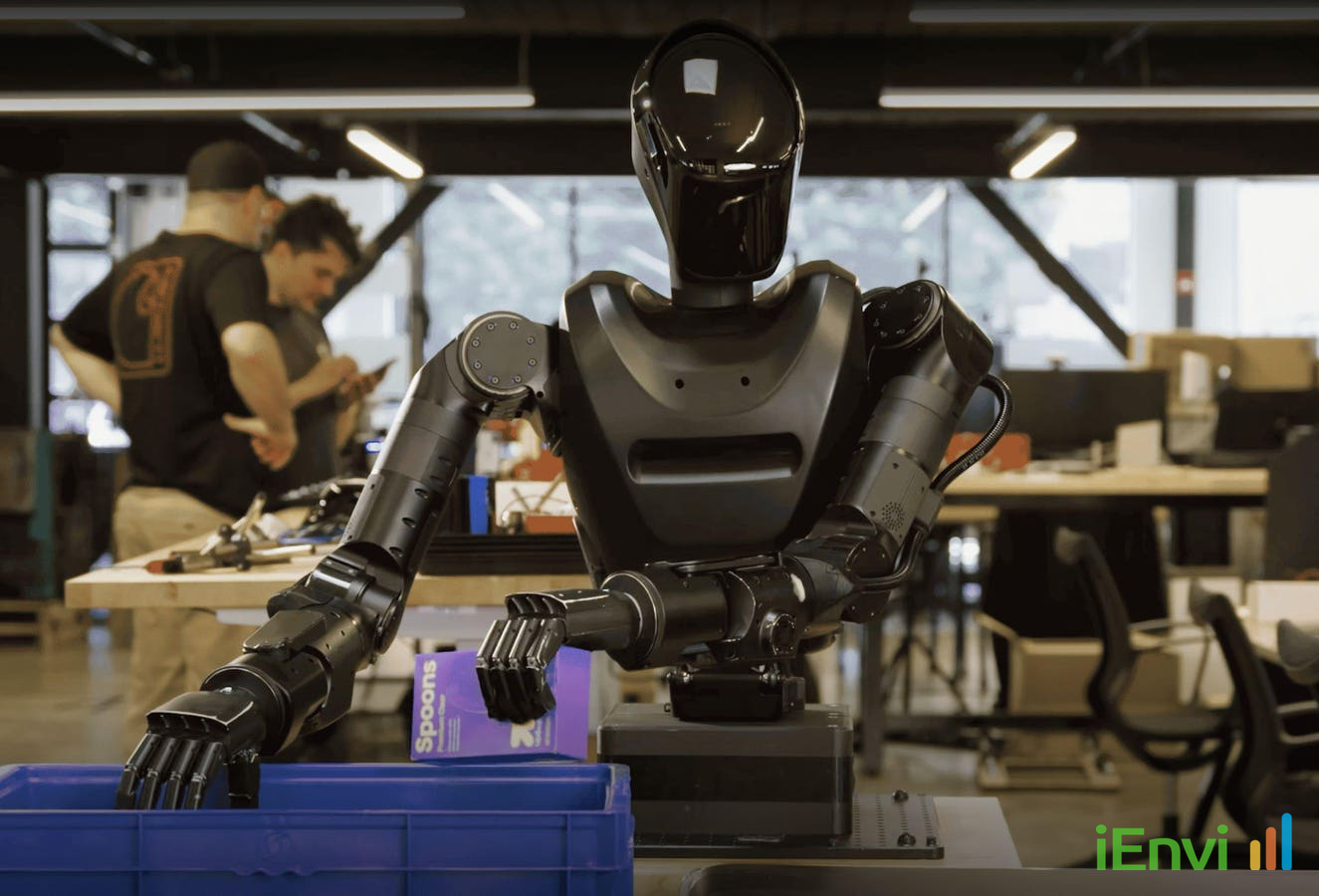
AMD Challenges NVIDIA in Physical AI Hardware with Foundation Future Industries Design Win
A significant shift in physical AI hardware competition emerged on 23 July 2026, when San Francisco-based humanoid robotics startup Foundation Future Industries announced it had selected AMD Ryzen AI Embedded X100 Series processors to power its next-generation Phantom MK-2 humanoid robots. The announcement, reported by Forbes contributor John Koetsier, marks the first major commercial design win for AMD in a market that has been dominated by NVIDIA’s Jetson and Thor hardware ecosystems for the better part of a decade. For businesses and technology professionals tracking the deployment of autonomous systems in industrial and hazardous environments, this development signals the beginning of genuine hardware competition in physical AI compute.
Foundation Future Industries claims that migrating from NVIDIA silicon to AMD’s X100 architecture delivers up to 2.5 times faster inference and 3 times faster training performance for the Phantom MK-2 platform. The robot is explicitly designed for harsh industrial and defence applications, carrying an IP67 ingress protection rating and tolerance for vibration loads up to 100G. These are not laboratory specifications. They reflect a deliberate engineering choice to deploy physical AI into environments where conventional consumer or data-centre grade hardware would fail. That context matters, because the performance claims are being made for real-world deployment conditions, not controlled benchmarks.
The broader significance extends well beyond one startup’s procurement decision. The physical AI hardware market is projected to reach USD 50 billion annually by 2035, and until now, developers of autonomous systems have operated with limited supplier alternatives. AMD’s entry into this space with a competitive silicon platform introduces procurement diversity, pricing pressure, and the prospect of accelerated commercial rollout of robotic systems across sectors from manufacturing to resource extraction. For Australian businesses and technology teams evaluating autonomous systems, the competitive dynamics of the underlying hardware supply chain are about to change materially.
Key details of the AMD X100 Series and Phantom MK-2 design win
The technical foundation of AMD’s competitive advantage in this design win is the integration of Xilinx-acquired Field Programmable Gate Array (FPGA) fabric directly alongside the central processing unit (CPU), graphics processing unit (GPU), and neural processing unit (NPU) on a single X100 Series silicon package. This architectural choice is not cosmetic. FPGA fabric allows hardware logic to be configured at the circuit level to perform specific, repeatable tasks with deterministic timing, meaning the system executes operations in a fixed, predictable time window regardless of software overhead or competing processes. That determinism is precisely what motor control systems require and what conventional GPU-heavy architectures have historically struggled to deliver.
NVIDIA’s dominant position in AI compute has been built on massively parallel GPU architectures optimised for workloads such as computer vision inference, transformer model training, and large language model processing. These workloads tolerate some variation in execution timing because the output is a decision or a prediction, not a physical actuator command. Motor control is fundamentally different. When a robotic hand must grip a delicate component or apply calibrated force to an irregularly shaped object, the control loop must operate in the millisecond range with guaranteed latency. According to the Forbes report, Foundation is using AMD’s FPGA fabric to run a real-time, deterministic control loop specifically for the Phantom MK-2’s 23-degree-of-freedom hands. That figure, 23 degrees of freedom, approaches the kinematic complexity of a human hand, which has approximately 27 degrees of freedom including the wrist.
The tactile and haptic sensor fusion capability enabled by this architecture deserves specific attention. By processing high-frequency sensory feedback within a dedicated hardware loop on the same silicon package, the Phantom MK-2 can execute mechanical adjustments based on touch data without routing that data through a conventional operating system kernel, which would introduce unpredictable scheduling delays. This approach bypasses what engineers refer to as operating system latency overhead, allowing the robot to respond to physical contact in a timeframe that matches or approximates human reflexive response. The practical outcome is a machine capable of manipulating both delicate and heavy objects with dexterity that general-purpose compute architectures have not previously supported at commercial scale.
The Phantom MK-2’s IP67 rating means it is fully protected against dust ingress and capable of withstanding temporary immersion in water to one metre (3.3 feet) depth for up to 30 minutes under the IEC standard. Combined with the 100G vibration tolerance, this positions the platform for deployment in environments including heavy manufacturing, mining operations, offshore facilities, and defence logistics. These are not environments where fragile laboratory robots have previously been viable. The convergence of ruggedised mechanical design with competitive AI compute performance at the hardware level represents a meaningful step toward practical deployment in industries that have been waiting for physical AI to mature beyond proof-of-concept demonstrations.
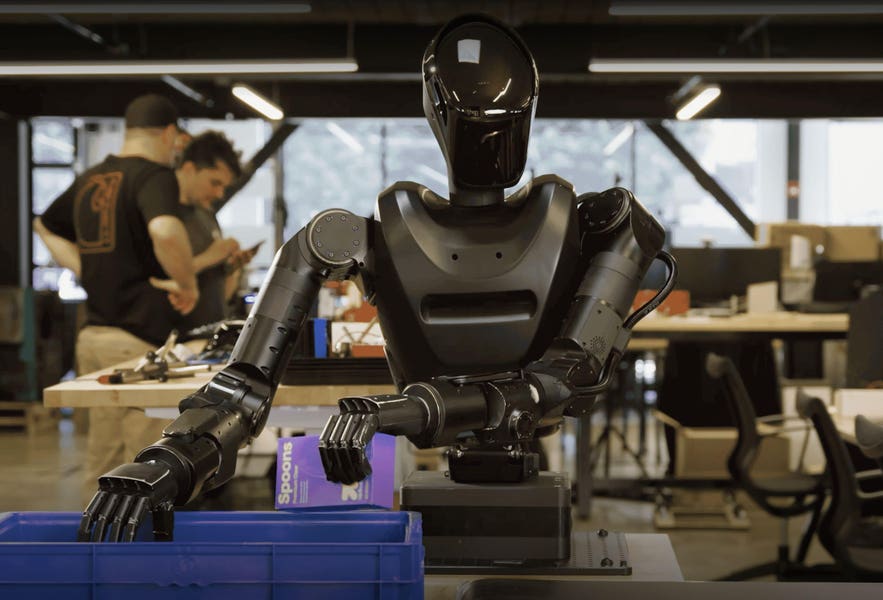
Australian business and professional services context for physical AI hardware competition
For Australian businesses evaluating autonomous systems, the AMD versus NVIDIA competition in physical AI compute has direct procurement and strategy implications. Until this announcement, organisations building or procuring robotic platforms for industrial use were largely constrained to NVIDIA’s ecosystem, with limited alternatives at the silicon level. That constraint shaped not only hardware costs but also the pace at which vendors could bring competitive products to market. A second credible platform changes that calculus. Procurement teams can now evaluate competing architectures, and vendors face incentives to accelerate development timelines and moderate pricing to retain design wins.
For sectors with particular relevance to Australian industry conditions — resources, defence logistics, remote infrastructure maintenance, and offshore energy — the ruggedised performance envelope of platforms like the Phantom MK-2 is directly applicable. Australia’s mining and resources sector has long faced labour availability and safety constraints in operating environments that closely match the IP67 and high-vibration specifications the Phantom MK-2 is designed to meet. The emergence of commercially viable physical AI platforms with competitive hardware underpinning brings autonomous deployment in these environments from a long-term ambition to a near-term evaluation priority.
Technology and strategy teams should note that hardware competition at the silicon level typically precedes broader ecosystem development. Software toolchains, developer communities, and integration support tend to follow commercial design wins. AMD’s X100 Series entry into physical AI compute suggests that the ecosystem around non-NVIDIA robotic compute will expand over the next two to three years, which has implications for technology roadmaps, vendor selection, and skills investment. Organisations that begin evaluating AMD-based platforms now will be better positioned to take advantage of that ecosystem maturation as it occurs.
References and related sources
- Primary source: www.forbes.com
- aiweekly.co
- gizmodo.com
How iEnvi can help
iEnvi integrates technology and data-driven approaches into environmental consulting. We monitor AI and technology developments that affect how environmental professionals deliver services to clients.
This is an iEnvi Machete news summary. Prepared by iEnvi to summarise the source article for environmental professionals tracking AI, data, and technology developments that affect consulting and project delivery.
Published: 24 Jul 2026
Need advice on this topic? Speak to an iEnvi expert at info@ienvi.com.au or 1300 043 684, or contact us online.
Need advice on this issue? iEnvi provides practical, senior-led environmental consulting across contaminated land, remediation, ecology and environmental risk.
Contaminated land advice Remediation services Discuss your site Talk to iEnvi