
Overview
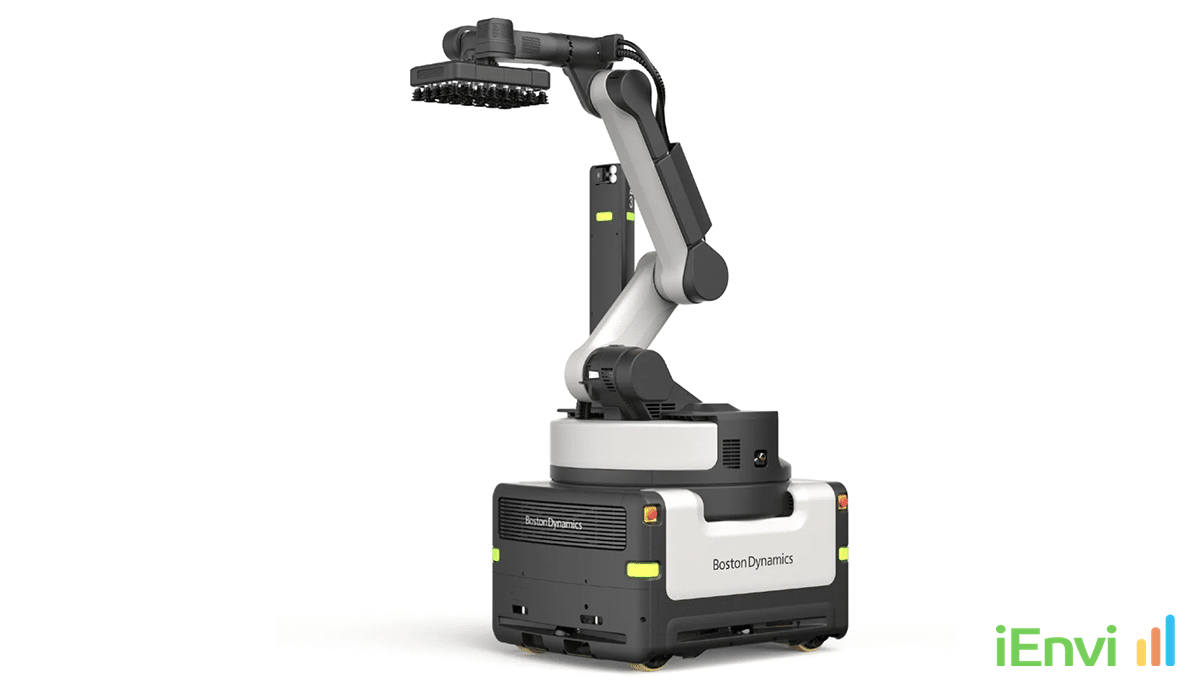
Eight hours down to one. That is how long it now takes to replace a drive module on Boston Dynamics’ Stretch trailer-unloading robot, following the company’s launch of Stretch Gen 2 on 3 November 2026. The second-generation machine was redesigned using telemetry and performance data from more than 100,000 operational hours and tens of millions of boxes unloaded across warehouse deployments worldwide. The stated goal was a robot that stays online, not a faster or more novel one.
Stretch is a commercial autonomous mobile robot built to unload shipping containers and trailers at logistics docks, which is one of the most repetitive and mechanically punishing tasks in the supply chain. Brian Donnelly, Vice President and General Manager of Logistics Robotics at Boston Dynamics, framed the release around downtime: “Our customers count on Stretch to keep freight moving, and every hour a robot sits idle is an hour of work that piles up on the dock. With Gen 2, we focused on the things that actually took robots offline in the real world. We made it tougher, we made it simpler to service, and we made sure it keeps getting better long after it’s deployed.”
Stretch is not an environmental product, and Boston Dynamics does not present it as one. Its relevance to Australian environmental practitioners lies in the engineering logic behind the redesign. The lesson that cables, connectors and field serviceability decide whether hardware performs over years applies equally to the automated monitoring equipment now routinely specified in remediation programmes. Developers, councils and lawyers relying on continuous data from contaminated sites face the same question a warehouse operator faces: what does the equipment actually deliver after the first year in the field?
Key details
The headline change in Stretch Gen 2 is an 81% reduction in internal cabling. Boston Dynamics engineers removed approximately 800 metres (about half a mile) of dynamic internal cabling and complex wire harnesses. According to the company, these components were the primary source of intermittent electrical faults, wire fatigue and diagnostic failures in high-vibration operation. Intermittent faults are the most expensive kind to manage because they are difficult to reproduce, difficult to trace and often return after a technician has left.
Serviceability was the second focus. Swapping a full swerve-drive module previously took more than 8 hours, effectively a full business day. In Gen 2 the same task takes approximately 1 hour, using standardised high-strength fasteners and plug-and-play modules that on-dock maintenance crews can service directly. Mechanical hardening measures include:
- Continuous-rotation joints that turn past 360 degrees without mechanical hard stops, removing the high-torque stress that occurs when a joint reaches the end of its travel.
- Recessed lower emergency-stop assemblies, protecting them from impact during operation.
- Heavy-duty automotive-grade connectors selected to withstand rough trailer thresholds and floor transitions.
On performance, Boston Dynamics quotes throughput of up to 1,000 cases per hour using an updated multi-pick vacuum gripper with revised valve arrays and higher-precision tactile sensing. The redesigned battery platform is rated to run two consecutive full operating shifts and fast-charges to 90% capacity in approximately 75 minutes. Both figures are manufacturer specifications from the launch release rather than independently verified results.
The fourth change is an upgraded edge computing stack. It supports continuous over-the-air (OTA) updates to the robot’s pre-trained visual perception models, dynamic motion planners and dock world-modelling systems without any hardware intervention. Taken together, the Gen 2 design reflects a broader shift in commercial robotics from bespoke pilot hardware to industrial hardening, where return on investment depends on mean time between failures (MTBF), elimination of wiring harnesses and modular field repair rather than headline capability.
Australian context
Australian contaminated land practice increasingly depends on automated field equipment. Typical examples include pressure transducers and data loggers recording groundwater levels, telemetered soil vapour and ground gas monitoring, controllers on LNAPL recovery and groundwater extraction systems, and remote sensors reporting to cloud platforms. In our field experience, these systems rarely fail because the sensing element itself stops working. They fail at the same points Boston Dynamics targeted: damaged vented cables, corroded or loose connectors, moisture in junction boxes, flat batteries and replacement parts that nobody on site is equipped to fit.
Those failures matter because of how Australian frameworks treat data. The National Environment Protection (Assessment of Site Contamination) Measure 1999, as amended in 2013 (NEPM 2013), requires data quality objectives to be set at the outset and assessed against the data collected, under Schedule B2. A three-month gap in a continuous record can weaken a line of evidence that a site’s conceptual model depends on. In NSW, accredited Site Auditors operating under the Contaminated Land Management Act 1997 examine whether monitoring supports the conclusions drawn. In Victoria, environmental auditors work under the Environment Protection Act 2017. Queensland and South Australia regulate under the Environmental Protection Act 1994 and the Environment Protection Act 1993 respectively. For ground gas, the NSW EPA’s 2020 guidelines on assessment and management of hazardous ground gases recognise continuous monitoring as a tool for capturing episodic, pressure-driven events that spot readings miss. If the equipment is offline during those events, the justification for using it falls away.
The OTA update capability carries a similar lesson. Many telemetered loggers and remediation system controllers can already receive firmware, configuration and alarm-threshold changes remotely, but the feature is often left unused or applied inconsistently across a monitoring network. Remote updates reduce site visits, which matters on regional and remote sites where a single call-out can take a technician most of a day. They also create a record-keeping obligation: any change to logging intervals, calibration constants or alarm settings should be documented so the dataset remains defensible when it is reviewed by an auditor or regulator.
For practitioners specifying monitoring equipment, the practical point from Stretch Gen 2 is a set of procurement questions rather than a technology. How many cable joints and connectors sit between the sensor and the logger? Can a field technician replace a failed component on site, and how long does it take? What is the expected battery life at the chosen logging interval? How are firmware updates delivered and recorded? Equipment that answers those questions well is more likely to deliver a complete record over the life of a remediation or validation programme.
References and related sources
- Primary source: bostondynamics.com
- bostondynamics.com
- youtube.com
How iEnvi can help
iEnvi integrates technology and data-driven approaches into environmental consulting. We monitor AI and technology developments that affect how environmental professionals deliver services to clients.
This is an iEnvi Machete news summary. Prepared by iEnvi to summarise the source article for environmental professionals tracking AI, data, and technology developments that affect consulting and project delivery.
Published: 04 Nov 2026
Need advice on this topic? Speak to an iEnvi expert at info@ienvi.com.au or 1300 043 684, or contact us online.
Need advice on this issue? iEnvi provides practical, senior-led environmental consulting across contaminated land, remediation, ecology and environmental risk.
Contaminated land services Remediation services Groundwater services Talk to iEnvi