
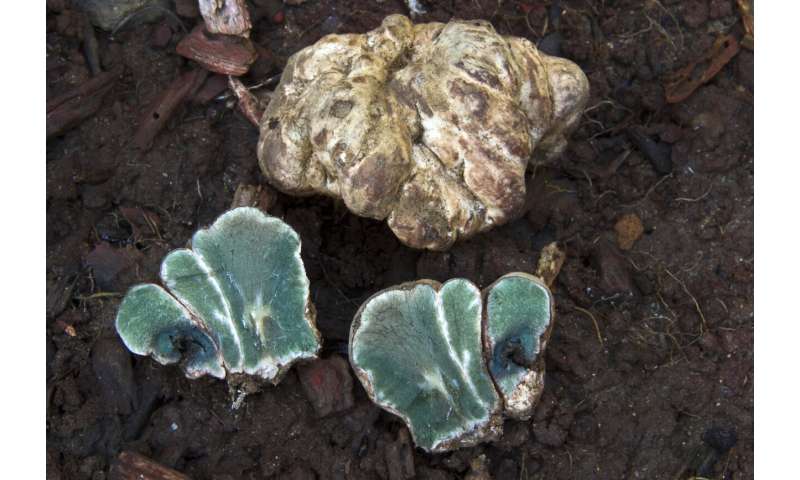
Impact of Climate Change on Subterranean Fungal Diversity
A peer-reviewed study published in the journal Ecography (DOI: 10.1002/ecog.08410) has found that climate change is measurably narrowing the diversity of truffle-like fungi available within Australian forest ecosystems, with direct consequences for the subterranean networks that keep those forests functioning. The research was conducted by scientists from the University of Melbourne in partnership with Royal Botanic Gardens Victoria, CSIRO, and the Victorian Department of Energy, Environment and Climate Action (DEECA), and was published in April 2025. It represents one of the most substantive longitudinal examinations of below-ground ecological health in an Australian forest context to date.
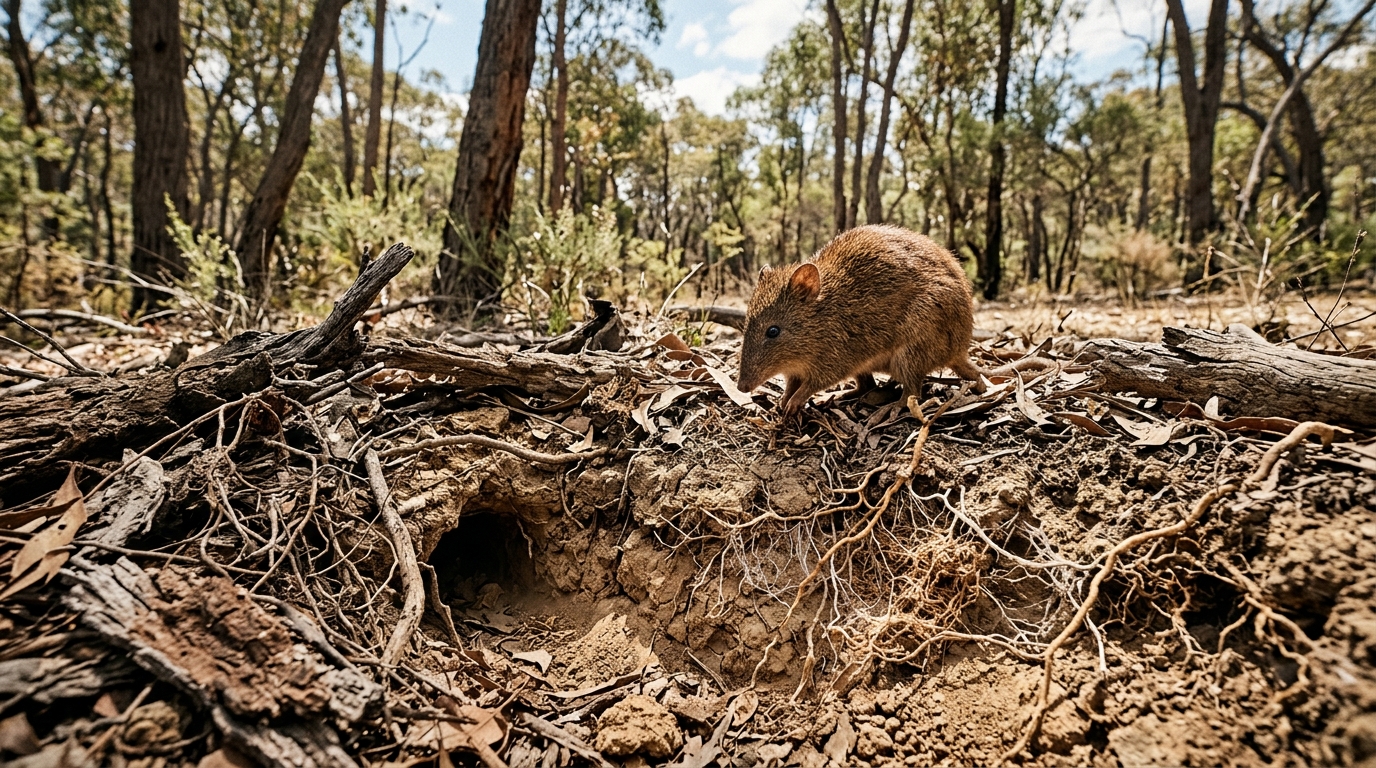
The study analysed 23 years of scat data collected from the Long-footed Potoroo (Potorous longipes), a critically threatened mycophagous marsupial endemic to a narrow band of cool temperate and wet sclerophyll forest in eastern Victoria and far southern New South Wales. Because the potoroo derives approximately 90 per cent of its diet from fungi, its scat record functions as a long-term dietary log that indirectly maps the availability and diversity of subterranean fungi across changing climatic conditions. What the researchers found was that during hotter, drier periods, potoroos consumed a significantly narrower range of truffle-like fungi species, suggesting that climate variability is directly affecting the composition and diversity of the below-ground fungal community.
For ecologists, environmental planners, development consultants, and biodiversity offset practitioners, these findings have significant implications. The subterranean fungal networks documented in this study are not incidental components of forest ecology; they are foundational to forest function. The research adds rigorous longitudinal evidence to a growing body of scientific concern that Australia’s current conservation and biodiversity assessment frameworks may be inadequately equipped to detect, measure, or protect below-ground ecological systems that are quietly degrading under climate pressure.
Ecological Indicators and the Long-footed Potoroo
The Long-footed Potoroo is listed as endangered under the Commonwealth Environment Protection and Biodiversity Conservation Act 1999 (EPBC Act) and under Victoria’s Flora and Fauna Guarantee Act 1988. It occupies a highly restricted range, estimated at fewer than 3,000 square kilometres (approximately 300,000 hectares), and is considered a flagship species for the wet and cool temperate forests of eastern Victoria. The animal’s near-total dietary dependence on hypogeous (below-ground) fungi, primarily sporocarps of ectomycorrhizal species, makes it an exceptionally sensitive biological indicator of below-ground ecosystem condition. In effect, what the potoroo eats is a proxy for what is available in the soil, and 23 years of scat analysis provides a time-resolved picture of how that availability has shifted.
The ectomycorrhizal symbiosis at the centre of this research is a bidirectional nutrient exchange relationship between fungal hyphae and host tree root systems. Fungal hyphae, the threadlike structures that extend a tree’s effective root system, enable host trees to access water and soil nutrients, particularly phosphorus and nitrogen, that would otherwise be beyond reach. In return, the host tree supplies carbohydrates to the fungi. This relationship is not peripheral to forest health; in many Australian forest types, the ectomycorrhizal network underpins the nutrient cycling and drought resilience of the entire stand. When fungal diversity within that network declines, the functional capacity of the forest as a system is compromised, even when the above-ground vegetation appears structurally intact. The study found that warmer, drier climatic periods were associated with a measurable reduction in the species richness of fungi recorded in potoroo scat, pointing to a climate-driven contraction of the available fungal community.
The longitudinal design of the study is a material strength of the research. Most ecological studies examining fungal communities operate over one to three years, making it difficult to distinguish climatic signal from seasonal noise. By drawing on 23 years of consistently collected scat samples, the research team was able to correlate shifts in fungal species diversity with documented climatic variables across multiple drought cycles and warming periods. This temporal depth gives the findings a credibility that shorter studies cannot match. The study was published in Ecography, a high-impact international journal published by the Nordic Society Oikos, focused on macroecology and broad-scale patterns in ecology, lending the findings considerable peer-reviewed authority.
An important caveat worth noting for practitioners interpreting these findings: the study documents a correlation between warmer and drier periods and reduced fungal species diversity in potoroo diet. The specific physiological mechanisms by which warming affects individual fungal species, such as soil moisture thresholds or changes in host tree carbohydrate supply, are subjects of broader mycological literature and were not the stated causal findings of this particular paper. Practitioners should avoid overstating the mechanistic conclusions when citing this work in assessment reports or offset strategy documents.
Australian context: implications for biodiversity assessment, EPBC Act referrals, and ecological restoration frameworks
Australian biodiversity assessment and offset frameworks, at both Commonwealth and state levels, are overwhelmingly structured around above-ground ecological attributes. Under the EPBC Act and its associated Biodiversity Conservation Strategy, threatened ecological communities and species habitats are assessed primarily through vegetation condition, canopy cover, f
Background and context
Scientists from the University of Melbourne, in partnership with Royal Botanic Gardens Victoria, CSIRO, and the Victorian Department of Energy, Environment and Climate Action (DEECA) have discovered that climate change is actively degrading the subterranean truffle-like fungi networks that sustain Australian forest ecosystems. Analysing 23 years of scat data from the Long-footed Potoroo (Potorous longipes)—a highly specialised marsupial that derives 90% of its diet from fungi—researchers found the animal consumed a significantly narrower range of truffle species during hotter, drier periods.
Published in the journal Ecography, the study reveals that warming climates are narrowing the range of truffle-like fungi species available and consumed by potoroos; the specific mechanisms of 'inhibiting fungal growth' and 'reducing sugars supplied by host trees' are not stated findings of this study and represent unsourced causal extrapolation. This creates a dangerous feedback loop: The tripartite relationship is broadly accurate, but describing fungal structures as 'root-like structures' is imprecise. The correct term used in the literature is 'hyphae' (threadlike structures), which extend the tree's root system through an ectomycorrhizal symbiosis offering bidirectional nutrient exchange..
Why it matters for environmental professionals and their clients
For ecologists, environmental planners, and consultants designing biodiversity offsets or restoration projects, this research highlights a critical blind spot: subterranean ecosystem health. It demonstrates that simply preserving above-ground vegetation may inadvertently create "empty forests"—landscapes that appear intact but have lost the foundational soil biodiversity required to keep them functioning and resilient to climate change. As climate pressures mount, future ecological impact assessments, conservation strategies, and land rehabilitation plans will increasingly need to account for soil microbiomes and the complex symbiotic web between flora, fungi, and mycophagous (fungi-eating) fauna.
The publication date of the source article
While no specific statutory Act is triggered, the research was published in the peer-reviewed journal Ecography (DOI: 10.1002/ecog.08410) and has direct implications for biodiversity assessment methodologies and ecological conservation frameworks in Australia.
References and related sources
- Primary source: sciencex.com
- EPBC Act
How iEnvi can help
iEnvi provides specialist consulting services relevant to this topic. Our team includes CEnvP Site Contamination Specialists with experience across contaminated land, groundwater, remediation, ecology, and regulatory compliance.
- iEnvi contaminated land investigation services
- iEnvi remediation and validation services
- iEnvi expert services and independent review services
This is an iEnvi Machete news summary. Prepared by iEnvi to summarise the source article for contaminated land, groundwater, remediation, approvals and site risk professionals.
Published: 05 Apr 2026
Need advice on this topic? Speak to an iEnvi expert at info@ienvi.com.au or 1300 043 684, or contact us online.
Need advice on this issue? iEnvi provides practical, senior-led environmental consulting across contaminated land, remediation, ecology and environmental risk.
Team credentials Flora and fauna assessment Contaminated land services Remediation services Talk to iEnvi