
Overview
The Commonwealth and Queensland Governments have jointly committed an initial $18 million towards a $36 million long-term water security and drinking water infrastructure project for the Aboriginal community of Woorabinda in Central Queensland. The announcement was made on 17 November 2026 in a joint media release from Federal Minister for the Environment and Water Murray Watt, Queensland Premier David Crisafulli and Queensland Minister for Local Government and Water Ann Leahy. Planning and detailed engineering design are under way, and construction of the new water treatment plant and broader distribution works is slated to begin in 2027.
The funding follows an 11-month boil water advisory in Woorabinda. According to the release, the advisory was lifted by the Woorabinda Aboriginal Shire Council after interim emergency mechanical, electrical and dosing upgrades returned the town’s legacy treatment plant to operating condition. The new commitment is intended to replace that short-term fix with a modern, fit-for-purpose potable water treatment plant, a fully rehabilitated supply bore and a clearer picture of the condition of the town’s pipe network.
For Australian environmental professionals and their clients, the project shows what happens when ageing plant on a small, single-source water scheme fails. Developers relying on regional reticulated supply, councils operating small schemes, lawyers advising on property transactions in serviced regional towns, and asset owners with their own bore supplies all face a version of the same risk. Residents living under a boil water advisory for close to a year shows how long recovery can take once a drinking water system loses its barriers.
Key details
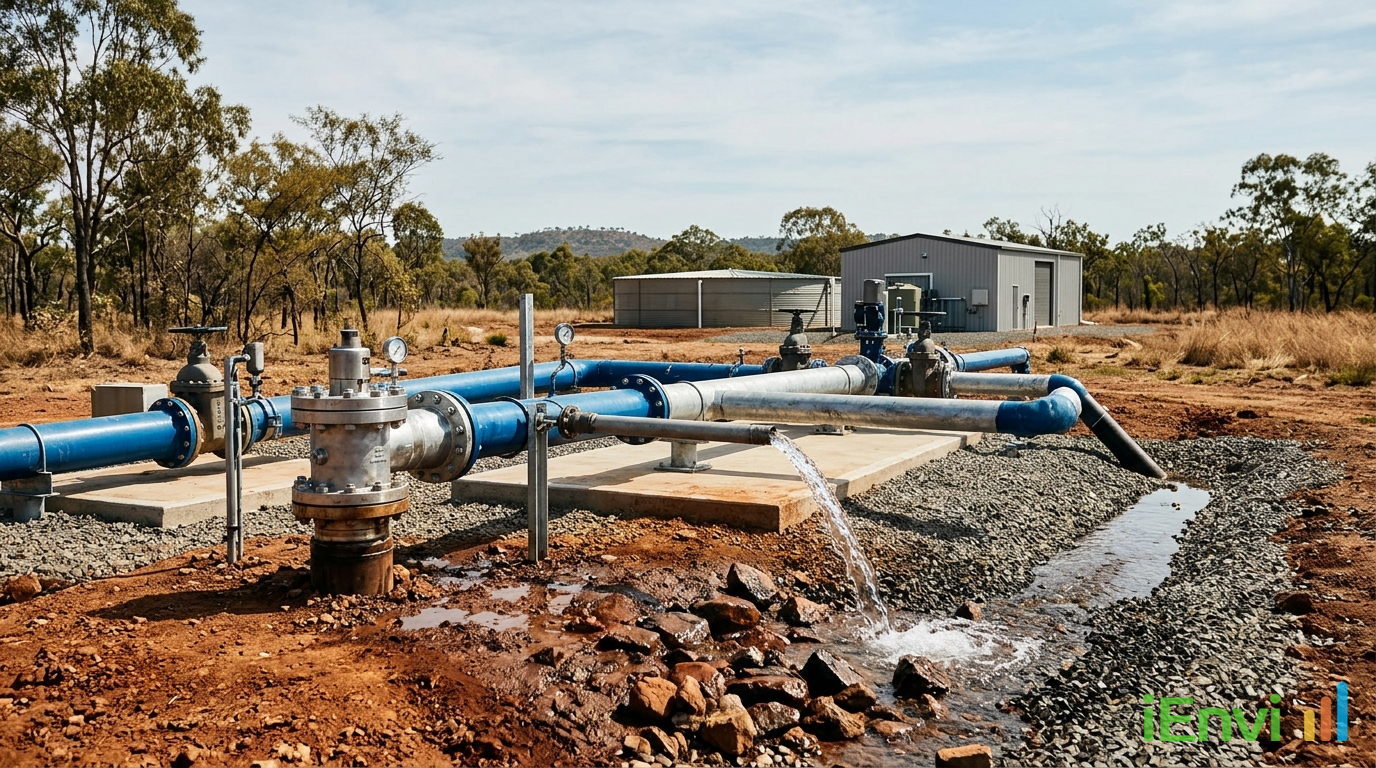
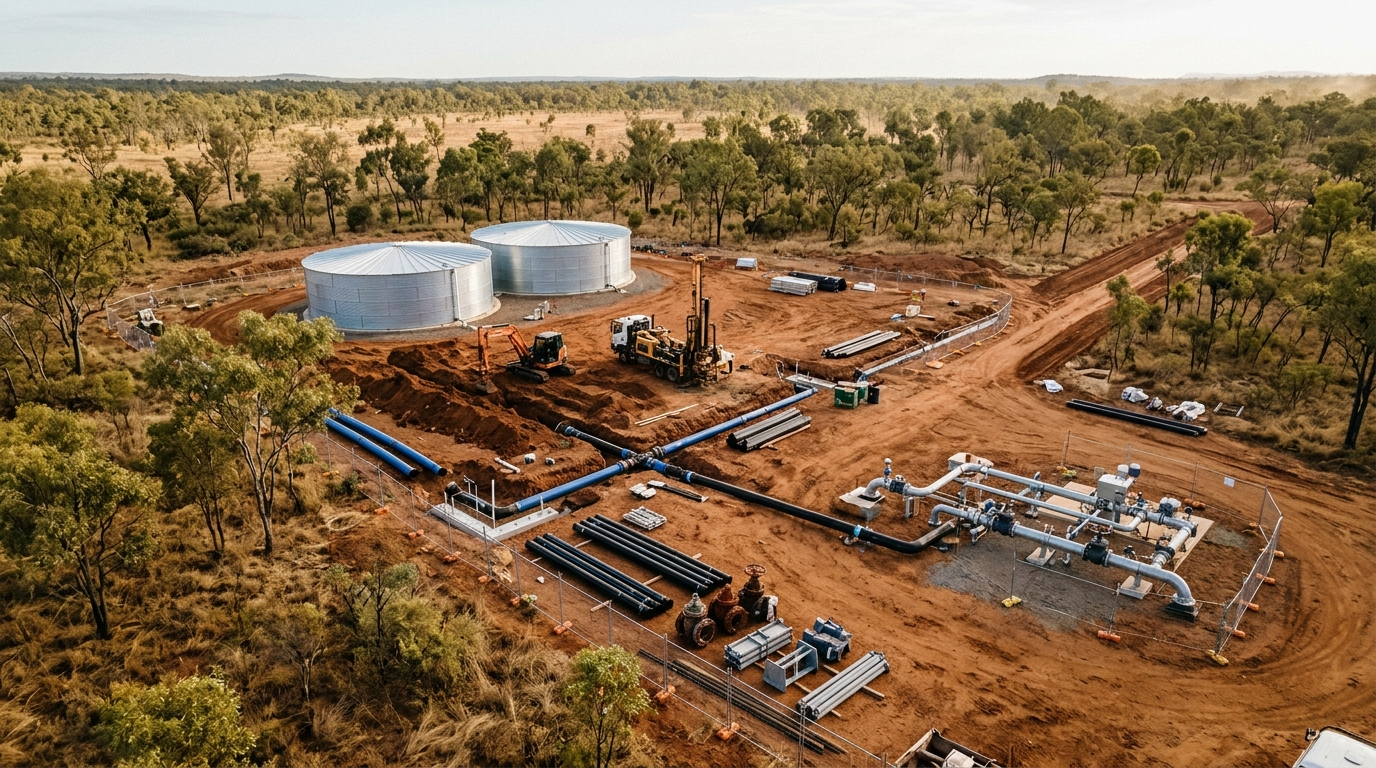
The $36 million project has three core components: planning, design and construction of a new potable water treatment plant; full rehabilitation of the town’s water supply bore to safeguard groundwater yield and quality; and network condition investigations across the raw water lines, potable reticulation and dedicated firefighting supply to detect leaks and structural defects. The initial $18 million is jointly funded by the Commonwealth, through its National Water Grid Fund, and the Queensland Government.
The project builds on interim works already completed. These emergency works covered mechanical, electrical and chemical dosing upgrades to the existing plant. They were sufficient to restore treatment performance and allow the boil water advisory to be lifted, but the media release frames them as a bridge to a permanent solution rather than a long-term fix. The difference is important: an interim upgrade to a legacy plant restores compliance but does not necessarily restore redundancy, process resilience or remaining asset life.
Bore rehabilitation on a project of this type typically follows a recognised sequence. Casing and screen integrity is usually checked first, commonly by downhole camera survey, to identify corrosion, collapse, perforation or sand ingress. The bore is then assessed for microbial biofouling, including iron-related bacteria, and for mineral scaling that reduces screen efficiency and yield. Controlled pumping tests then confirm sustainable yield against observed drawdown. In Queensland, groundwater take and use, including bore works and water allocation, falls under the Water Act 2000 (Qld).
Treatment design for a bore-fed supply must be matched to the actual raw water chemistry rather than to headline plant capacity. Under the Australian Drinking Water Guidelines (ADWG, NHMRC), common groundwater parameters include iron (aesthetic guideline 0.3 mg/L) and manganese (health guideline 0.5 mg/L, aesthetic guideline 0.1 mg/L), along with hardness. Microbial safety is the overriding priority: the ADWG specifies that E. coli should not be detected in any 100 mL sample of drinking water. Where a bore is influenced by surface water, pathogen risk increases and the plant needs a multiple barrier approach capable of handling seasonal variability in turbidity, organic loading and microbial spikes.
Australian context
In Queensland, registered drinking water service providers must operate under an approved Drinking Water Quality Management Plan (DWQMP) under the Water Supply (Safety and Reliability) Act 2008 (Qld). The DWQMP identifies hazards from catchment to tap, sets out preventive measures and defines how incidents are reported and managed. The drinking water quality standard for E. coli is set in the Public Health Regulation 2018 (Qld) under the Public Health Act 2005 (Qld), and Queensland Health protocols govern the escalation and lifting of boil water advisories. Treatment performance is assessed against the ADWG, currently the June 2025 version.
Other states run comparable risk-based frameworks. In New South Wales, drinking water suppliers must maintain a quality assurance program under the Public Health Act 2010 (NSW). Victoria requires drinking water risk management plans under the Safe Drinking Water Act 2003 (Vic), and South Australia applies a similar model under the Safe Drinking Water Act 2011 (SA). All four jurisdictions align with the ADWG framework for management of drinking water quality, which is built on preventive risk management rather than end-of-pipe testing alone. The Woorabinda experience illustrates the gap that can open between a plan on paper and the physical condition of the plant, bore and pipes that the plan relies on.
At the Commonwealth level, the National Water Grid Fund operates under the National Water Grid Authority arrangements and the National Water Grid Investment Framework. The Woorabinda commitment shows the funding pathway is being used for regional water security projects, including smaller community-scale schemes. The project is also relevant to Closing the Gap Target 9b, which aims for all Aboriginal and Torres Strait Islander households in discrete Aboriginal or Torres Strait Islander communities to receive essential services, including water, that meet or exceed the relevant jurisdictional standard by 2031.
References and related sources
- Primary source: minister.dcceew.gov.au
- Australian Drinking Water Guidelines
How iEnvi can help
iEnvi provides specialist consulting services relevant to this topic. Our team includes CEnvP Site Contamination Specialists with experience across contaminated land, groundwater, remediation, ecology, and regulatory compliance.
- iEnvi groundwater services
- iEnvi remediation and validation services
- iEnvi expert services and independent review services
This is an iEnvi Machete news summary. Prepared by iEnvi to summarise the source article for contaminated land, groundwater, remediation, approvals and site risk professionals.
Published: 18 Nov 2026
Need advice on this topic? Speak to an iEnvi expert at info@ienvi.com.au or 1300 043 684, or contact us online.
Need advice on this issue? iEnvi provides practical, senior-led environmental consulting across contaminated land, remediation, ecology and environmental risk.
Team credentials Contaminated land services Remediation services Groundwater services Talk to iEnvi