
What is an end-of-lease UPSS investigation at a Queensland service station?
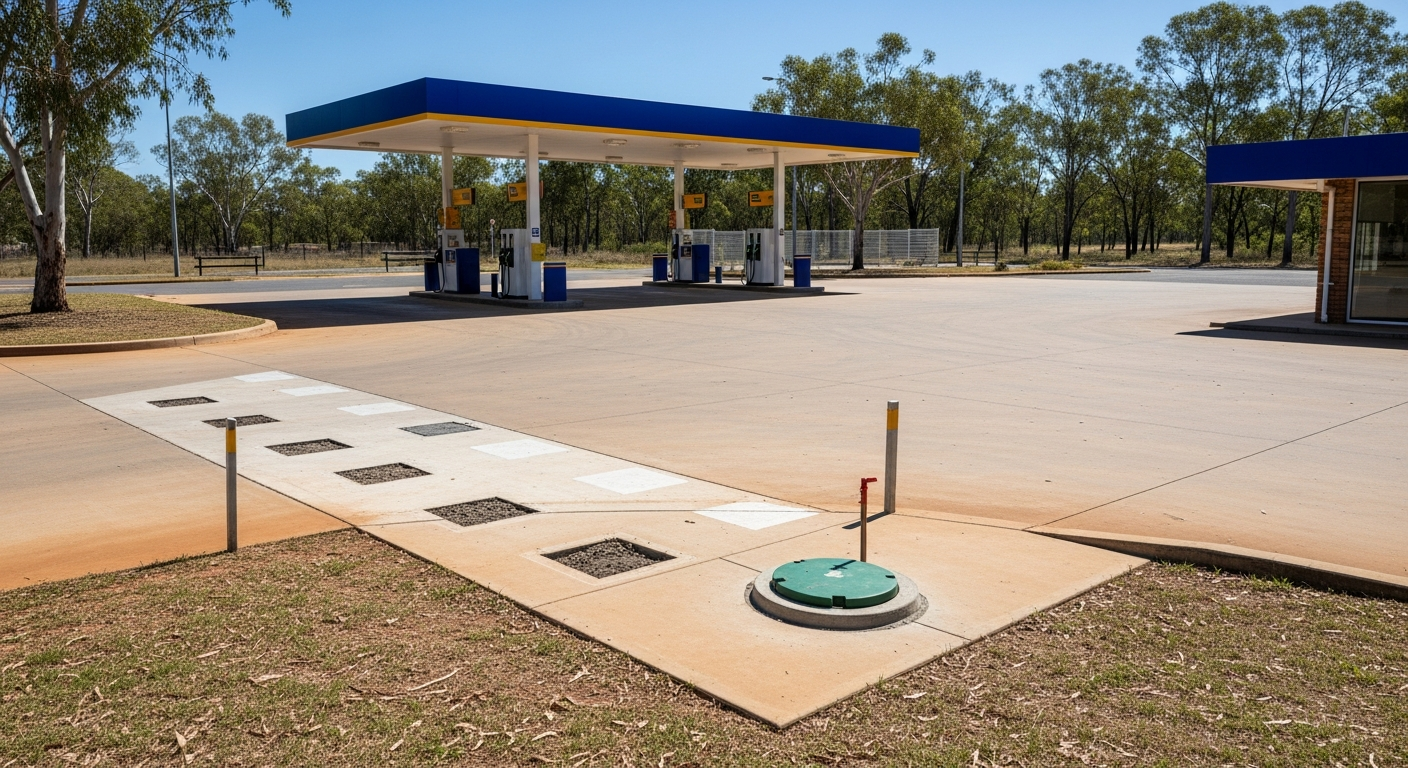
An end-of-lease UPSS (underground petroleum storage system) investigation assesses whether fuel tanks have contaminated soil and groundwater during a tenancy. It creates a documented baseline that protects the property owner and former tenant, and meets requirements under the Queensland Environmental Protection Act and the National Environment Protection (Assessment of Site Contamination) Measure.
By Michael Nicholls, Managing Director, iEnvironmental Australia. CEnvP Site Contamination Specialist.
The Problem
Owning a service station property is a significant investment. When a long-running fuel tenancy ends, questions about what has been left behind underground matter a great deal. This particular site had three large underground storage tanks, a 20-plus-year operational history, and no prior environmental investigation. The property owner needed a credible, comprehensive baseline before the site could be repositioned or re-tenanted.
Project Summary
iEnvi was engaged to complete a full UPSS investigation at the end of the fuel company’s lease. The site had three underground storage tanks with a combined capacity of approximately 165,000 litres. This included two split-compartment tanks designed to hold multiple fuel grades simultaneously. Before fieldwork began, iEnvi reviewed monthly Statistical Inventory Reconciliation Analysis (SIRA) data from January 2023 through to the investigation date. The SIRA data showed no significant leaks detected during the review period.
Fieldwork was completed in September 2024. It included drilling eight soil bores across the site, installing three groundwater monitoring wells, and collecting 29 primary soil samples. Fifteen of these were selected for laboratory analysis targeting petroleum hydrocarbons, BTEXN, PAHs, and other relevant parameters. Groundwater samples were collected from two of the three monitoring wells. The third well, drilled into a semi-confined mudstone aquifer at 7 to 9 metres depth, did not yield enough water to sample during this event due to the low permeability of the local geology.
The results were unambiguous. No petroleum hydrocarbons were detected in any soil or groundwater sample above laboratory reporting limits. No field indicators of leakage or spill events were observed. There were no odours, no soil staining, and no LNAPL. All results sat comfortably below human health and ecological Tier 1 risk criteria under the ASC NEPM.
Solution & Benefit
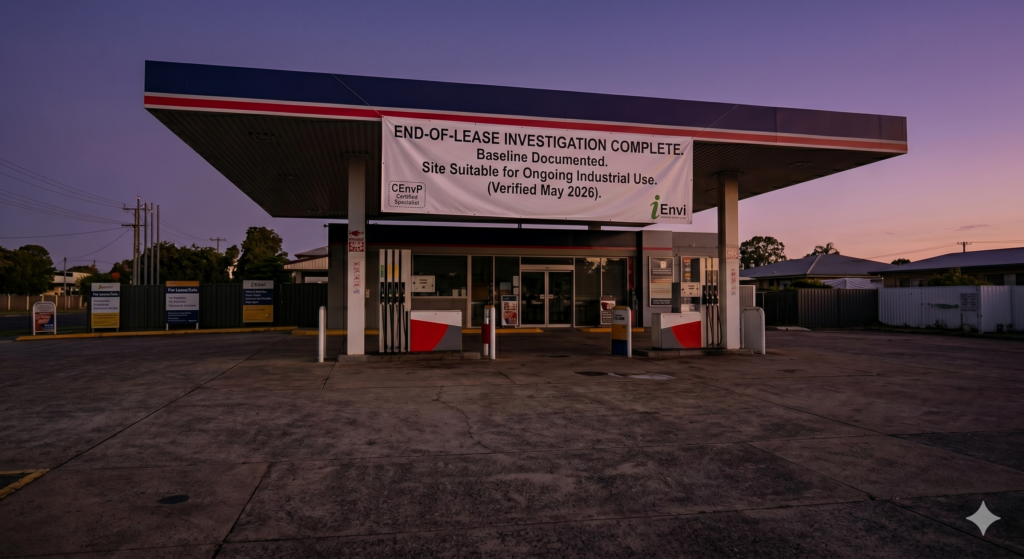
The property owner received a fully documented baseline investigation confirming the site is suitable for ongoing industrial use. The UPSS investigation met all ASC NEPM requirements and provides legal protection for both owner and former tenant. The site remains listed on the Environmental Management Register. This is standard for any Queensland service station property, and means future soil disposal will require a disposal permit, but this does not indicate contamination. With clean data on record, the owner can proceed with confidence: attract a new tenancy, pivot to alternative commercial use, or prepare a future development application, all backed by independent technical evidence.
Related services
UPSS investigation and validation | Contaminated land investigations | Talk to iEnvi
For innovative solutions that are focussed on giving you the very best outcome, contact our expert team of environmental consultants today.
Need advice on this issue? iEnvi provides practical, senior-led environmental consulting across contaminated land, remediation, ecology and environmental risk.
Contaminated land services Groundwater services Ecological assessment Environmental management Talk to iEnvi