
Overview
A landmark peer-reviewed study published on 7 May 2026 in Nature Ecology and Evolution, led by researchers at The University of Queensland (UQ) and the University of Technology Sydney (UTS), has for the first time quantitatively modelled the biodiversity costs embedded within the global nickel supply chain underpinning the clean energy transition. The research, led by Dr Jayden Hyman, finds that by 2050 approximately half of the world’s mined nickel supply is projected to originate from areas ranked in the top 10% globally for biodiversity conservation importance. The findings place a precise and confronting number on a tension that environmental practitioners have long recognised in principle but rarely been able to quantify: the decarbonisation agenda relies on critical minerals extracted from some of the planet’s most ecologically irreplaceable landscapes.
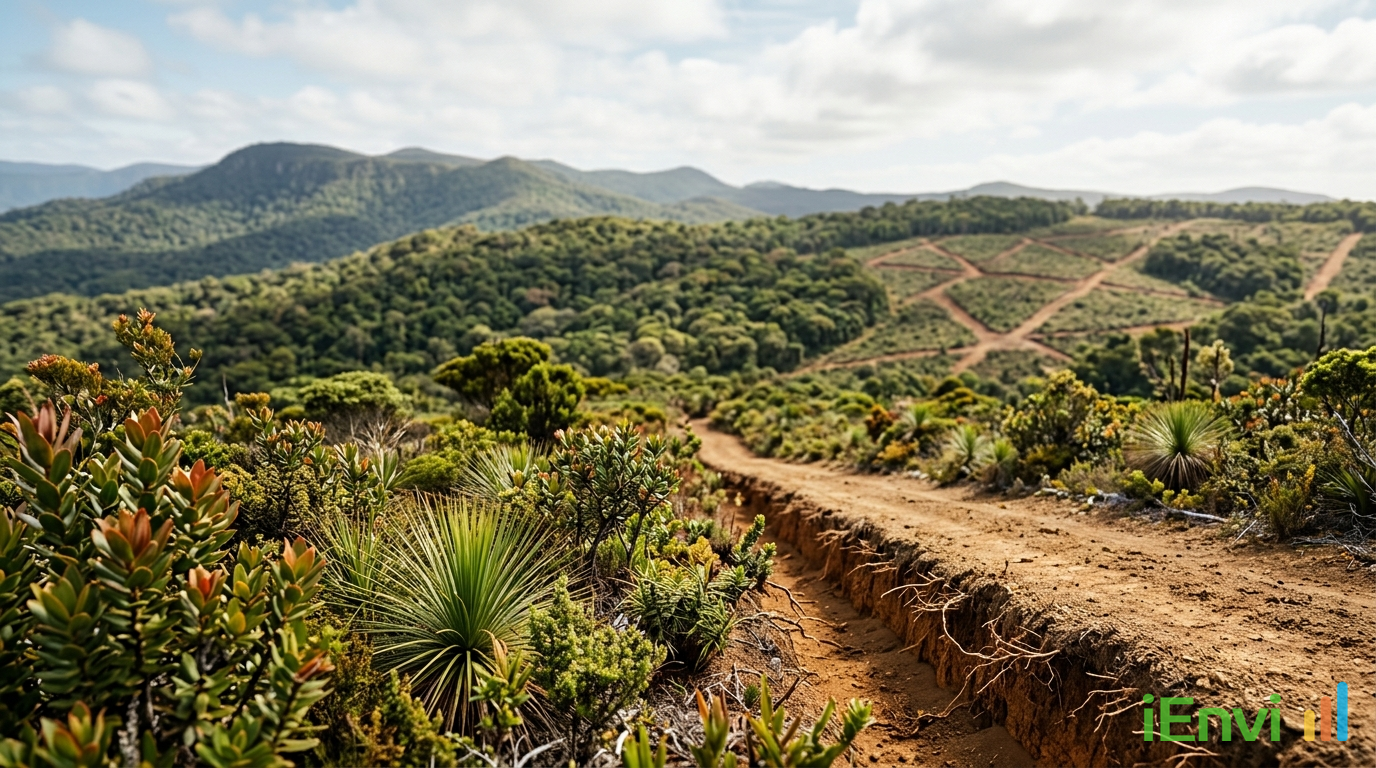
The study’s geographic focus lands squarely in Australia’s near region. The Coral Triangle, the world’s most biodiverse marine ecosystem and situated directly north of Australia, is identified as one of the primary zones where future nickel extraction pressure will concentrate. The research models that up to 83% of future nickel supply could be sourced from laterite deposits located beneath highly sensitive tropical rainforests across Southeast Asia and the Pacific. This is not a speculative worst-case scenario. It reflects demand trajectories drawn from International Energy Agency (IEA) projections for battery-grade nickel requirements as electric vehicle uptake accelerates globally through the 2030s and 2040s.
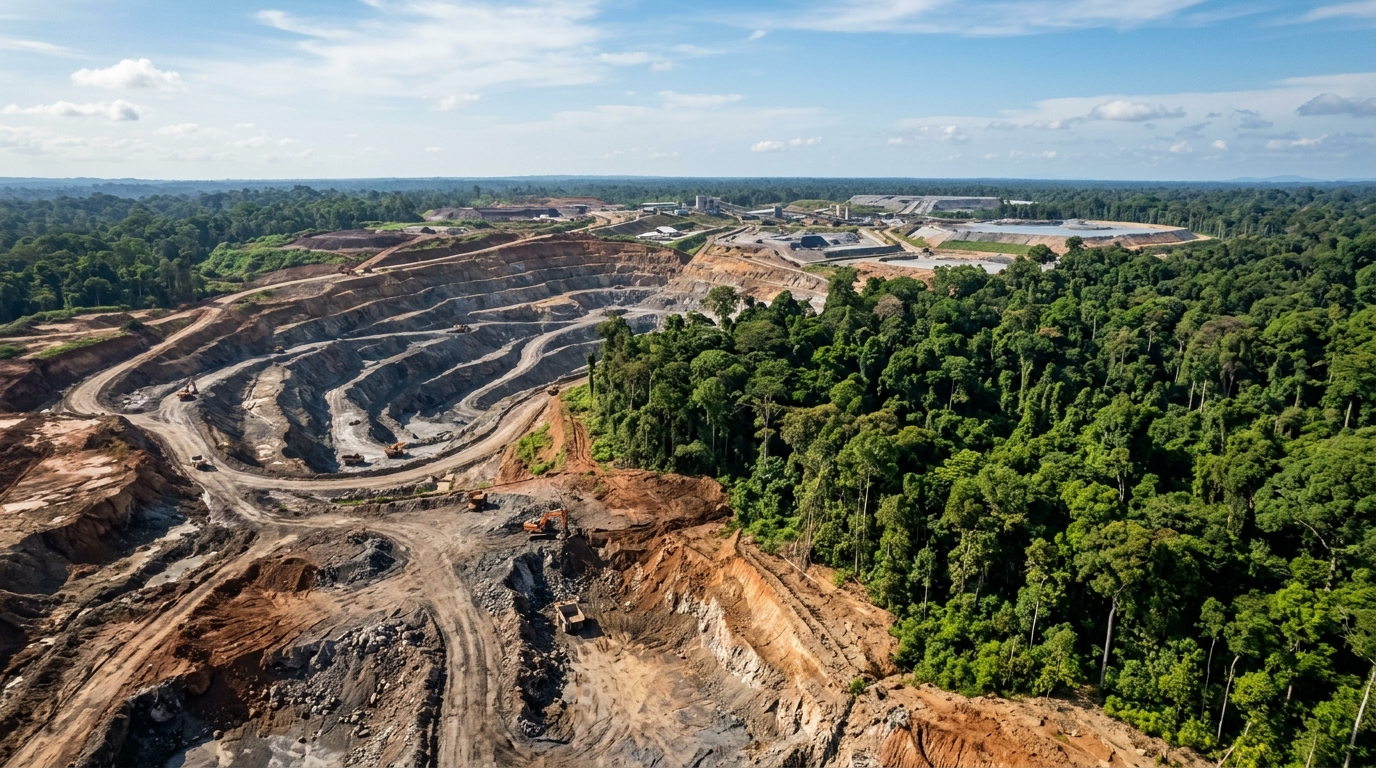
For Australian environmental professionals, ecologists, ESG advisers, and the developers and financiers they support, this study matters on two distinct levels. First, it establishes a rigorous scientific basis for the biodiversity risk embedded in critical mineral supply chains, which is directly relevant to emerging disclosure frameworks and project due diligence obligations. Second, it contextualises what is already happening in the Australian nickel sector: the flood of cheaper laterite supply from Indonesia has contributed to production suspensions and mine closures at several Australian operations, effectively offshoring both nickel output and its associated ecological impact to jurisdictions with far less regulatory scrutiny.
Key details from the UQ and UTS Nature Ecology and Evolution study
The research team built a spatial model overlaying projected nickel deposit development pathways against globally recognised biodiversity priority datasets. The core finding is that approximately 50% of global nickel supply by 2050 will be extracted from areas falling within the top decile of biodiversity conservation importance worldwide. Critically, the study distinguishes between sulphide deposits, which tend to occur in geologically older, more temperate terrains, and laterite deposits, which form in tropical weathering environments. Laterite deposits are increasingly the focus of new project development because sulphide deposits of sufficient grade are becoming harder to find and develop economically. The study found that up to 83% of future nickel sourced from laterite deposits will come from beneath or adjacent to highly sensitive tropical rainforest ecosystems, precisely because the lateralisation processes that create these deposits are concentrated in tropical regions.
The sensitivity analysis built into the model is particularly significant for policymakers and practitioners. The study calculated that excluding nickel extraction from just the top 10% of the most environmentally sensitive areas globally would generate an 18% shortfall in projected global nickel supply by 2050, relative to IEA demand scenarios. That 18% figure is not a rounding error. It represents a material gap that would need to be filled through a combination of alternative battery chemistry development, scaled-up recycling infrastructure, demand-side efficiency improvements, or acceptance of slower electric vehicle fleet transitions. The research does not prescribe which of these pathways should be pursued, but it establishes with quantitative precision that the trade-off is real and significant, and that current trajectories have not priced in the biodiversity cost.
The Coral Triangle receives specific attention in the study as a hotspot of convergent risk. This marine and coastal region spanning Indonesia, Malaysia, the Philippines, Papua New Guinea, the Solomon Islands, and Timor-Leste supports roughly 76% of the world’s coral species and 37% of all coral reef fish species. It is both a critical zone for future laterite nickel development and one of the highest-ranked areas globally for marine and terrestrial biodiversity conservation. The proximity to Australian territory, and Australia’s longstanding diplomatic and environmental engagement with Pacific Island nations, makes this a directly relevant data point for Australian-based practitioners advising on supply chain risk, project finance biodiversity conditions, or regional environmental governance.
Lead researcher Dr Jayden Hyman stated: “The decisions being made now about where to source nickel could lock in impacts for decades in some of Earth’s most biodiverse and carbon-rich ecosystems.” This framing is important from a technical standpoint because it highlights the irreversibility dimension. Tropical rainforest and reef ecosystems do not recover on decadal timescales once significantly disturbed. The carbon stock dimension is equally material: laterite deposits in tropical forests overlie some of the world’s most carbon-dense above-ground biomass, meaning that mine development in these zones carries a compounded climate and biodiversity impact that is rarely captured in standard project-level environmental assessments.
Australian context: nickel supply chains, biodiversity frameworks, and ESG disclosure
References and related sources
- Primary source: news.uq.edu.au
- https://www.uq.edu.au/news/article/2026/05/biodiversity-costs-of-clean-energys-n
- EPBC Act
How iEnvi can help
iEnvi provides specialist consulting services relevant to this topic. Our team includes CEnvP Site Contamination Specialists with experience across contaminated land, groundwater, remediation, ecology, and regulatory compliance.
- iEnvi ecology services
- iEnvi ESG services
- iEnvi contaminated land investigation services
- iEnvi remediation and validation services
- iEnvi expert services and independent review services
This is an iEnvi Machete news summary. Prepared by iEnvi to summarise the source article for contaminated land, groundwater, remediation, approvals and site risk professionals.
Published: 07 May 2026
Need advice on this topic? Speak to an iEnvi expert at info@ienvi.com.au or 1300 043 684, or contact us online.
Need advice on this issue? iEnvi provides practical, senior-led environmental consulting across contaminated land, remediation, ecology and environmental risk.
Contaminated land services Remediation services Groundwater services Ecological assessment Talk to iEnvi