
Overview
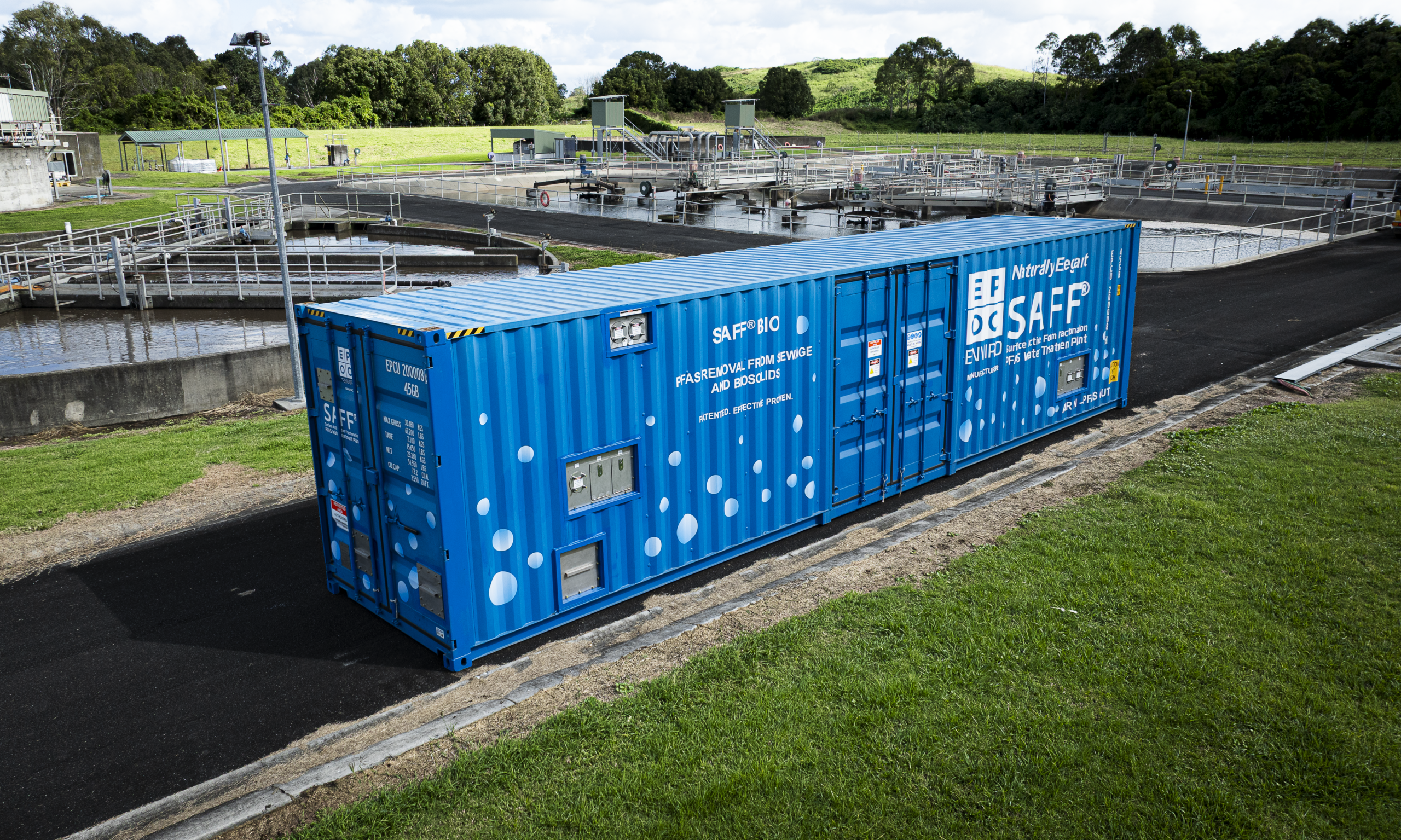
The commencement of a full-scale trial utilizing Surface-Active Foam Fractionation technology at an Australian wastewater treatment plant represents a significant milestone in addressing a critical environmental pathway. Municipal sewage treatment plants have historically acted as unintentional consolidators and environmental distribution vectors for per- and polyfluoroalkyl substances. Because these facilities were never originally designed to capture highly persistent, mobile, and soluble synthetic compounds, PFAS has historically passed through municipal treatment systems largely unobstructed, resulting in the continuous release of these contaminants into adjacent waterways and agricultural soils.
For Australian environmental professionals, land developers, local councils, and legal advisors, this development targets a major historical blind spot in catchment-wide contamination management. The traditional release of treated effluent and the land application of organic biosolids have inadvertently distributed PFAS across agricultural and urban landscapes, occasionally complicating the assessment of local contamination sources. The initiation of this full-scale trial by EPOC Enviro using their patented technology represents a proactive attempt to intercept these contaminants at a primary systemic bottleneck before they can migrate further into the wider environment.
The fundamental challenge of treating municipal wastewater lies in its highly complex, variable chemical matrix, which typically contains elevated concentrations of total organic carbon, suspended solids, industrial surfactants, and various co-contaminants. Standard physical adsorption methodologies, such as Granular Activated Carbon or Ion Exchange resins, are often rendered operationally and financially unviable in raw or primary treated sewage due to rapid competitive adsorption and mechanical fouling. Consequently, a technology capable of isolating PFAS from such high-fouling matrices without relying on extensive consumable solid media represents a critical advancement for municipal utility management and the wider environmental sector.
Key details
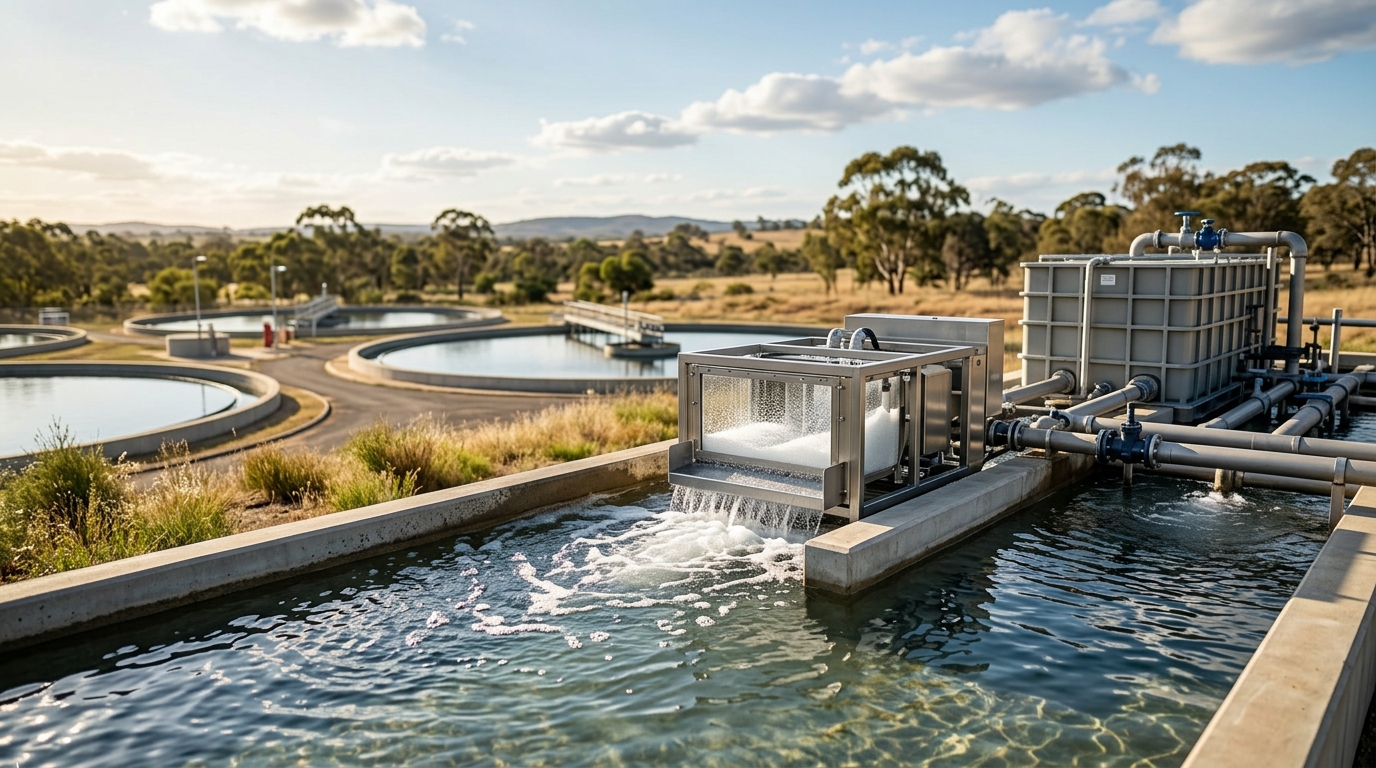
The physical-chemical mechanism of Surface-Active Foam Fractionation exploits the inherent molecular structure of per- and polyfluoroalkyl substances to achieve separation without solid chemical adsorbents. PFAS molecules are amphiphilic, possessing a hydrophobic, highly fluorinated carbon tail and a hydrophilic polar head group. When fine air bubbles are introduced into the aqueous matrix, these molecules naturally align themselves at the air-water boundary, orienting their hydrophobic tails into the air phase while their hydrophilic heads remain bound to the surrounding water. As these air bubbles rise through the water column, they carry the concentrated PFAS compounds to the surface, creating a stable, PFAS-rich foam that can be mechanically separated from the treated bulk liquid.
Technical data obtained from the preceding bench-scale evaluations of this technology demonstrated high-efficiency removal rates across a wide suite of target analytes. The preliminary testing achieved a removal rate of greater than 97 percent of the sum of 30 distinct PFAS compounds from the aqueous wastewater phase. Furthermore, the technology demonstrated greater than 99 percent removal of short-chain C6 chemistry, which historically presents a significant remediation challenge because short-chain compounds are highly soluble, mobile, and less susceptible to traditional physical adsorption techniques than their long-chain counterparts.
Crucially, the performance metrics extended to the solid phase of municipal wastewater processing, which has historically been a primary repository for accumulated fluorinated compounds. The evaluation achieved greater than 80 percent removal of the sum of 30 PFAS compounds directly from the solid biosolids phase. This targeted extraction from the sludge stream before drying and subsequent land application is highly significant for waste management authorities seeking to mitigate the long-term accumulation of contaminants in agricultural soils.
Practitioners must recognize that this technology operates as a physical separation and concentration system rather than a destructive destruction process. The system does not break down the ultra-strong carbon-fluorine bonds that characterise these substances. Instead, it concentrates the target chemicals from vast volumes of municipal sewage into a highly concentrated, low-volume foam reject stream. This highly concentrated liquid waste must then be managed through specialized downstream pathways, such as high-temperature incineration, supercritical water oxidation, or advanced electrochemical destruction, to permanently destroy the synthetic compounds.

Australian context
This full-scale trial occurs at a time of escalating regulatory pressure in Australia, driven by the implementation of the PFAS National Environmental Management Plan, commonly referred to as the PFAS NEMP, with the current iteration being PFAS NEMP 3.0. This national framework outlines highly stringent screening levels for aquatic ecosystems, municipal drinking water, and the commercial reuse of agricultural soil and biosolids. State environmental protection authorities, including the New South Wales Environment Protection Authority, the Queensland Department of Environment, Science and Innovation, Victoria EPA, and the South Australian EPA, are increasingly enforcing these national guidelines, leaving water utilities with little choice but to evaluate advanced treatment technologies.
The trial is highly relevant to established Australian environmental assessment frameworks, such as the National Environment Protection Measure 1999, specifically the 2013 amendment. Under these guidelines, the protection of ecosystems requires adherence to conservative water quality guidelines, such as the default guideline values defined under the Australian and New Zealand Guidelines for Fresh and Marine Water Quality. For example, the default guideline value for PFOS of 0.00023 micrograms per litre, which translates to 0.23 nanograms per litre, for the protection of 99 percent of species, is exceptionally difficult to meet using standard municipal sewage treatment techniques. The adoption of localized separation technologies is rapidly becoming the only viable pathway for water authorities discharging into sensitive, high-value aquatic environments.
Furthermore, the outcomes of this trial have significant ramifications for the circular economy and regional water security initiatives across Australia. Many state governments have established ambitious targets for the utilisation of recycled water for municipal irrigation, industrial processing, and agricultural production, alongside the beneficial land application of treated biosolids. The presence of persistent synthetic chemicals has threatened to derail these circular economy programmes, as regulators restrict the application of biosolids containing PFAS above conservative threshold limits due to concerns regarding plant uptake, bioaccumulation in livestock, and subsequent human exposure. Validating a commercial-scale separation process could preserve these recycling programmes by purging the contaminant load prior to distribution.
Practical implications
For site contamination consultants and environmental auditors, the potential success of upstream wastewater fractionation directly impacts the development of conceptual site models. Historically, consultants assessing sites adjacent to municipal infrastructure or downgradient of agricultural land irrigated with recycled water have had to account for diffuse, regional inputs of PFAS that complicate the delineation of localized, site-specific source zones. By implementing source-reduction technologies at municipal wastewater plants, the ongoing contribution of diffuse municipal contamination is mitigated, allowing for clearer regulatory attribution of historic on-site releases during detailed site investigations.
For property developers and corporate entities undertaking transactional due diligence, the regional presence of historically applied biosolids remains a legacy liability under state-based contaminated land frameworks. Because this technology is designed to treat ongoing wastewater streams, it does not remediate soils or shallow groundwater systems that have already been impacted by decades of historical effluent discharge or biosolids application. Environmental consultants advising buyers must continue to prioritize comprehensive historical research regarding recycled water usage and biosolids application rates, as these legacy impacts will continue to require management under environmental protection acts and planning regimes.
Finally, the adoption of separation technologies at scale introduces new risk-management variables concerning waste classification and chain of custody. The generation of a highly concentrated foam reject stream containing elevated levels of hazardous synthetic chemicals requires strict adherence to state waste transport regulations. Practitioners must ensure that the downstream receiving facility possesses the appropriate environmental licensing, technical capabilities, and destruction efficiencies to completely neutralise the concentrated waste. Failure to verify the ultimate fate of this concentrated reject stream exposes waste generators to substantial regulatory, financial, and reputational liabilities under modern environmental duty of care legislation.
Article Summary
From a senior site contamination perspective across Queensland, New South Wales, Victoria, and South Australia, this trial highlights a critical reality that developers and their legal counsel consistently overlook during transaction negotiations: municipal wastewater pathways are a massive source of regional PFAS liability. In our experience, when delivering an environmental due diligence report or a Detailed Site Investigation, consultants frequently attribute PFAS detections solely to localized on-site historical activities. In reality, the diffuse migration of PFAS from effluent irrigation and historical biosolids application is often the primary driver.
With the strict mandates of PFAS NEMP 3.0 now in play, this development must immediately shift how we structure Remediation Action Plans and draft transactional warranties. When advising on projects where municipal pathways intersect with development boundaries, we must move away from traditional, highly conservative assumptions about background concentrations. We must design sampling programmes with highly sensitive target detection limits to distinguish regional diffuse contamination from localized sources. Additionally, when evaluating remediation options for site-derived wastewater, we can no longer rely on standard solid media like Granular Activated Carbon, which rapidly fouls in high-organic matrices. We must instead prioritize active, physical separation technologies that mitigate downstream waste disposal liabilities.
References and related sources
- Primary source: www.globenewswire.com
- https://www.globenewswire.com/news-release/2026/05/11/3291913/0/en/saff-technolo
- https://epocenviro.com/applications/sewage/
- PFAS National Environmental Management Plan (NEMP)
- NEPM Assessment of Site Contamination
How iEnvi can help
iEnvi provides specialist consulting services relevant to this topic. Our team includes CEnvP Site Contamination Specialists with experience across contaminated land, groundwater, remediation, ecology, and regulatory compliance.
- iEnvi remediation services
- iEnvi PFAS services
- iEnvi expert services and independent review services
This is an iEnvi Machete news summary. Prepared by iEnvi to summarise the source article for contaminated land, groundwater, remediation, approvals and site risk professionals.
Published: 21 May 2026
Need advice on this topic? Speak to an iEnvi expert at info@ienvi.com.au or 1300 043 684, or contact us online.
Need advice on this issue? iEnvi provides practical, senior-led environmental consulting across contaminated land, remediation, ecology and environmental risk.
DSI services Team credentials Environmental management plans Contaminated land advice Talk to iEnvi