
Overview
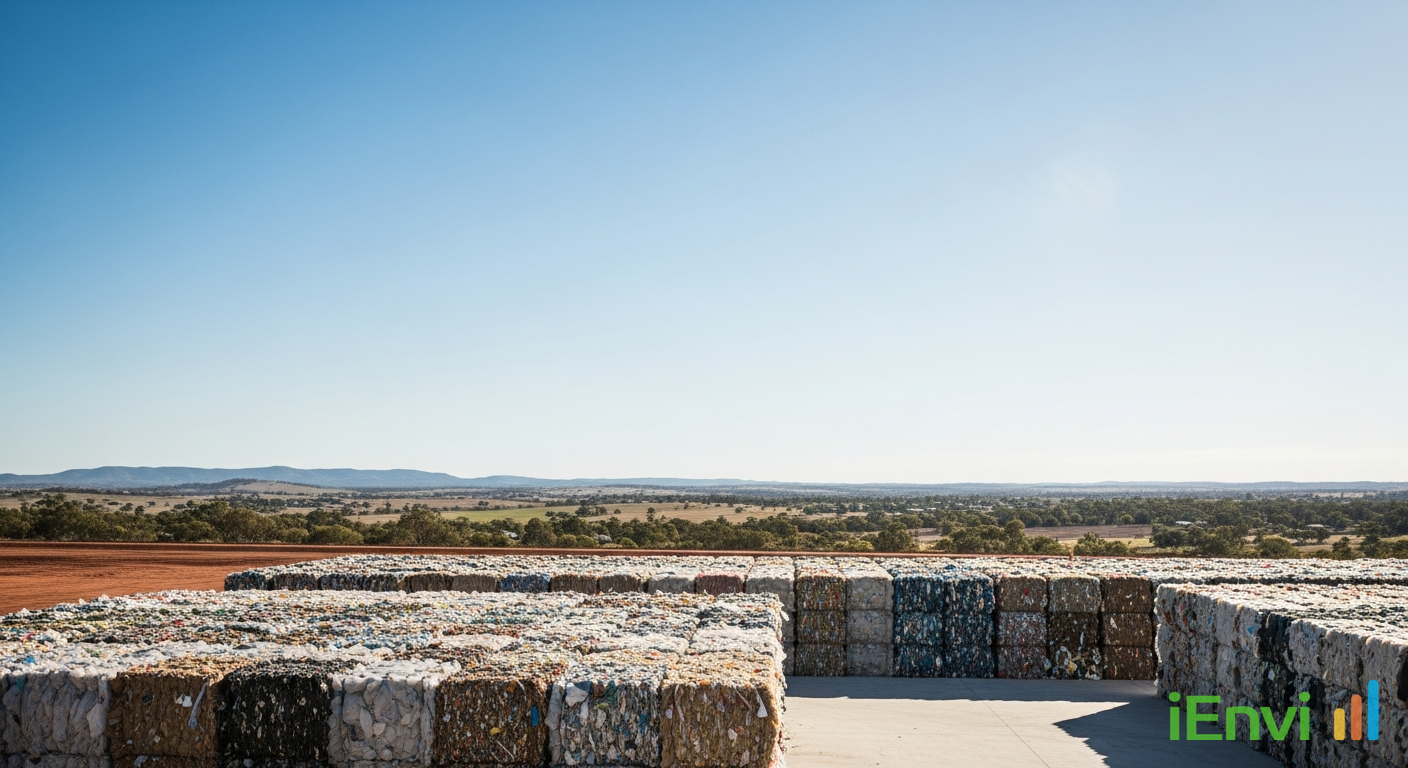
On 22 July 2024, the Federal Government and the Western Australian Government jointly announced more than $3.7 million in Recycling Modernisation Fund (RMF) grants to be distributed across 16 regional and remote local governments in Western Australia. The funding targets the collection, sorting, storage, and processing of materials directly affected by Australia’s waste export bans, specifically plastics, paper, cardboard, and whole used tyres. This announcement represents one of the more substantial injections of Commonwealth recycling infrastructure funding into regional WA under the RMF program, which is established under the Recycling and Waste Reduction Act 2020 (Cth).
For environmental professionals, waste management engineers, and the clients they advise, this funding matters because it directly addresses one of the most persistent structural failures in Australia’s regional circular economy: the absence of cost-effective, local recovery pathways. Regional and remote councils have historically been caught between federal obligations to divert material from landfill and the sheer cost of transporting sorted recyclables hundreds of kilometres to metropolitan processing facilities. The grants funded under this round are specifically designed to close that gap by upgrading physical infrastructure at transfer stations and waste management facilities serving communities across WA’s Kimberley, South West, Mid West, and Great Southern regions.
Collectively, the 14 infrastructure projects already delivered under the RMF in Western Australia have expanded the state’s recycling capacity by 237,700 tonnes annually. The new round of grants extends that expansion further and signals continued Commonwealth commitment to the national waste policy framework in the lead-up to 2030 targets. For practitioners advising councils, developers with regional project footprints, or commercial operators subject to producer responsibility obligations, understanding the scope, structure, and implications of this funding is a practical necessity rather than background reading.
Key details of the $3.7 million RMF grant round for regional WA
The $3.7 million announced on 22 July 2024 is distributed across 16 regional and remote local governments in Western Australia, with individual grant amounts reflecting the scale and complexity of proposed infrastructure upgrades. The largest single allocation in this round is $576,308 to the Shire of Derby / West Kimberley, which will be used to upgrade Steel Street to an all-weather standard. Steel Street is the sole access road to the Derby Waste Management Facility, and without an all-weather surface, the facility is effectively inaccessible during the wet season, rendering waste diversion and resource recovery activities impossible for months at a time each year. This is not a minor logistical inconvenience; it is a structural barrier to regulatory compliance and operational continuity.
The City of Albany has been allocated $220,640 to expand regional processing infrastructure at the Hanrahan Road Waste Facility, specifically to handle cardboard, plastics, and expanded polystyrene. The Shire of Manjimup has received $144,000 to install advanced receiving mechanisms across transfer stations at Manjimup, Pemberton, Northcliffe, and Walpole, with the stated purpose of increasing recovery rates for tyres, plastics, and cardboard across multiple facilities simultaneously. The City of Greater Geraldton’s allocation of $117,000 will double cardboard storage capacity at the Meru Waste Disposal Facility, a targeted investment in throughput rather than new material streams. The Shire of Broome has been granted $114,330 to build infrastructure upgrades focused on plastic collection, storage, and transport efficiency at the Broome Waste Management Facility.
The RMF itself is a Commonwealth program established under the Recycling and Waste Reduction Act 2020 (Cth), which introduced Australia’s phased waste export bans. Those bans prohibit the export of unprocessed or low-value mixed materials, including mixed waste plastics, mixed paper and cardboard, glass, and whole used tyres. The ban on whole used tyres took effect on 1 January 2021, mixed paper and cardboard on 1 July 2021, and mixed waste plastics and glass on 1 July 2022. These bans created immediate downstream pressure on regional waste management systems that had previously relied on export as a de facto disposal pathway. The RMF grants are the policy response to that pressure, providing capital to build the processing and storage capacity needed to manage these materials domestically.
The WA-specific policy context is provided by the Waste Avoidance and Resource Recovery Act 2007 (WA) and the Waste Avoidance and Resource Recovery Strategy 2030 (WA), which sets targets for increasing resource recovery and reducing per capita waste to landfill across the state. The Strategy 2030 establishes a target of 70 per cent diversion of material from landfill by 2030, a figure that is functionally unachievable in regional WA without the kind of infrastructure investment this RMF round represents. The Waste Authority of Western Australia, established under the WA Act, is the principal body responsible for administering waste policy and oversight in the state, and its frameworks inform the strategic direction of grant expenditure.
Australian context: waste export bans, regional compliance gaps, and the national resource recovery framework
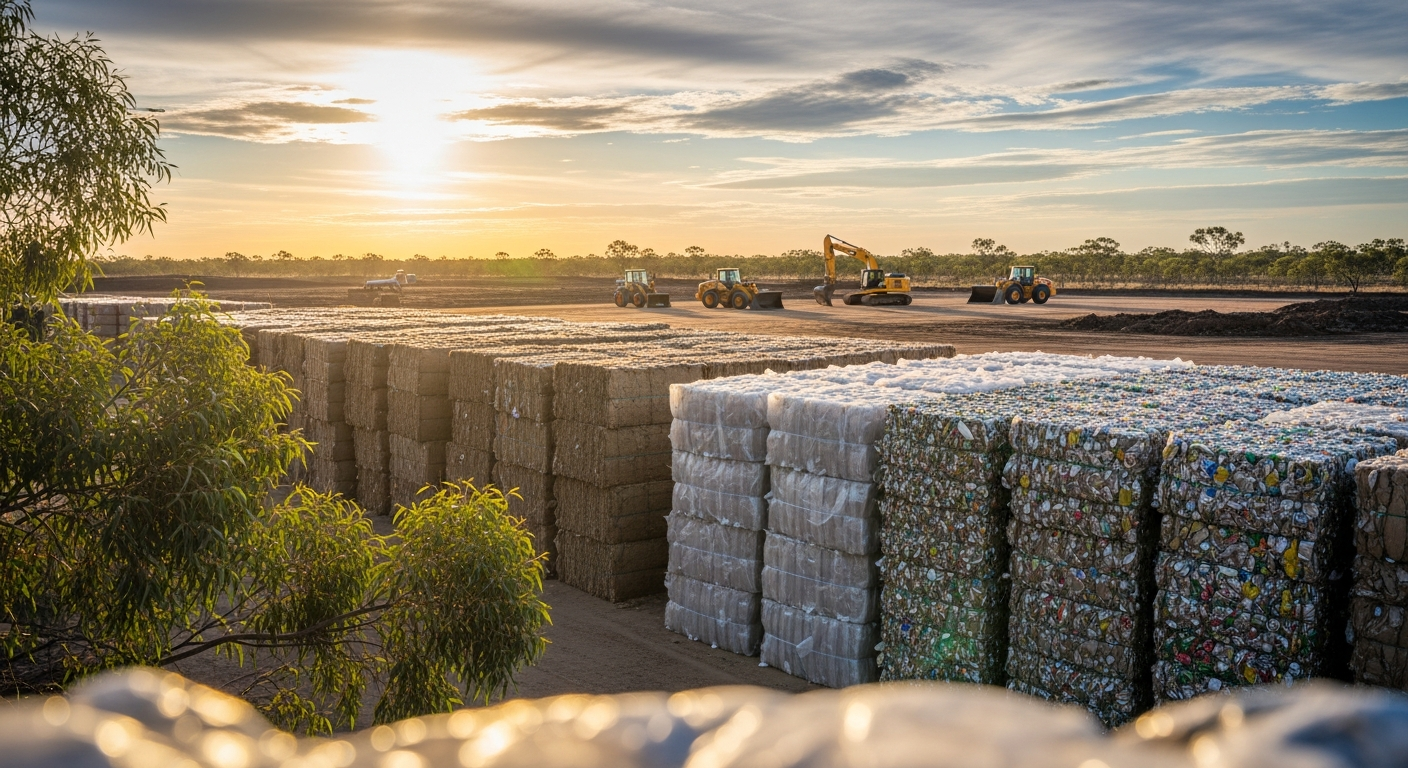
Australia’s waste export bans under the Recycling and Waste Reduction Act 2020 (Cth) fundamentally restructured the economics of resource recovery for every local government and commercial waste operator in the country. Prior to the bans, significant volumes of mixed recyclables, particularly plastics, paper, and cardboard, were exported to Asian markets for processing, effectively outsourcing the domestic infrastructure investment that responsible resource recovery requires. The withdrawal of those markets, accelerated by China’s National Sword policy from 2018 and then formalised through the export bans, exposed the extent to which Australia’s recycling system had been built on access to offshore processing rather than domestic capacity. For regional councils in WA, that exposure was acute: unlike metropolitan areas with access to large-scale material recovery facilities, regional operators had limited alternatives when export pathways closed.
References and related sources
- Primary source: minister.dcceew.gov.au
- wasteauthority.wa.gov.au
How iEnvi can help
iEnvi provides specialist consulting services relevant to this topic. Our team includes CEnvP Site Contamination Specialists with experience across contaminated land, groundwater, remediation, ecology, and regulatory compliance.
- iEnvi contaminated land investigation services
- iEnvi remediation and validation services
- iEnvi expert services and independent review services
This is an iEnvi Machete news summary. Prepared by iEnvi to summarise the source article for contaminated land, groundwater, remediation, approvals and site risk professionals.
Published: 23 Jul 2026
Need advice on this topic? Speak to an iEnvi expert at info@ienvi.com.au or 1300 043 684, or contact us online.
Need advice on this issue? iEnvi provides practical, senior-led environmental consulting across contaminated land, remediation, ecology and environmental risk.
Team credentials Contaminated land services Remediation services Groundwater services Talk to iEnvi