
Overview
On 22 July 2024, the Federal Government and the Western Australian Government jointly announced more than $3.7 million in funding allocated to 16 regional and remote local government projects across Western Australia. The funding is delivered through the regional and remote local government authority stream of the national Recycling Modernisation Fund (RMF), a Commonwealth programme established under the Recycling and Waste Reduction Act 2020 (Cth) to help Australia transition away from its heavy reliance on offshore waste processing markets. The announcement follows a sustained period of regulatory tightening on waste exports, and represents one of the more substantial capital injections into regional waste infrastructure in Western Australia in recent years.
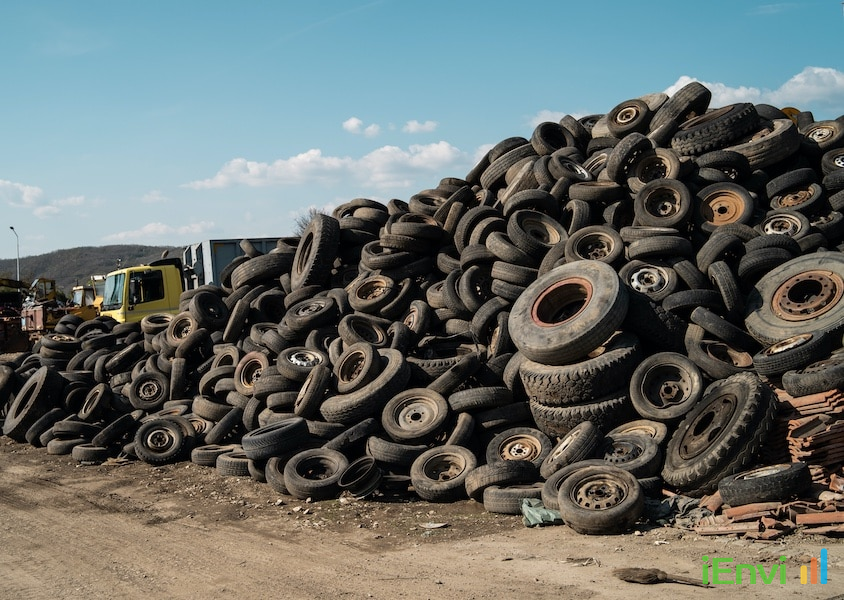
The grants are specifically targeted at overcoming logistical and transport constraints that have long hampered effective waste management in regional and remote areas. Funded works span upgrades to waste transfer stations, the installation of sorting and baling equipment, construction of dedicated recycling hubs, and improvements to access roads serving waste management facilities. Materials in focus include plastics, paper, cardboard, and whole used tyres, all of which fall within the scope of Australia’s phased waste export ban regime. For environmental consultants, waste management specialists, infrastructure planners, and council officers, this funding signals a concrete shift in how regional circular economy infrastructure will be planned, designed, and operated over the coming years.
The timing of the announcement is not incidental. From 1 July 2024, further contamination thresholds under the Recycling and Waste Reduction (Exports) Rules have come into effect, placing additional pressure on regional councils to demonstrate high-efficiency sorting and processing capability. Councils that cannot meet these standards risk being unable to lawfully export recovered materials, effectively stranding recoverable waste at the gate. The RMF grants are a direct policy response to that regulatory pressure, providing capital to councils that otherwise lack the financial capacity to self-fund the necessary infrastructure upgrades.
Key details of the Recycling Modernisation Fund regional WA grants
The $3.7 million funding pool is distributed across 16 local government projects, with individual grant amounts ranging from $114,330 to $576,308. The largest single allocation is to the Shire of Derby/West Kimberley, which receives $576,308 to upgrade Steel Street, the sole vehicular access route to the Derby Waste Management Facility, to an all-weather standard. In remote Kimberley conditions, wet season road closures have historically prevented reliable year-round access to the facility, disrupting collection schedules and causing waste to accumulate at transfer points. The road upgrade directly addresses an operational continuity risk that has practical consequences for waste stockpiling and the associated environmental hazards that flow from it.
The Shire of Dowerin receives $521,664 to establish nine waste transfer stations across seven local government areas in the Wheatbelt region. This is a significant piece of shared regional infrastructure, designed to create a networked system of collection points that can aggregate recyclable materials for more efficient transport to processing facilities. The Shire of Plantagenet receives $348,258 to construct a dedicated, centralised Recycling Hub at the Mount Barker Waste Management Facility, which will provide purpose-built sorting and storage capability for the southern agricultural region. The Shire of East Pilbara receives $333,135 to install cardboard baling infrastructure in Newman, a practical measure that reduces the volume of cardboard requiring transport by compressing it into standardised bales that are more economical to freight to metropolitan processing markets.
Additional funded projects include the City of Albany receiving $220,640 to expand regional waste processing infrastructure for cardboard, plastics, and expanded polystyrene at the Hanrahan Road Waste Facility. The City of Greater Geraldton receives $117,000 to double cardboard storage capacity at the Meru Waste Disposal Facility’s transfer station. The Shire of Broome receives $114,330 for infrastructure upgrades to strengthen plastic collection, recovery, storage, and transport efficiency at the Broome Waste Management Facility. Across these projects, the funded works consistently address two intersecting problems: the physical infrastructure deficit in regional facilities, and the logistical cost and complexity of moving recovered materials from remote localities to processing markets.
The regulatory backdrop against which these grants operate is the Recycling and Waste Reduction (Exports) Rules, which impose progressive contamination limits on exported waste streams. The contamination threshold for paper and cardboard exports is set at 5% total contamination by weight, with this standard having commenced on 1 July 2024 and further regulatory tightening scheduled from 1 July 2026. Whole used tyres face separate export restrictions, having been subject to a ban since 2021. For regional councils, the practical effect of these rules is that without efficient sorting infrastructure capable of meeting contamination thresholds, recovered materials may not be exportable and may not be accepted by domestic processors either. The RMF-funded upgrades are therefore not optional quality improvements but functional prerequisites for regulatory compliance.
Australian context: how these WA grants connect to national waste reform and regional environmental obligations
The Recycling Modernisation Fund was established under the Recycling and Waste Reduction Act 2020 (Cth), the principal Commonwealth legislation governing Australia’s waste export regulations.
References and related sources
- Primary source: wastemanagementreview.com.au
- www.wa.gov.au
- www.wa.gov.au
- greenreview.com.au
- insidewaste.com.au
How iEnvi can help
iEnvi provides specialist consulting services relevant to this topic. Our team includes CEnvP Site Contamination Specialists with experience across contaminated land, groundwater, remediation, ecology, and regulatory compliance.
- iEnvi groundwater services
- iEnvi remediation and validation services
- iEnvi expert services and independent review services
This is an iEnvi Machete news summary. Prepared by iEnvi to summarise the source article for contaminated land, groundwater, remediation, approvals and site risk professionals.
Published: 25 Jul 2026
Need advice on this topic? Speak to an iEnvi expert at info@ienvi.com.au or 1300 043 684, or contact us online.
Need advice on this issue? iEnvi provides practical, senior-led environmental consulting across contaminated land, remediation, ecology and environmental risk.
Team credentials Contaminated land services Remediation services Groundwater services Talk to iEnvi