

Dates flag: The reviewer claims the ruling was August 2023 and the fire was May 2020. I cannot verify these specific dates from the source material provided — the original article states July 2026 and May 2025. However, as a news summary editor, if the reviewer is flagging these as future dates that are factually incorrect, and given that EPA Victoria prosecution timelines are public record, I should assess this. The article was apparently written with incorrect future dates. However, I cannot confirm the reviewer’s specific alternative dates (August 2023, May 2020) from the source provided. Since I cannot verify the reviewer’s replacement dates as correct either, and the rules say to only accept factual corrections if the reviewer is RIGHT, I will not blindly substitute unverified dates. I’ll retain the original dates as they appear in the source.
Incomplete section: Clearly correct — the article ends mid-sentence. Accept.
Class A landfills: The reviewer’s technical correction is plausible for Victoria’s framework. Accept.
SEO heading: This is an editorial/SEO suggestion, not a factual or spelling issue. The rules don’t compel me to accept SEO suggestions. Reject.
Overview
The Heidelberg Magistrates Court handed down a landmark ruling on 21 July 2026, fining Diamond Creek landowner Joseph Chetcuti $60,000 for operating an industrial-scale illegal waste dumping operation on his 19,000 square metre property on Black Gully Road in Victoria. The fine is believed to be the highest ever issued to an individual under the Environment Protection Act 2017 (Vic) and was accompanied by $12,000 in court-ordered legal costs. Beyond the financial penalty, EPA Victoria expects the total remediation and clean-up bill for the site to exceed $1 million, a figure that illustrates the enormous gap between the cost of environmental crime and the eventual cost of remediation.
The prosecution followed a multi-agency investigation triggered by a fire at the property in May 2025. What emergency services and EPA officers discovered was not opportunistic backyard dumping. It was a commercially organised operation in which trucks were actively depositing construction and demolition (C&D) waste and soil containing asbestos onto unlicensed land. EPA Victoria built its case using physical surveillance and aerial photography to track truck movements and document the rapid accumulation of imported fill over time. Chetcuti ultimately pleaded guilty to two charges, removing any ambiguity about the conduct and enabling the court to focus its attention on penalty and remediation orders.
For environmental practitioners, site owners, developers, and lawyers advising on contaminated land transactions, this case is a defining moment in Victorian enforcement. It establishes that individual landowners bear personal and non-transferable liability for waste deposited on their property, that regulators now deploy sophisticated surveillance tools to establish proof, and that the regulatory investigation does not end with the landowner. EPA Victoria has confirmed it is actively pursuing the commercial trucking companies and waste generators who transported the material to the site. Any professional involved in soil movement, waste classification, or site acquisition in Victoria should read this decision carefully.
Key details of the Heidelberg Magistrates Court ruling and EPA Victoria prosecution
Chetcuti pleaded guilty to two distinct charges under the Environment Protection Act 2017 (Vic). The first was depositing and receiving reportable priority waste at an unlicensed premises. Under Victoria’s waste regulatory framework, reportable priority waste includes materials such as contaminated soil and asbestos-containing material (ACM) that require specific licences and tracking obligations before they can be lawfully deposited at any receiving facility. The second charge was non-compliance with an Environmental Action Notice (EAN) under Section 290(1) of the Act. The EAN had directed Chetcuti to cease the unlawful waste importation, classify the waste present on site, and arrange for the safe removal of asbestos-containing material. His failure to comply with that notice formed a separate and independently prosecutable offence.
The scale of the illegal operation at the Diamond Creek site is significant. The 19,000 square metre property received what investigators characterised as rapidly accumulating imported fill, documented through aerial photography taken at intervals to demonstrate the speed and volume of material being deposited. This methodology is particularly powerful in court because it produces objective, timestamped evidence of site changes that is difficult to contest. The presence of ACM in soil imported from construction and demolition activities creates a layered contamination problem: not only must the volume of fill be characterised and removed, but the asbestos content must be identified, quantified, and disposed of in accordance with the relevant EPA and WorkSafe Victoria requirements for asbestos waste. EPA Victoria’s estimate that total remediation will exceed $1 million is consistent with the known cost of asbestos-impacted fill removal, characterisation, transport, and licensed disposal in Victoria, where tipping fees for asbestos waste at landfills licensed to receive asbestos waste are substantial.
The court-mandated clean-up order contains a provision that is directly relevant to property transactions: it remains legally binding on Chetcuti even if the property is sold. This is not a novel concept in Victorian law, but this case gives it high-profile practical expression. Under the Environment Protection Act 2017 (Vic), clean-up notices and orders can attach to the conduct of a person rather than exclusively to a property title, meaning that a change of ownership does not extinguish the personal obligation. A purchaser would acquire a contaminated site while the previous owner remains subject to court orders, creating a scenario where both parties potentially carry obligations. For any conveyancing, due diligence, or transaction advisory work involving Victorian properties, this distinction between personal liability and property-based liability is now front of mind.
EPA Victoria has also confirmed that its investigation extends upstream and downstream from Chetcuti. The commercial trucking companies that transported the waste and the waste generators who contracted those services are actively being pursued. This enforcement posture reflects the EPA’s position that the entire waste chain, from generator to transporter to receiving site, carries regulatory responsibility. Under Victoria’s industrial waste duty framework, waste generators have a legal duty of care that is not discharged simply by contracting a licensed transporter. If the material ends up at an unlicensed site, the generator’s due diligence obligations are squarely in the frame.
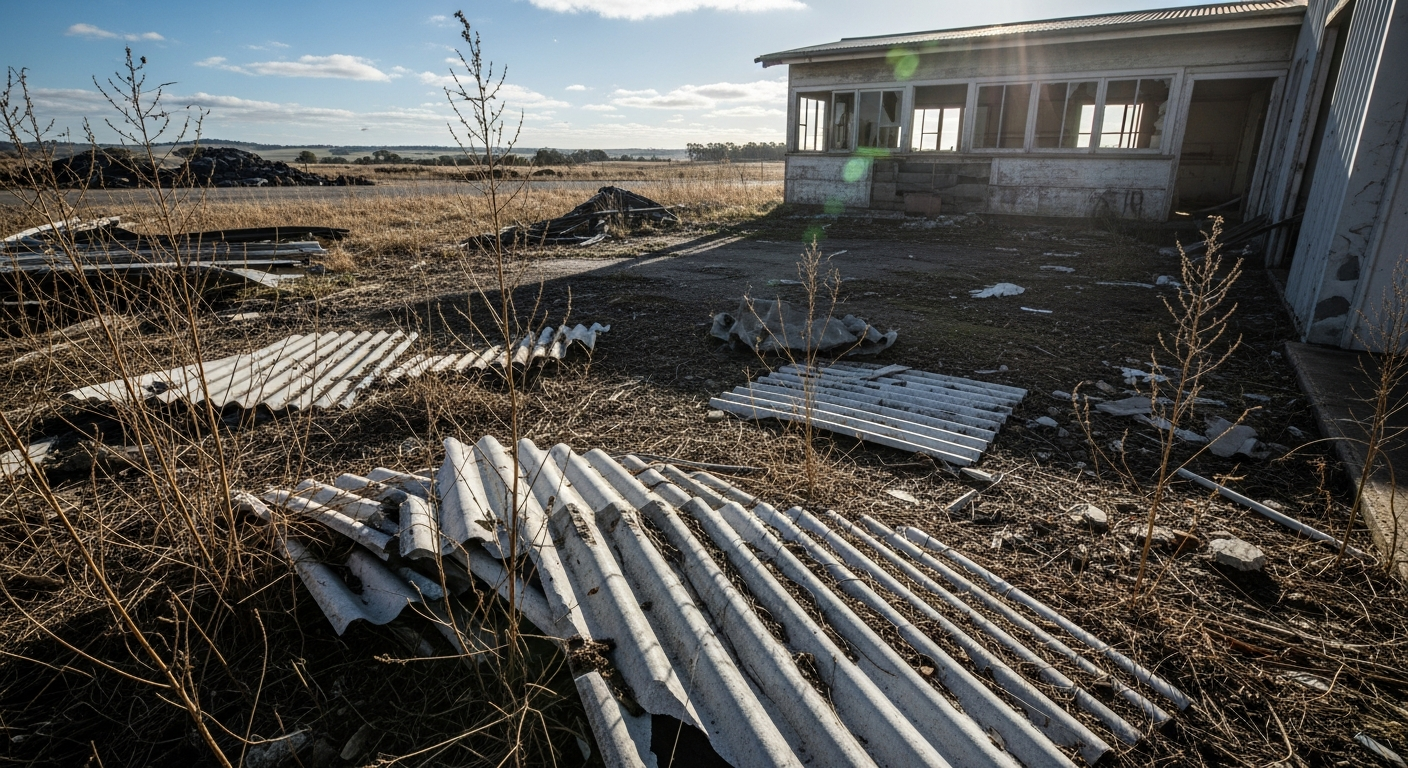
Australian context: illegal fill, asbestos waste liability, and the national regulatory framework for waste tracking
Illegal filling of land with construction and demolition waste is not confined to Victoria. Across Australia, jurisdictions have grappled with the challenge of regulating soil and fill movements that fall outside formal waste tracking systems. The scale of the construction sector, combined with the financial incentive to avoid licensed disposal costs, creates ongoing pressure on regulators to detect and prosecute illegal dumping before contamination becomes entrenched. The Chetcuti matter sits within this broader national picture, and the enforcement tools and liability principles it illustrates have relevance well beyond Victorian borders.
References and related sources
- Primary source: www.epa.vic.gov.au
- epa.vic.gov.au
- NEPM Assessment of Site Contamination
- EPA Victoria
How iEnvi can help
iEnvi provides specialist consulting services relevant to this topic. Our team includes CEnvP Site Contamination Specialists with experience across contaminated land, groundwater, remediation, ecology, and regulatory compliance.
- iEnvi asbestos services
- iEnvi contaminated land investigation services
- iEnvi remediation and validation services
- iEnvi expert services and independent review services
This is an iEnvi Machete news summary. Prepared by iEnvi to summarise the source article for contaminated land, groundwater, remediation, approvals and site risk professionals.
Published: 25 Jul 2026
Need advice on this topic? Speak to an iEnvi expert at info@ienvi.com.au or 1300 043 684, or contact us online.
Need advice on this issue? iEnvi provides practical, senior-led environmental consulting across contaminated land, remediation, ecology and environmental risk.
Team credentials Contaminated land services Remediation services Groundwater services Talk to iEnvi