
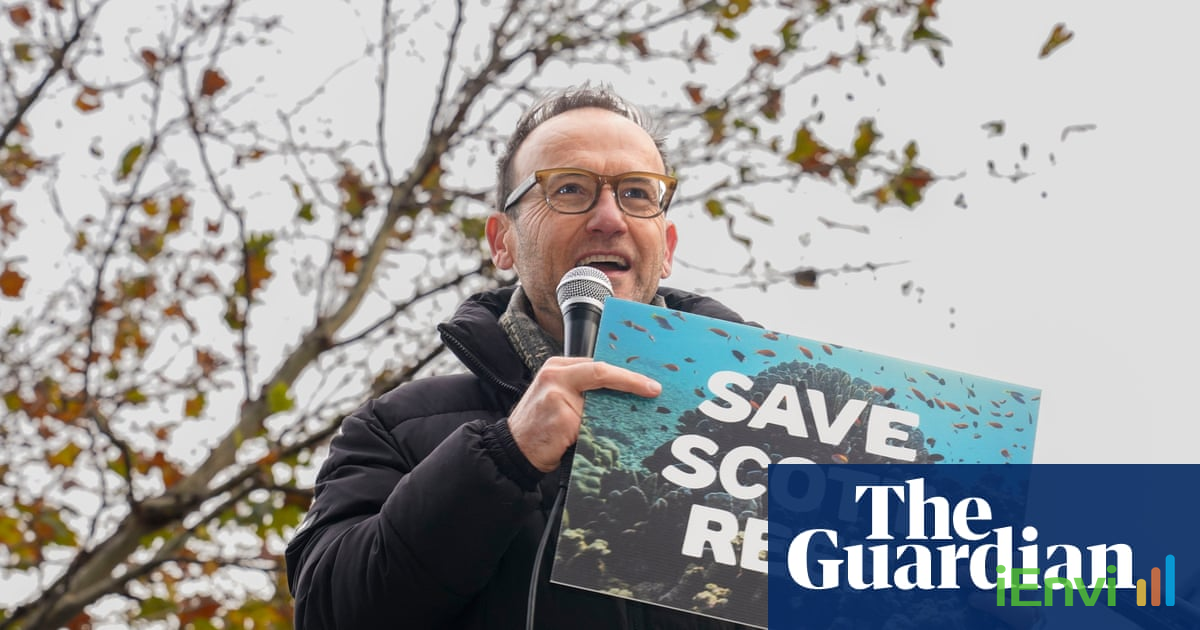
The North West Shelf Legal Challenge Explained
A landmark legal challenge commenced in the Federal Court of Australia in Melbourne in July 2026, targeting the federal government’s decision to extend Woodside Energy’s North West Shelf (NWS) gas project for 40 years. The concurrent trials, brought by the Australian Conservation Foundation (ACF), represented by Environmental Justice Australia (EJA), and the volunteer-led Friends of Australian Rock Art (FARA), seek to overturn Environment Minister Murray Watt’s September 2025 decision authorising the Karratha gas plant to operate until 2070. The legal challenge is widely regarded as one of the most consequential environmental law cases in Australian history, testing the outer limits of the Environment Protection and Biodiversity Conservation Act 1999 (EPBC Act) and raising fundamental questions about how major project approvals are conducted under Australian law.
The ACF’s core argument is that the approval process was “seriously defective” due to apprehended bias. The legal team alleges that the Department of Climate Change, Energy, the Environment and Water (DCCEEW) went beyond normal administrative procedures by privately negotiating approval conditions with Woodside, while the public was entirely excluded from that process and denied any opportunity to comment on the final conditions. This is not simply a procedural complaint. If the allegation of apprehended bias is upheld by the Federal Court, it would strike at the legitimacy of the approval decision itself and could require the entire assessment to be restarted under stricter procedural safeguards. FARA’s concurrent case raises a distinct but equally significant argument: that the Minister failed to properly identify and assess the risks that industrial emissions from the gas plant pose to the Murujuga (Burrup Peninsula) cultural landscape, which contains more than one million First Nations petroglyphs estimated to be up to 50,000 years old.
What makes this case particularly significant beyond Australian borders is the Federal Court’s decision to grant leave to the United Nations Special Rapporteur on the Human Right to a Clean, Healthy and Sustainable Environment, Astrid Puentes Riano, to intervene as amicus curiae. This is a legal first for Australia. The UN Special Rapporteur will advise the court on Australia’s international climate obligations, drawing on the International Court of Justice’s (ICJ) landmark 2025 advisory opinion, which established that fossil-exporting nations cannot simply export their climate change responsibilities to the countries receiving those exports. For Australian environmental practitioners, project proponents, and legal advisers, this case is not an abstract constitutional dispute. It is a live stress-test of the regulatory and legal frameworks that govern major project approvals across the country.
Scope 3 Emissions and Cultural Heritage Concerns under the EPBC Act
The North West Shelf gas project is Australia’s largest liquefied natural gas (LNG) export operation. The September 2025 ministerial decision extends the operating life of the Karratha gas plant by 40 years, allowing it to continue processing and exporting LNG until 2070. The ACF estimates that the project is projected to enable approximately 4 billion tonnes of lifetime carbon dioxide equivalent (CO2-e) emissions across its extended lifespan. To contextualise that figure, Australia’s total annual greenhouse gas emissions are currently estimated at approximately 400 million tonnes of CO2-e, meaning the NWS extension would enable emissions equivalent to roughly ten times Australia’s current annual national footprint. The vast majority of those emissions are Scope 3, meaning they arise from the downstream combustion of the exported LNG by overseas buyers rather than from the gas plant’s direct operations.
The ACF’s legal argument under the EPBC Act centres on the question of whether the federal government is legally required to rigorously assess and consider those Scope 3 downstream emissions as part of its approval obligations under the Act. The EPBC Act requires the Minister to consider the impacts of a controlled action on Matters of National Environmental Significance (MNES). The ACF argues that the Minister’s assessment failed to adequately account for the climate impact of the project’s full emission profile, including those occurring outside Australia’s territorial jurisdiction. This is a legally unsettled area. There is no binding precedent in Australian law that definitively requires Scope 3 emissions from exported fossil fuels to be assessed under the EPBC Act, which is precisely why the outcome of this case carries such weight for future project approvals.
The FARA case is grounded in a different but scientifically substantive argument. The Murujuga rock art site, formally listed as a National Heritage Place within the Dampier Archipelago, contains petroglyphs that researchers consider to be among the oldest and most extensive collections of rock art anywhere in the world. FARA argues that atmospheric emissions from the Karratha gas plant, including nitrogen oxides (NOx), sulphur dioxide (SO2), and fine particulate matter, cause physical and chemical weathering of the rock surfaces on which the petroglyphs are carved. Independent scientific research has previously identified correlations between industrial air quality and accelerated chemical alteration of the Murujuga rock surfaces. FARA’s argument is that the Minister’s approval decision failed to properly characterise this risk as a threat to a listed MNES, specifically the Dampier Archipelago National Heritage Place, and therefore did not apply the precautionary principle that the EPBC Act mandates when significant heritage damage is a plausible outcome.
The procedural ground of apprehended bias is legally distinct from both the emissions and heritage arguments. In administrative law, apprehended bias does not require proof that the decision-maker was actually biased, but rather that a fair-minded observer might reasonably suspect they were not impartial.

References and related sources
- Primary source: www.theguardian.com
- envirojustice.org.au
- theguardian.com
- thewest.com.au
- thewest.com.au
- EPBC Act
How iEnvi can help
iEnvi provides specialist consulting services relevant to this topic. Our team includes CEnvP Site Contamination Specialists with experience across contaminated land, groundwater, remediation, ecology, and regulatory compliance.
- iEnvi contaminated land investigation services
- iEnvi remediation and validation services
- iEnvi expert services and independent review services
This is an iEnvi Machete news summary. Prepared by iEnvi to summarise the source article for contaminated land, groundwater, remediation, approvals and site risk professionals.
Published: 23 Jul 2026
Need advice on this topic? Speak to an iEnvi expert at info@ienvi.com.au or 1300 043 684, or contact us online.
Need advice on this issue? iEnvi provides practical, senior-led environmental consulting across contaminated land, remediation, ecology and environmental risk.
Team credentials Contaminated land services Remediation services Groundwater services Talk to iEnvi