
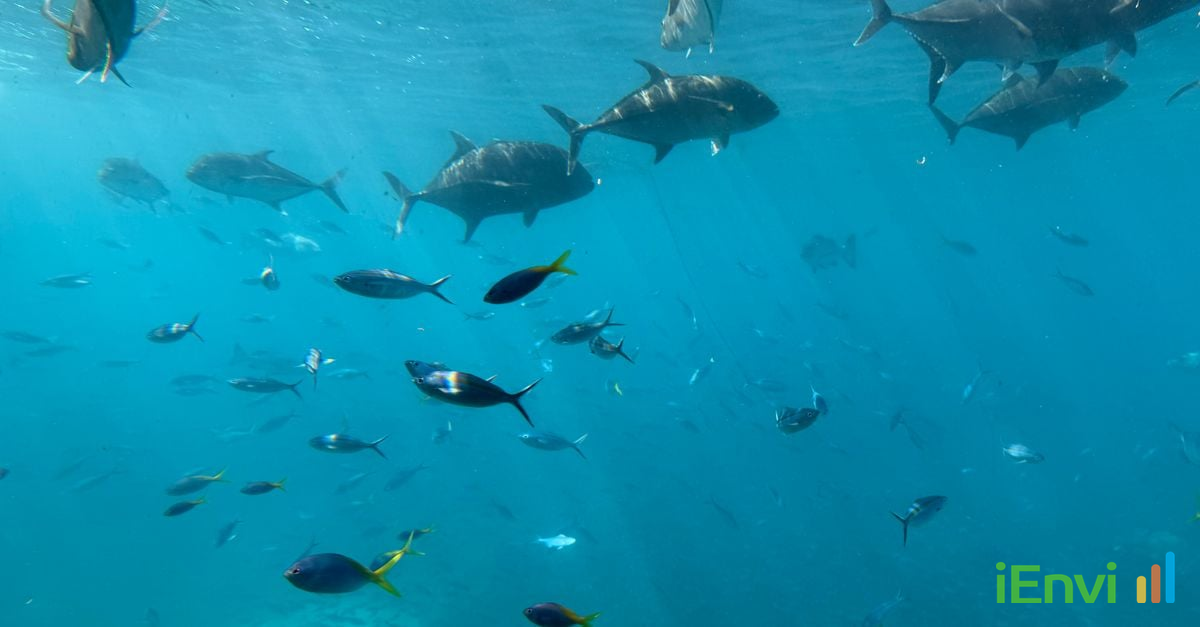
Mapping the Great Barrier Reef’s Open-Water Microbiome
A landmark study published in the journal Nature on 23 July 2026 has for the first time comprehensively mapped the open-water microbiome of the Great Barrier Reef. Led by researchers at the University of Queensland (UQ) and the Australian Institute of Marine Science (AIMS), the project sequenced more than 800,000 microbial genomes from seawater samples collected across 48 distinct reef sites. The work identified over 500 entirely new bacterial species and more than 300,000 viral sequences previously unknown to science. The findings have been compiled into the newly launched Great Barrier Reef Microbial Genomes Database, which is publicly accessible and represents the most comprehensive genomic catalogue of any marine ecosystem on the planet.
For environmental professionals working on coastal infrastructure, aquaculture, catchment management, and offshore development, this database fundamentally changes the toolkit available for marine environmental monitoring and impact assessment. Until now, practitioners assessing reef health have relied almost exclusively on visible indicators of ecological stress, including coral bleaching extent, macroalgae coverage, sediment accumulation, and turbidity measurements. The critical limitation of those approaches is that by the time these physical signals become detectable, underlying ecological damage is already advanced. A genomic baseline of a healthy reef microbiome makes it possible to detect disturbance at the molecular level, weeks or months before any visible degradation appears.
The significance of this research extends well beyond academic marine biology. It directly intersects with Australian environmental law, coastal planning approvals, biodiversity offset frameworks, and the monitoring obligations attached to large infrastructure projects affecting the Great Barrier Reef World Heritage Area. For developers, legal advisers, and councils managing land use in reef catchment areas, understanding what this database enables, and what regulators may soon expect of it, is an immediate and practical concern.
Key details of the Great Barrier Reef microbiome study
The UQ and AIMS research team collected seawater samples from 48 reef sites distributed across the Great Barrier Reef, capturing the spatial variability of microbial communities from inshore turbid zones through to clear offshore reef structures. DNA was extracted directly from filtered seawater, and metagenomic sequencing was applied to recover genomic material from microorganisms too small or too difficult to culture in laboratory conditions. This approach, known as culture-independent metagenomics, allows scientists to characterise the full community of bacteria, archaea, and viruses present in a water sample without needing to grow individual organisms. The sequencing effort produced more than 800,000 distinct microbial genomes, a dataset of extraordinary depth for a single ecosystem.
Among the 800,000 genomes sequenced, researchers identified over 500 bacterial species that had never previously been described by science. This is not a minor taxonomic refinement. It means that a substantial fraction of the microbial community underpinning one of the world’s best-studied marine ecosystems was entirely invisible to monitoring and management until now. In addition, more than 300,000 viral sequences were catalogued, the vast majority of which are new to science. Viruses play a central role in regulating bacterial population dynamics and nutrient cycling in marine systems, and their characterisation adds a further layer of interpretive power to the database. Together, these findings establish a reference state for what a biologically intact, low-stress open-water microbiome looks like across different reef zones and seasons.
The Great Barrier Reef Microbial Genomes Database provides an open-access repository of this genomic baseline. Researchers and practitioners can compare future water samples against this reference to identify shifts in microbial community composition that indicate environmental stress. Early warning signals detectable through this approach include changes associated with elevated water temperature, increased nutrient loading from agricultural runoff, heavy metal contamination, and sediment disturbance events. Critically, these molecular signals can be detected using environmental DNA, or eDNA, sampling, which involves filtering water samples in the field and sending preserved filter cartridges to a laboratory for sequencing. This is a non-destructive and relatively rapid technique that integrates readily into existing marine monitoring programmes.
The study aligns with Australian and New Zealand Guidelines for Fresh and Marine Water Quality (ANZG 2018), which establish water quality guideline values for a range of physical, chemical, and biological indicators relevant to marine protection. The microbiome database extends the biological sensitivity of monitoring programmes well beyond what the ANZG 2018 default guideline values for nutrients, turbidity, and toxicants can detect alone. It provides a complementary biological endpoint that captures cumulative and sub-lethal stress responses at the ecosystem level, which is precisely the type of evidence that environmental regulators and courts are increasingly interested in when assessing cumulative impact.
Australian regulatory context for reef microbiome monitoring and coastal development approvals
The Great Barrier Reef Marine Park, which covers approximately 344,400 square kilometres (133,000 square miles) of marine environment off the Queensland coast, is protected under both the Great Barrier Reef Marine Park Act 1975 (Cth) and listed as a Matter of National Environmental Significance (MNES) under the Environment Protection and Biodiversity Conservation Act 1999 (Cth). Any action that has, will have, or is likely to have a significant impact on the Great Barrier Reef World Heritage Area triggers the referral and approval process under the EPBC Act. Proponents must refer their proposed action to the federal Minister for the Environment, who then determines whether a formal environmental impact assessment is required before any approval can be granted. This referral obligation applies regardless of whether state or local government approvals are also required, meaning that major coastal and offshore developments affecting reef catchments face a dual layer of regulatory scrutiny at both state and Commonwealth levels.
References and related sources
- Primary source: news.uq.edu.au
- melbourne-insider.au
- ysi.com
- sevenseasmedia.org
- hsfkramer.com
How iEnvi can help
iEnvi provides specialist consulting services relevant to this topic. Our team includes CEnvP Site Contamination Specialists with experience across contaminated land, groundwater, remediation, ecology, and regulatory compliance.
- iEnvi contaminated land investigation services
- iEnvi remediation and validation services
- iEnvi expert services and independent review services
This is an iEnvi Machete news summary. Prepared by iEnvi to summarise the source article for contaminated land, groundwater, remediation, approvals and site risk professionals.
Published: 23 Jul 2026
Need advice on this topic? Speak to an iEnvi expert at info@ienvi.com.au or 1300 043 684, or contact us online.
Need advice on this issue? iEnvi provides practical, senior-led environmental consulting across contaminated land, remediation, ecology and environmental risk.
Team credentials Contaminated land services Remediation services Groundwater services Talk to iEnvi