
Overview
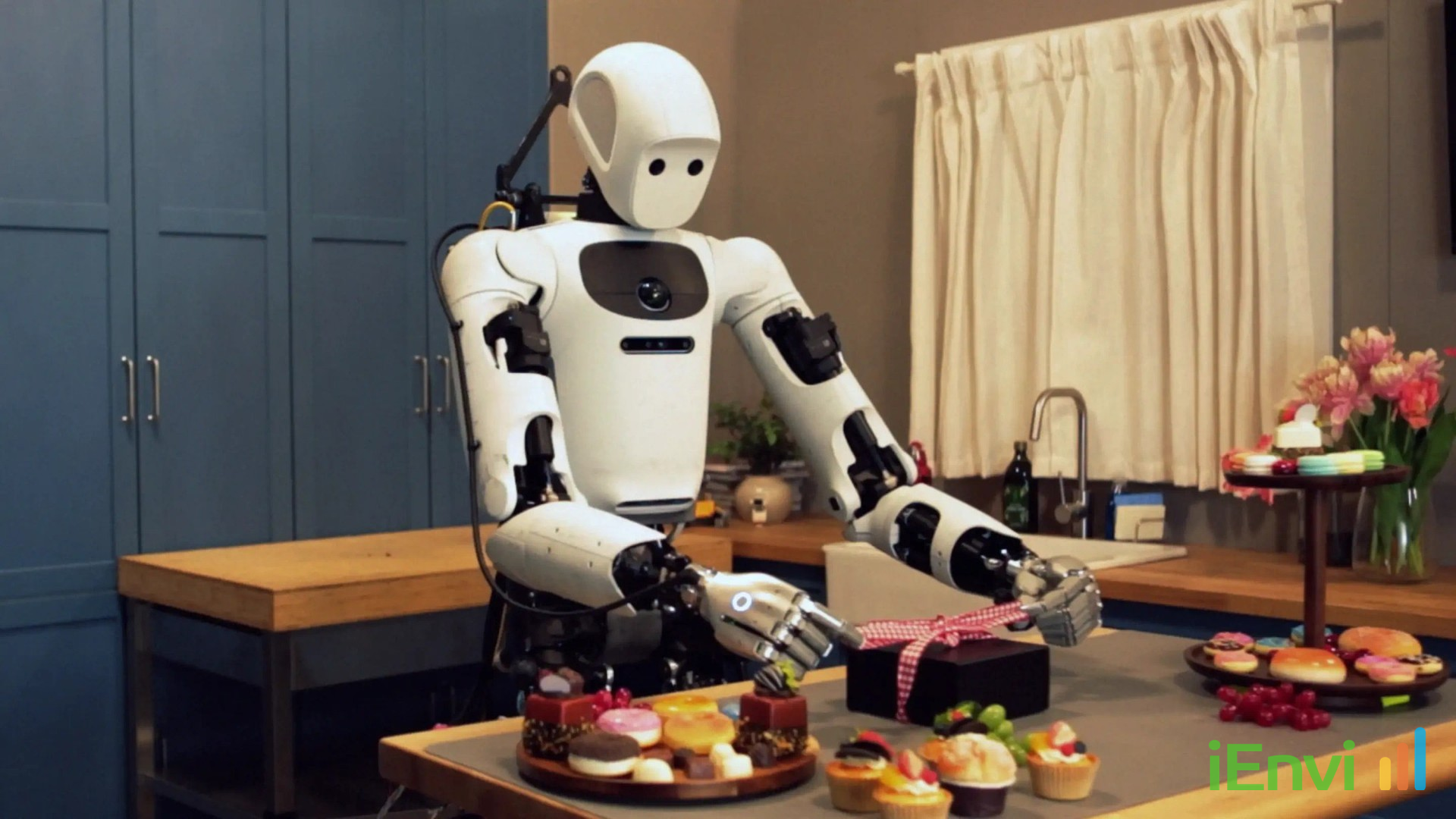
Google DeepMind has released Gemini Robotics 2.5, a vision-language-action (VLA) foundation model built for physical AI and complex robotic manipulation. According to a Unite.AI report published on 10 November 2026, Apptronik’s Apollo 2 humanoid robots running Gemini Robotics 2.5 achieved a 96% success rate in live production line trials at Mercedes-Benz manufacturing facilities in Sindelfingen, Germany, and Kecskemét, Hungary. The task was automotive kitting. The robots picked irregular metal brackets from bulk bins and placed them into sequencing containers in the exact order needed for vehicle assembly.
The result matters because kitting has long resisted automation. Parts arrive in bulk bins in variable, unaligned orientations, so a conventional robot with hard-coded scripts and fixed tooling struggles to pick them reliably. Apptronik Co-Founder and CEO Jeff Cardenas said: “Pairing Apollo 2 with Gemini Robotics, we saw the models improve dramatically in just a few weeks of post-training and carry over to Mercedes-Benz production with very little drop-off.” That is a claim about adaptation time, and adaptation time is what has made industrial robotics expensive to deploy in the past.
For Australian environmental professionals, developers, lawyers and councils, this is a technology development rather than a regulatory one. The source does not discuss contaminated land, laboratories or environmental field work. It does, however, describe a general-purpose robot handling unpredictable physical objects in a working industrial setting, alongside a new open-source safety evaluation suite. Both points are relevant to anyone who manages work health and safety (WHS) risk, procures technology or advises on how work is done on industrial sites.
Key details
The Mercedes-Benz deployment uses a hierarchical architecture that separates task planning from motor control. Gemini Robotics ER (Embodied Reasoning) monitors multi-camera feeds, tracks the overall workflow, detects gaps in the bin sequence and adjusts steps as conditions change. Gemini Robotics 2.5 sits underneath and converts raw multimodal sensor streams directly into low-level joint trajectory and torque commands for Apollo 2’s limbs and its 22 degree-of-freedom (22-DoF) five-finger SharpaWave hands. In plain terms, one model decides what needs to happen next and the other works out how the arms and fingers should move to do it.
DeepMind evaluated Gemini Robotics 2.5 across more than 200 distinct laboratory and manipulation benchmarks. The reported results were 30% to 100% higher task success rates and 20% to 30% faster execution speeds compared with baseline systems. The model reportedly handled tasks that have been difficult for robots, including deformable objects such as tying gift ribbons and fine tool use such as pipetting and handling tongs. These figures are relative improvements over baselines and should be read that way. A 100% improvement on a low baseline success rate is not the same as a 100% success rate.
Training was accelerated with synthetic data. According to the report, development used Gemini 4 Argon to generate thousands of physics-informed simulated trial runs from limited camera angles. This allowed rapid failure-mode analysis and synthetic pre-training before the model was deployed on physical hardware. This approach may help explain how Cardenas could describe a few weeks of post-training rather than the months of scripting and dedicated fixturing that conventional industrial deployments have needed for each part geometry, although the source does not draw that link directly.
DeepMind also published ASIMOV-jailbreak alongside the model. This is an open-source safety evaluation suite for auditing physical robots against three categories of risk: prompt injections, adversarial overrides and compliance with hazard boundaries around obstacles and human co-workers. The source describes it as an open standard that enterprise risk officers, industrial safety auditors and regulators can use to assess collision risk and behavioural guardrails before robots enter workspaces shared with people. The source also states that the architecture is designed to scale across kinematic configurations, from stationary dual-arm industrial units to bipedal humanoids, which separates the software intelligence from any single robotics manufacturer.

Australian context
In Australia, a humanoid or industrial robot in a workplace is plant under WHS law, and the existing duties apply in full. The model Work Health and Safety Act 2011 has been adopted in every state and territory except Victoria, as well as at the Commonwealth level. It requires a person conducting a business or undertaking (PCBU) to eliminate risks to health and safety so far as is reasonably practicable, or to minimise them where elimination is not possible. Victoria applies equivalent duties under the Occupational Health and Safety Act 2004. Nothing in the Gemini Robotics release changes those obligations. A 96% task success rate is a performance figure, not a safety case, and a PCBU deploying a robot would still need to identify hazards, assess risk and apply controls under the hierarchy of control.
Australia’s AI policy framework is still voluntary for most applications. The Department of Industry, Science and Resources published the Voluntary AI Safety Standard in September 2024, setting out 10 guardrails covering accountability, risk management, testing, human oversight and transparency. A proposals paper released at the same time consulted on mandatory guardrails for AI in high-risk settings. AS ISO/IEC 42001:2023 provides a management system standard for organisations developing or using AI. For physical robots, the international standards ISO 10218 (industrial robot safety) and ISO/TS 15066 (collaborative robots) are the established references. ASIMOV-jailbreak tests something those standards were not written for: whether an AI-driven robot can be manipulated through prompt injection or adversarial override into unsafe behaviour. For organisations considering similar systems, that testing would be in addition to a standard WHS risk assessment, not a substitute for it.
References and related sources
- Primary source: www.unite.ai
- kie.ai
- tao.media
- dataconomy.com
- autonomousfuture.co
How iEnvi can help
iEnvi integrates technology and data-driven approaches into environmental consulting. We monitor AI and technology developments that affect how environmental professionals deliver services to clients.
This is an iEnvi Machete news summary. Prepared by iEnvi to summarise the source article for environmental professionals tracking AI, data, and technology developments that affect consulting and project delivery.
Published: 12 Nov 2026
Need advice on this topic? Speak to an iEnvi expert at info@ienvi.com.au or 1300 043 684, or contact us online.
Need advice on this issue? iEnvi provides practical, senior-led environmental consulting across contaminated land, remediation, ecology and environmental risk.