
Overview
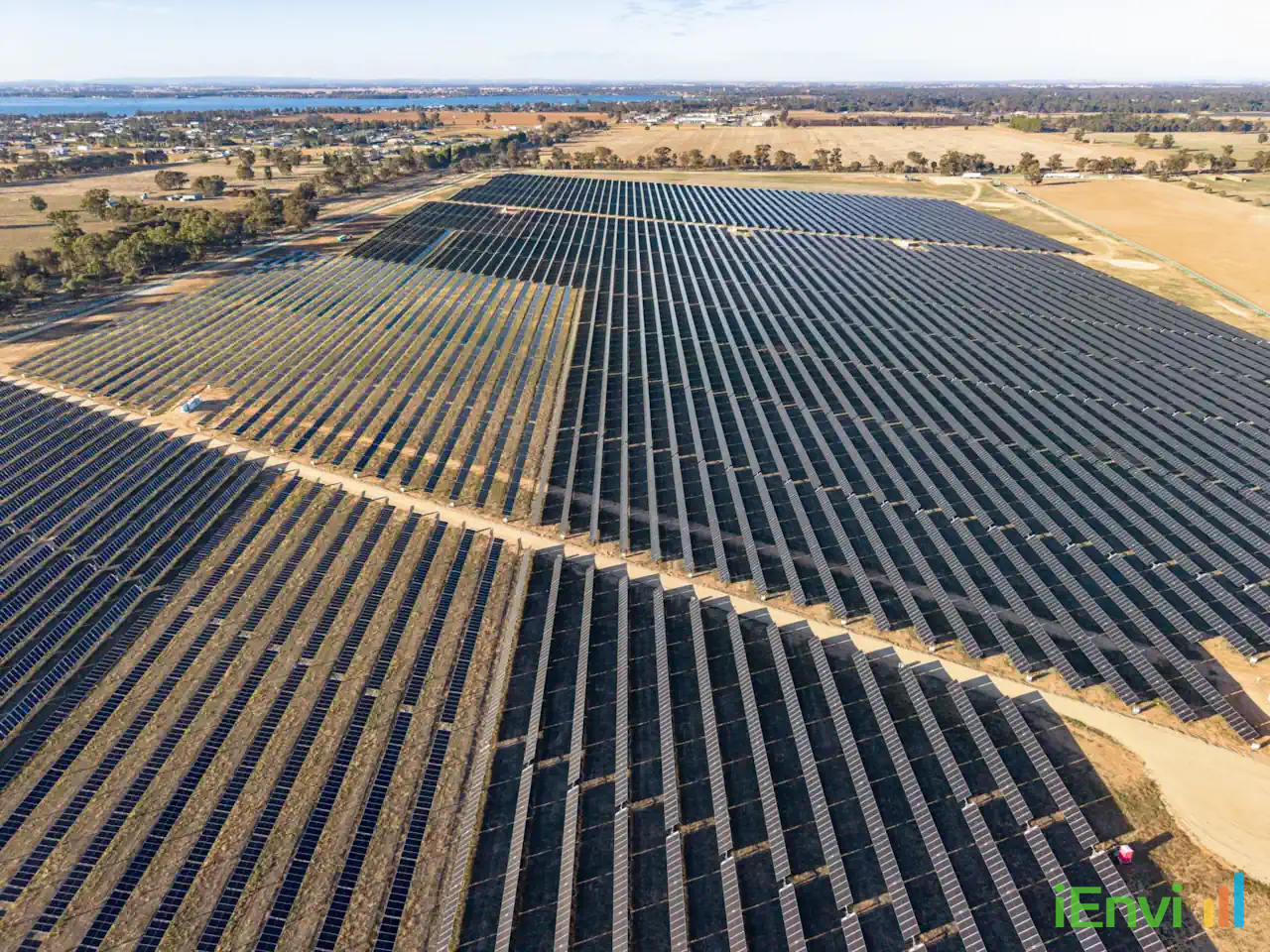
European Energy’s 31 MW Mulwala Solar Farm in the New South Wales Riverina has completed full output testing and begun commercial generation at full capacity, RenewEconomy reported on 9 November 2026 (Joshua S Hill). A 25 MW / 100 MWh battery energy storage system (BESS), providing four hours of storage, is planned for the same site. The project was originated by OX2 and acquired and built by European Energy as part of a $130 million portfolio financing package with Westpac and DZ Bank.
The generating capacity is modest by current utility-scale standards. The commercial structure is what makes Mulwala notable. Under a corporate Power Purchase Agreement (PPA), hyperscale data centre operator AirTrunk procures 25 MW of the solar farm’s output for its data centre operations. The associated Large-scale Generation Certificates (LGCs) are time-matched to Google’s Australian cloud consumption. Under conventional annual procurement, a buyer purchases a year’s worth of certificates and claims that year’s consumption as renewable. Here, the certificates are linked to the hours in which the electricity was consumed.
For Australian environmental professionals, the project matters on two fronts. First, it shows how corporate renewable electricity claims are likely to be scrutinised under climate disclosure regimes, which affects ESG advisers, sustainability teams and the lawyers who review public statements. Second, it signals continued demand for hybrid solar and storage projects in regional NSW. Each of those projects carries its own planning, biodiversity, hazard and land assessment workload for developers, landholders and consent authorities.
Key details
The Mulwala Solar Farm has a generating capacity of 31 MW, of which 25 MW is contracted to AirTrunk. The planned BESS is rated at 25 MW with 100 MWh of storage, which equates to four hours of discharge at full rated power. The battery capacity therefore matches the 25 MW contracted to AirTrunk. In practical terms, storage at this ratio allows solar generated during the middle of the day to be shifted into the late afternoon and evening, when solar output drops and data centre demand continues.
LGCs are created under the Renewable Energy (Electricity) Act 2000 (Cth) and the Renewable Energy (Electricity) Regulations 2001, and are registered in the REC Registry administered by the Clean Energy Regulator. Each LGC represents 1 MWh of eligible renewable electricity generated by an accredited power station. An LGC does not carry an hourly timestamp. Time matching therefore depends on the contractual arrangements between the parties and on metered interval data that aligns generation with the buyer’s load profile, rather than on any feature of the certificate itself.
The distinction between annual and hourly matching has real consequences for emissions claims. A company that buys enough LGCs to cover its annual consumption can report 100% renewable electricity under current market-based accounting, even if much of its consumption occurs at night when solar generation is zero and the grid relies on fossil generation. Hourly matching removes that gap by requiring renewable supply and consumption to coincide in each interval. The Greenhouse Gas Protocol is revising its Scope 2 Guidance, and hourly matching for market-based accounting is among the central proposals released for consultation. The revision is not yet final. Google has publicly committed to running on 24/7 carbon-free energy by 2030, and the Mulwala arrangement is consistent with that goal.
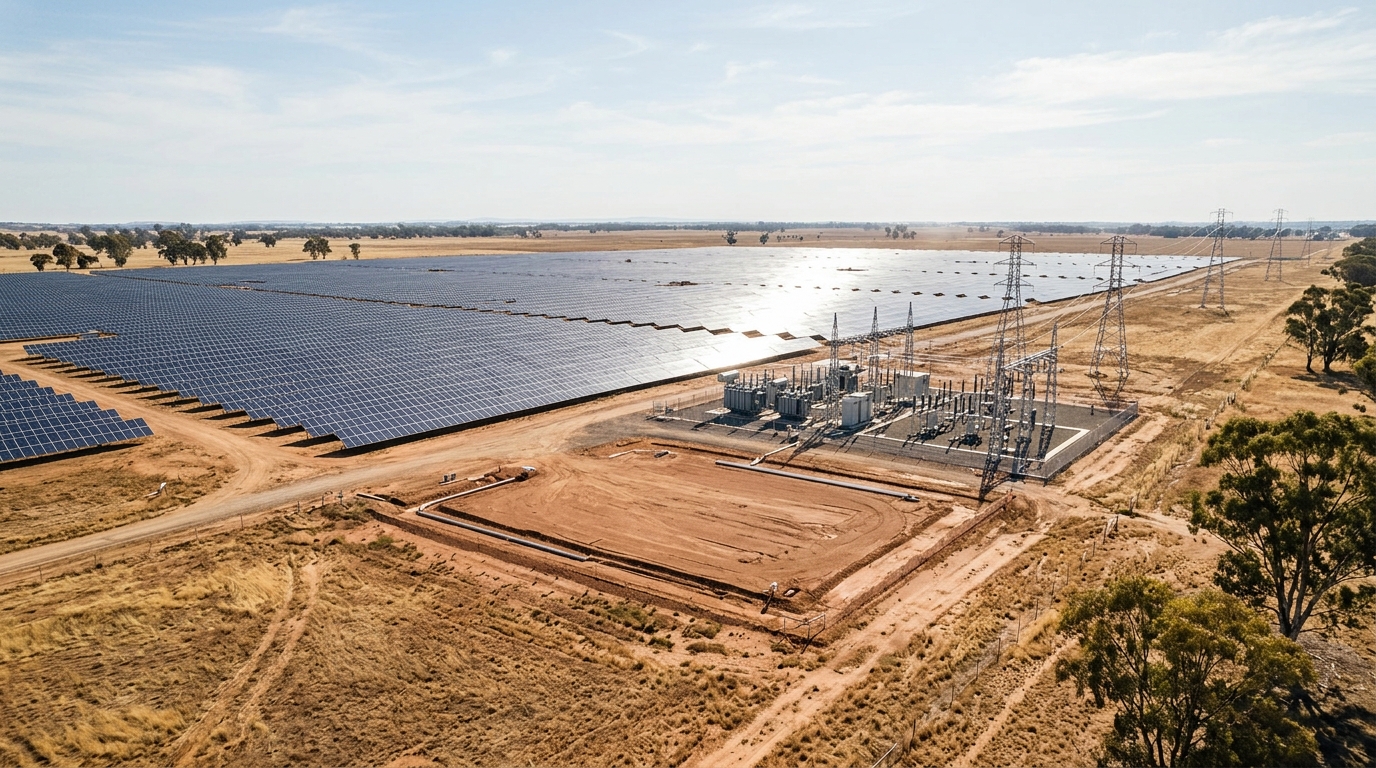
Grid connection for a project of this kind is governed by Chapter 5 of the National Electricity Rules, which sets generator performance standards and connection processes administered by AEMO and the relevant network service provider. Adding a BESS to an operating solar farm generally requires the connection arrangements and performance standards to be revisited, because the battery both draws power from and exports power to the network. This has to be managed in parallel with the planning approval pathway for the battery.

Australian context
The Mulwala PPA arrives as Australian certificate and disclosure frameworks are changing. The Large-scale Renewable Energy Target ends in 2030. The Guarantee of Origin scheme, established under the Future Made in Australia (Guarantee of Origin) Act 2024, is designed to carry renewable electricity certification beyond that date. The scheme is expected to support more granular certificate information, including when electricity was generated. Granular time data within a government certificate system would make hourly matching easier to verify than the current approach, which relies on contracts and private metering records sitting alongside LGCs.
Mandatory climate-related financial disclosure under the Corporations Act 2001 (Cth) commenced for the first cohort of large entities from 1 January 2025, with reporting against AASB S2 Climate-related Disclosures. AASB S2 requires entities to disclose location-based Scope 2 emissions, together with information about contractual instruments such as LGCs that inform users’ understanding of those emissions. A market-based figure that relies on annually matched certificates may appear favourable, but it now sits alongside a location-based number that reflects the actual grid. The Clean Energy Regulator’s Corporate Emissions Reduction Transparency (CERT) report provides a voluntary mechanism for companies to present their renewable electricity and emissions information in a standardised format. Directors and in-house counsel reviewing climate statements should test whether renewable electricity claims could be defended if challenged on an hour by hour basis, since claims that rest on annual matching could become more exposed to greenwashing allegations as expectations shift.
On the planning side, a co-located solar and BESS development in regional NSW is assessed under the Environmental Planning and Assessment Act 1979 (NSW). Electricity generating works above the capital investment value thresholds in State Environmental Planning Policy (Planning Systems) 2021 are assessed as State significant development. A battery added to an existing solar farm may proceed as a modification of the original consent or as a separate application, depending on its scale and the terms of the existing approval. Battery storage is screened under Chapter 3 of State Environmental Planning Policy (Resilience and Hazards) 2021, and a preliminary hazard analysis is commonly required to address fire risk, thermal runaway and emergency response. State significant development applications must also include a biodiversity development assessment report under the Biodiversity Conservation Act 2016 (NSW), unless a waiver applies. The NSW Large-Scale Solar Energy Guideline requires proponents to address agricultural land use, visual impact, glint and glare, and decommissioning and rehabilitation. Consent authorities must also consider whether the land is contaminated and suitable for the proposed use under Chapter 4 of the Resilience and Hazards SEPP, which is relevant where projects are sited on long-standing agricultural land.
Implications
Mulwala is a small project, but its contract structure is likely to be repeated as data centre operators and their cloud customers look for renewable supply that lines up with when they use power. That favours projects that pair solar with storage so that supply extends past daylight hours. For sustainability teams, the immediate task is to understand how their own renewable electricity claims are built and whether they rest on annual or hourly matching. For consultants, landholders and consent authorities in regional NSW, more hybrid projects mean more hazard, biodiversity, contamination and land use assessments, including applications to add batteries to solar farms that are already operating.
References and related sources
- Primary source: reneweconomy.com.au
- now.solar
- youtube.com
- EPBC Act
How iEnvi can help
iEnvi provides specialist consulting services relevant to this topic. Our team includes CEnvP Site Contamination Specialists with experience across contaminated land, groundwater, remediation, ecology, and regulatory compliance.
- iEnvi contaminated land investigation services
- iEnvi remediation and validation services
- iEnvi expert services and independent review services
This is an iEnvi Machete news summary. Prepared by iEnvi to summarise the source article for contaminated land, groundwater, remediation, approvals and site risk professionals.
Published: 11 Nov 2026
Need advice on this topic? Speak to an iEnvi expert at info@ienvi.com.au or 1300 043 684, or contact us online.
Need advice on this issue? iEnvi provides practical, senior-led environmental consulting across contaminated land, remediation, ecology and environmental risk.
Team credentials Contaminated land services Remediation services Groundwater services Talk to iEnvi