
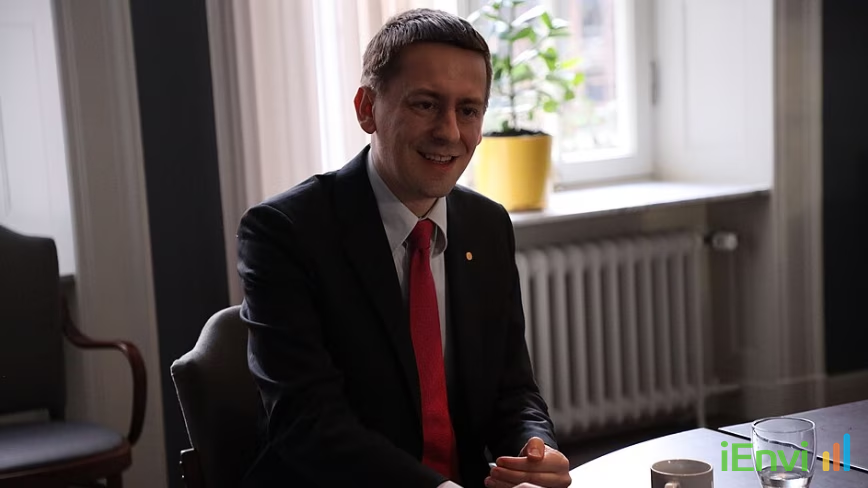
John Jumper leaves Google DeepMind for Anthropic following Nobel Prize recognition
Computational biologist and 2024 Nobel Prize in Chemistry co-laureate John Jumper announced his departure from Google DeepMind after nearly nine years, confirming he would be joining rival AI frontier laboratory Anthropic. Jumper, who served as Vice President at Google DeepMind, is best known as the co-creator of AlphaFold, the AI system that predicted the three-dimensional structure of more than 200 million proteins and effectively resolved a scientific grand challenge that had confounded structural biologists for five decades. His departure was announced in a post on X, where he stated simply: “After nearly 9 years, I have decided to leave Google DeepMind and join Anthropic.”
The timing of the move compounds what is shaping up to be a serious talent crisis for Google’s AI research programme. Just 48 hours before Jumper’s announcement, Noam Shazeer, a Vice President of engineering at Google and co-lead of its Gemini AI model development, departed to join OpenAI. Shazeer is a co-author of the landmark 2017 paper “Attention Is All You Need,” which introduced the transformer architecture that underpins virtually every major large language model in production today. Losing two researchers of that calibre within two days, each to a direct competitor, marks an extraordinary concentration of talent movement in a compressed window of time.
For professionals in technical and scientific sectors, including environmental consulting, engineering, life sciences, and professional services broadly, this development carries implications that extend well beyond the internal politics of Silicon Valley. It signals a structural realignment in where elite AI research talent is choosing to work, what problems they are choosing to solve, and which organisations are positioning themselves to lead the next wave of applied AI development in science and medicine.
Key details of the Jumper departure and AlphaFold legacy
John Jumper joined Google DeepMind in 2017, and his most significant contribution was leading the development of AlphaFold 2, which was released publicly in 2021. The system used deep learning to predict protein three-dimensional structures from amino acid sequences with an accuracy that matched or exceeded experimental methods such as X-ray crystallography and cryo-electron microscopy. Before AlphaFold, determining the structure of a single protein could require years of laboratory work and cost hundreds of thousands of dollars. AlphaFold reduced that timeline to seconds per structure. By 2023, the AlphaFold Protein Structure Database, developed in partnership with the European Molecular Biology Laboratory’s European Bioinformatics Institute, had released predicted structures for more than 200 million proteins covering virtually every known organism on Earth.
In October 2024, Jumper was awarded a share of the Nobel Prize in Chemistry alongside Google DeepMind CEO Demis Hassabis and David Baker of the University of Washington, who was recognised for his independent work in computational protein design. The Nobel Committee’s citation described AlphaFold as having “cracked the protein structure prediction problem,” acknowledging it as one of the most consequential applications of artificial intelligence to a scientific domain. Hassabis responded to Jumper’s departure publicly, stating: “What we achieved with AlphaFold changed the world, and showed the field what was possible with AI for science and medicine, lighting the way for how AI can benefit humanity.” That statement is a notable acknowledgement from a sitting CEO of the historic nature of a collaboration that has now concluded.
Reports emerging around the time of Jumper’s departure indicated that Google had recently redirected his work toward AI coding tools rather than continuing pure scientific research. This organisational decision appears to have been a contributing factor in his move.
The sequential loss of Shazeer and Jumper within 48 hours represents what analysts are describing as a structural brain drain from Google’s foundational AI research engine. Shazeer’s 2017 transformer paper is among the most cited works in the history of computer science and is the direct architectural ancestor of GPT-4, Claude, Gemini, and every other major frontier model. Jumper’s AlphaFold work represents the most celebrated application of deep learning to physical science. The departure of both individuals to competing organisations within the same news cycle is without clear precedent in the modern AI industry.

Australian context: AI talent concentration and implications for technical professional services
Australia does not have a direct regulatory or policy framework that governs where AI researchers work or how frontier AI laboratories operate domestically. However, the broader dynamics illustrated by the Jumper and Shazeer departures are highly relevant to Australian organisations that are integrating AI tools into technical professional services, including environmental consulting, engineering, legal practice, and scientific research. The Australian Government’s 2024 Interim Response to the Safe and Responsible AI consultation and the Department of Industry, Science and Resources’ AI in Government policy framework both emphasise the importance of responsible adoption of AI in professional and public sector contexts. As frontier AI capabilities shift between laboratories, Australian practitioners should be aware that the tools and platforms underpinning their workflows are subject to rapid change driven by the movement of key research talent between competing organisations.
References and related sources
- Primary source: thenextweb.com
- taipeitimes.com
- indianexpress.com
- aiweekly.co
- startupfortune.com
How iEnvi can help
iEnvi integrates technology and data-driven approaches into environmental consulting. We monitor AI and technology developments that affect how environmental professionals deliver services to clients.
This is an iEnvi Machete news summary. Prepared by iEnvi to summarise the source article for environmental professionals tracking AI, data, and technology developments that affect consulting and project delivery.
Published: 22 Jun 2026
Need advice on this topic? Speak to an iEnvi expert at info@ienvi.com.au or 1300 043 684, or contact us online.
Need advice on this issue? iEnvi provides practical, senior-led environmental consulting across contaminated land, remediation, ecology and environmental risk.
Contaminated land advice Remediation services Discuss your site Talk to iEnvi