
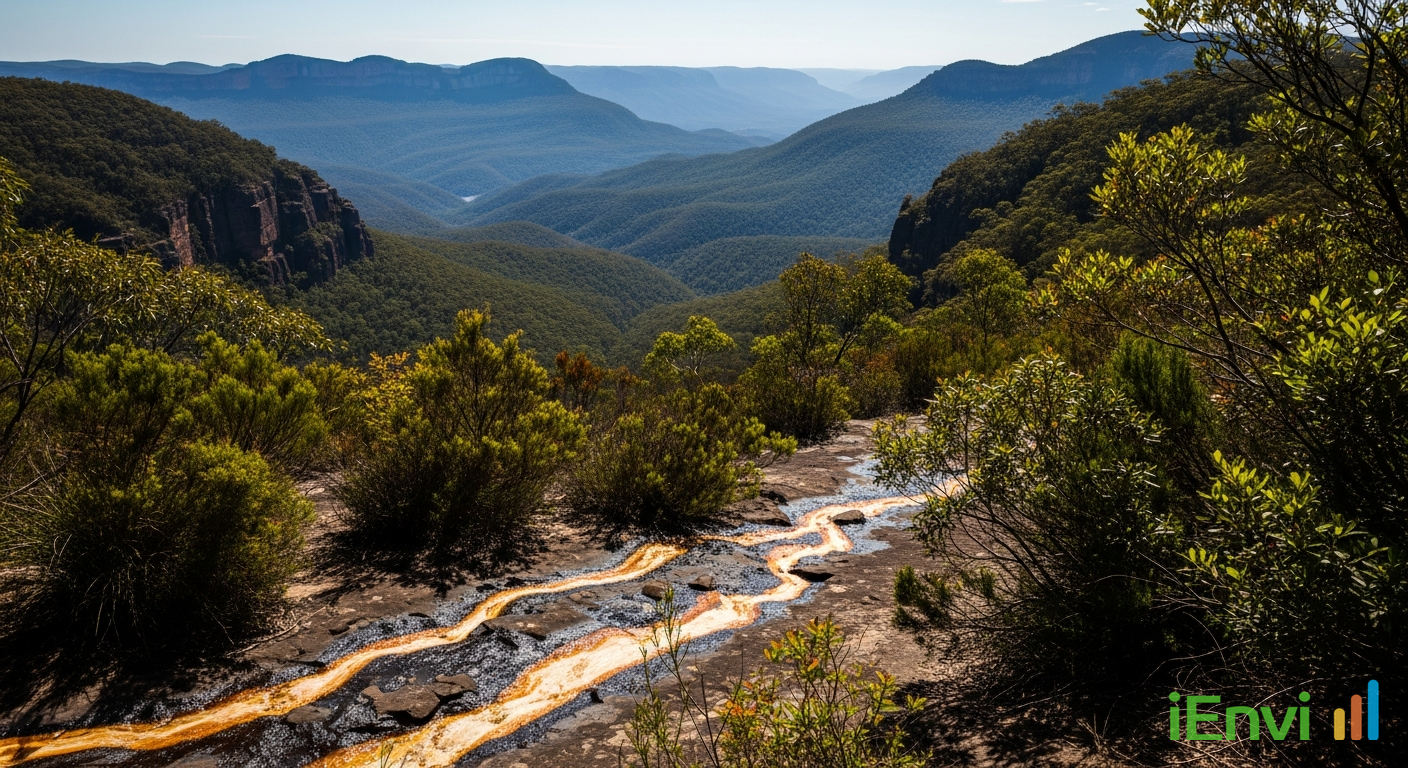
Overview of the Blaxland Landfill Leachate Leak
The NSW Environment Protection Authority (EPA) issued a $30,000 penalty notice to Blue Mountains City Council in July 2024 following a major leachate overflow at the Blaxland Waste Management Facility. Between 160,000 and 260,000 litres of landfill leachate discharged directly into Cripple Creek, a watercourse that drains into the ecologically sensitive Blue Mountains National Park. The incident was self-reported by the council, and a subsequent EPA investigation confirmed that the overflow resulted from an isolation valve being incorrectly closed and then left unopened by facility staff who had not received adequate training in valve operation.
Environmental sampling conducted at the discharge point by the EPA identified highly elevated concentrations of ammonia, nitrogen, and phosphorus, along with other contaminants characteristic of high-strength landfill leachate. The proximity of Cripple Creek to a protected National Park significantly amplified the ecological consequences of this discharge, placing the incident at the more serious end of the regulatory response spectrum for a pollution event of this nature. The council has since updated its safe operating procedures, retrained staff, and installed clear physical signage on the isolation valves as corrective actions following EPA intervention.
For environmental practitioners advising local government bodies, waste facility operators, and infrastructure managers across New South Wales and other Australian jurisdictions, this case is a pointed reminder that engineered containment systems are only as reliable as the people operating them. The failure here was not a design flaw or an extreme weather event. It was an entirely preventable operational error, and the regulatory and reputational consequences have fallen squarely on the council as the licensed operator of the facility.
Key details of the Blaxland leachate overflow and EPA enforcement action
The volume of leachate released, estimated at between 160,000 and 260,000 litres, is substantial by any measure. To put that in context, 260,000 litres is equivalent to approximately 260 cubic metres, enough to fill more than 100 standard household rainwater tanks. Landfill leachate is not a dilute effluent. It is a complex mixture of dissolved organic matter, inorganic salts, heavy metals, and biological breakdown products. The specific contaminants identified by the EPA at the discharge point, ammonia, nitrogen, and phosphorus, are characteristic indicators of active biological decomposition within the waste mass and represent a significant acute toxicity risk to freshwater ecosystems.
The penalty was issued under Section 120 of the Protection of the Environment Operations Act 1997 (NSW), which imposes a strict liability prohibition on the pollution of waters. This provision does not require the EPA to prove intent. The mere act of causing or permitting a pollutant to enter waters is sufficient to attract liability. The $30,000 penalty notice is notable because it sits within the EPA’s on-the-spot penalty framework, which is designed for clear-cut contraventions where the facts are not in dispute. It does not represent the upper bound of the EPA’s enforcement powers under POEO Act, which can extend to much larger court-ordered fines and licence conditions for more serious or repeat offences.
The EPA investigation identified a specific causal chain: an isolation valve was incorrectly closed, it was not subsequently reopened, leachate accumulated and overflowed from a pipe, and that overflow discharged directly to Cripple Creek without treatment or interception. Critically, the investigation found that the facility staff responsible for valve operation had not received training adequate to understand the operational significance of the valve position. This gap between the engineering infrastructure in place and the operational competency of staff is the central finding of regulatory concern in this case.
Following the penalty notice, the council undertook a series of corrective actions that are relevant to how practitioners frame remedial recommendations for similar clients. These included revision of safe operating procedures for the leachate management system, retraining of facility staff on valve operation and containment protocols, and the installation of clear physical signage on isolation valves to indicate their function and the consequences of incorrect positioning. These are low-cost, high-impact interventions that should arguably have been in place as standard operating practice from the outset of the facility’s operation.
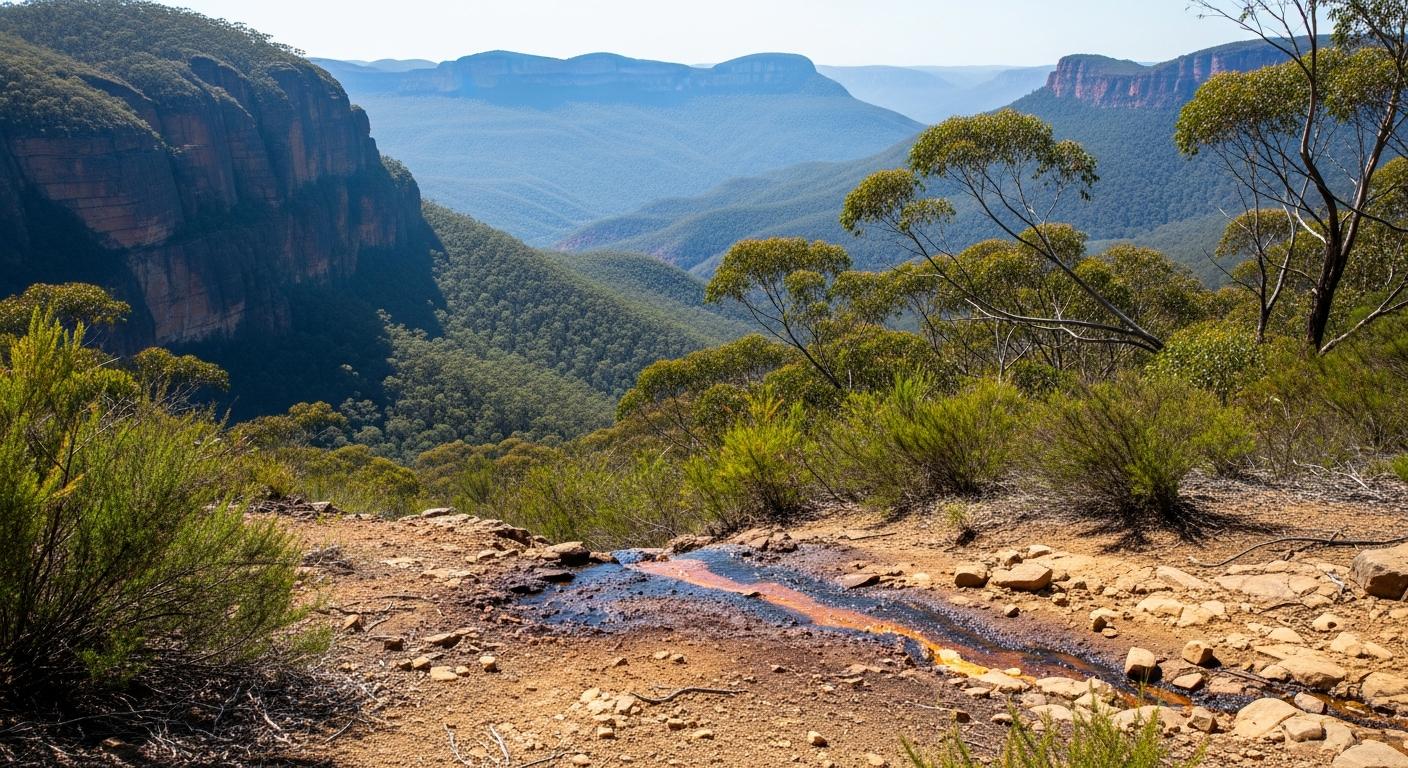
Australian context: POEO Act, ANZG 2018 freshwater guidelines, and landfill licensing obligations in NSW and beyond
Under the Protection of the Environment Operations Act 1997 (NSW), landfill facilities of the scale of the Blaxland Waste Management Facility operate under an Environment Protection Licence (EPL). EPLs routinely include conditions requiring the licensee to maintain and operate pollution control equipment, prevent the escape of pollutants to waters or land, and keep records of operational activities. A failure of the kind documented at Blaxland, where inadequate staff training was the proximate cause of a 260,000-litre leachate release, is precisely the scenario EPL conditions are designed to prevent. The fact that the council self-reported the incident is likely to have been a mitigating factor in the EPA’s decision to issue a penalty notice rather than pursue prosecution, but self-reporting does not extinguish liability.
The ecological risk posed by this discharge must be assessed against the Australian and New Zealand Guidelines for Fresh and Marine Water Quality 2018 (ANZG 2018), which provide the primary framework for evaluating impacts to freshwater receiving environments in Australia. The ANZG 2018 default guideline values for nutrients in freshwater ecosystems set low thresholds for total nitrogen and total phosphorus, reflecting the sensitivity of Australian waterways to nutrient enrichment. A discharge of this volume and concentration into a creek draining to a protected national park would, in most assessments, represent a significant exceedance of those guideline values at and downstream of the discharge point, with corresponding risks of algal proliferation, dissolved oxygen depletion, and broader aquatic habitat disruption.
References and related sources
- Primary source: www.epa.nsw.gov.au
- nationaltribune.com.au
- ANZG Water Quality Guidelines
- NSW EPA
How iEnvi can help
iEnvi provides specialist consulting services relevant to this topic. Our team includes CEnvP Site Contamination Specialists with experience across contaminated land, groundwater, remediation, ecology, and regulatory compliance.
- iEnvi contaminated land investigation services
- iEnvi remediation and validation services
- iEnvi expert services and independent review services
This is an iEnvi Machete news summary. Prepared by iEnvi to summarise the source article for contaminated land, groundwater, remediation, approvals and site risk professionals.
Published: 11 Jul 2026
Need advice on this topic? Speak to an iEnvi expert at info@ienvi.com.au or 1300 043 684, or contact us online.
Need advice on this issue? iEnvi provides practical, senior-led environmental consulting across contaminated land, remediation, ecology and environmental risk.
Team credentials Contaminated land services Remediation services Groundwater services Talk to iEnvi