
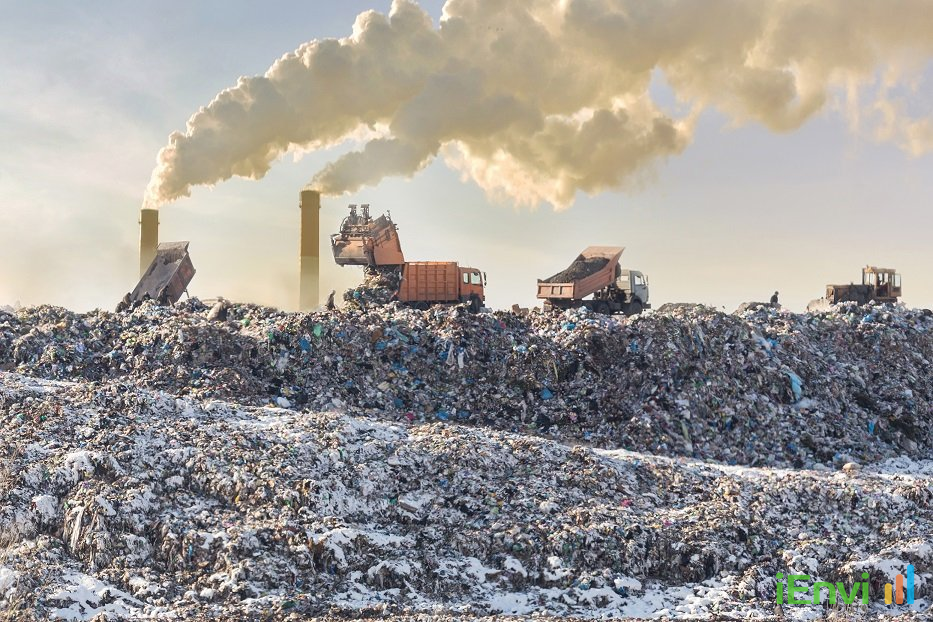
Overview of the NSW Asbestos Plan of Action
On 5 July 2025, the NSW Government released its formal Asbestos Plan of Action, representing its official response to the nine recommendations delivered by the Office of the NSW Chief Scientist and Engineer (OCSE) on the management of asbestos in recovered fines and recycled materials intended for beneficial reuse. The government accepted six of those recommendations in full and the remaining three in principle. Most significantly, it has supported in principle a transition away from the longstanding zero-tolerance approach to asbestos in recycled materials, moving instead toward a coordinated, through-chain risk-based regulatory framework. This is a consequential shift in NSW waste and contamination policy that will be felt across the construction and demolition (C&D) waste sector, contaminated land practice, and infrastructure development.
For years, the absence of a legally defensible threshold for asbestos in recovered fines has created an almost unworkable situation for practitioners, waste processors, and their clients. Any detectable asbestos in a recovered material effectively rendered it a regulated waste, foreclosing beneficial reuse options and driving material to landfill regardless of actual risk. The proposed framework changes that by introducing a clear numerical threshold and a standardised testing methodology, providing the regulatory certainty that industry and the environmental consulting profession have needed. The plan also introduces practical upstream controls at demolition sites and a household collection trial to reduce illegal dumping.
This development matters not just for NSW, but for the trajectory of asbestos-in-recycled-materials regulation nationally. Western Australia already operates with a defined threshold, and the OCSE’s recommendations effectively provide a scientific basis for NSW to align with that approach. Contaminated land consultants, site auditors, developers, councils, and demolition contractors across NSW will need to understand the framework’s structure, its testing requirements, and what it means for project planning and waste classification decisions from this point forward.
Key details of the NSW Asbestos Plan of Action framework
The proposed regulatory threshold at the centre of the Plan of Action is 0.001% w/w, equivalent to 10 mg/kg, for total asbestos content in recovered fines intended for use in non-contact scenarios. Non-contact scenarios include buried, capped, or encapsulated applications where human exposure pathways are controlled by engineered or physical separation from the material. This threshold is directly modelled on Western Australia’s current regulatory limit, providing a precedent within the Australian regulatory system rather than drawing solely on overseas benchmarks. The threshold is not a standalone criterion; it is one part of a three-part test that recovered fines must satisfy to be eligible for beneficial reuse under the proposed framework.
The three criteria that recovered fines must meet are as follows. First, there must be no visible asbestos-containing material (ACM) present in the recovered fines at the time of inspection. Second, the total asbestos content must be below 10 mg/kg (0.001% w/w) as determined by laboratory analysis. Third, asbestos must be reported as “not detected” when the material is tested using Australian Standard AS 5370, which is the current national standard for the identification and quantification of asbestos in bulk materials. The combination of visual inspection, quantitative threshold, and method-specific detection requirement creates a multi-layered compliance pathway that is intended to be both scientifically defensible and practically implementable by existing laboratories and inspection services.
Beyond the threshold itself, the Plan of Action introduces several structural initiatives across the waste supply chain. Source-separation controls are to be introduced at demolition and construction sites, with standardised protocols and mandatory training requirements for workers to ensure asbestos is isolated before demolition-derived materials enter the recycling stream. The NSW EPA is tasked with consulting industry stakeholders to develop new material acceptance, inspection, sampling, and analysis guidelines, which will be validated through a staged pilot programme before broader rollout. Additionally, a two-year trial of a free household asbestos collection and disposal service is to be established, targeting small quantities generated by residential renovation activity. That trial directly addresses the illegal dumping of residential asbestos waste into general recycling streams, which is one identified pathway by which asbestos enters recovered fines in the first place.
The OCSE’s involvement is technically significant. Its final report provided the scientific basis upon which government policy is now being built, and the acceptance of six recommendations in full signals that the government is treating the OCSE’s findings as technically sound rather than merely advisory. The three in-principle acceptances, which include the risk-based threshold itself, indicate that further consultation and pilot work is required before those elements are formalised as regulatory instruments. Practitioners should not treat the threshold as currently operative; it remains a proposed direction subject to EPA guideline development and stakeholder consultation.
Australian context: how this fits within existing asbestos and waste regulation frameworks
Asbestos regulation in Australia operates across multiple overlapping frameworks. At the national level, the Model Work Health and Safety (WHS) Regulations set baseline requirements for asbestos management, identification, and removal, and are adopted with state-specific variations across most jurisdictions. Safe Work Australia’s Code of Practice for the Management and Control of Asbestos in the Workplace provides practical guidance that sits beneath those regulatory requirements, and state-based environment protection legislation governs the classification and disposal of asbestos waste. In NSW, the Protection of the Environment Operations Act 1997 and associated regulations establish the waste classification framework within which recovered fines and C&D materials are assessed. The Plan of Action sits at the intersection of these frameworks, requiring coordinated updates to both environment protection and work health and safety instruments to give the proposed threshold and testing requirements full regulatory effect.
The significance of Western Australia’s existing threshold cannot be overstated in this context. WA has operated with a defined numerical limit for asbestos in recycled materials for several years, providing a real-world reference point for the feasibility of a threshold-based approach. The OCSE drew on WA’s experience in formulating its recommendations, and the alignment of NSW’s proposed 10 mg/kg threshold with WA’s limit creates the conditions for a nationally consistent approach to emerge over time. Other jurisdictions will be watching NSW’s implementation closely, and the EPA guidelines and pilot programme outcomes will likely inform regulatory reform discussions in other states.
For contaminated land practitioners, the Plan of Action also has implications for how recovered fines are characterised and managed under the NSW EPA’s Waste Classification Guidelines and the broader site auditor scheme. Once the proposed threshold and testing methodology are formalised, the basis for classifying recovered fines containing trace asbestos will shift from a binary detectable/non-detectable determination to a quantitative risk-based assessment. That shift will require updates to standard operating procedures, sampling and analysis plans, and potentially to audit criteria used by accredited site auditors assessing sites where recovered fines have been or are proposed to be placed.

What this means for practitioners
The Plan of Action does not immediately change the regulatory obligations applying to asbestos in recovered fines in NSW. The zero-tolerance position remains in effect until the EPA completes its guideline development process, the pilot programme is conducted and evaluated, and the relevant regulatory instruments are amended. Practitioners should continue to apply existing waste classification requirements and asbestos management obligations in the interim.
However, the Plan of Action does signal the direction of travel clearly enough that forward-looking project planning should take it into account. Developers and contractors working on long-duration infrastructure projects, in particular, should monitor the EPA’s consultation and guideline development process, as the framework may be operational before those projects conclude. Contaminated land consultants advising on recovered fines reuse should begin familiarising themselves with the three-part test structure and the AS 5370 testing methodology so that they are positioned to advise clients accurately once the framework is formalised.
The household collection trial is of particular relevance to councils and waste facility operators. If the trial demonstrates effective diversion of residential asbestos waste from general recycling streams, it may become a permanent service and could be accompanied by regulatory changes to how small quantities of residential asbestos waste are classified and managed. Councils involved in the trial should document outcomes carefully to contribute to the evidence base informing any subsequent policy decisions.
Across the sector, the Plan of Action represents the most substantive shift in NSW’s approach to asbestos in recycled materials in many years. The regulatory framework that emerges from the EPA’s consultation and pilot work will define practice standards for C&D waste processing, contaminated land assessment, and infrastructure development for the foreseeable future. Staying engaged with the consultation process is the most direct way for practitioners to ensure the framework reflects operational realities and is implementable within existing industry capabilities.
References and related sources
- Primary source: www.epa.nsw.gov.au
- bcsda.org.au
- aclca.com.au
- enviliance.com
- nsw.gov.au
How iEnvi can help
iEnvi provides specialist consulting services relevant to this topic. Our team includes CEnvP Site Contamination Specialists with experience across contaminated land, groundwater, remediation, ecology, and regulatory compliance.
- iEnvi remediation services
- iEnvi asbestos services
- iEnvi contaminated land investigation services
- iEnvi expert services and independent review services
This is an iEnvi Machete news summary. Prepared by iEnvi to summarise the source article for contaminated land, groundwater, remediation, approvals and site risk professionals.
Published: 06 Jul 2026
Need advice on this topic? Speak to an iEnvi expert at info@ienvi.com.au or 1300 043 684, or contact us online.
Need advice on this issue? iEnvi provides practical, senior-led environmental consulting across contaminated land, remediation, ecology and environmental risk.
Team credentials Contaminated land services Remediation services Groundwater services Talk to iEnvi