
Overview
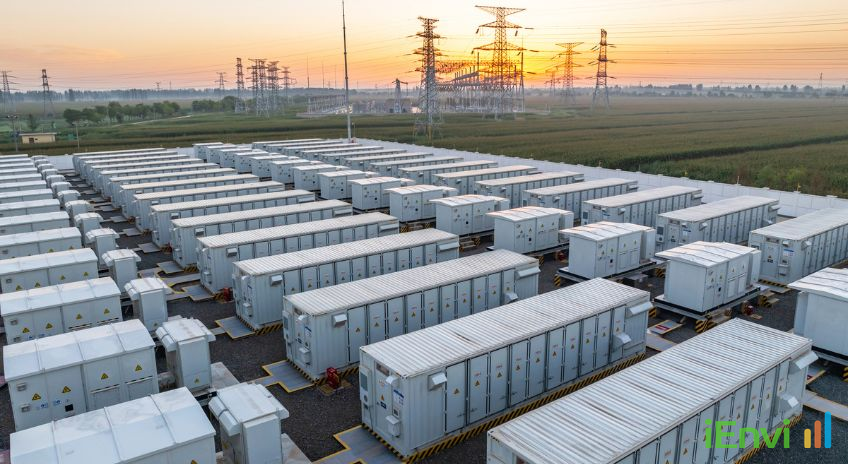
Swedish renewable energy developer OX2 has referred its proposed Riverland Battery Energy Storage System (BESS) in South Australia for assessment under the Commonwealth Environment Protection and Biodiversity Conservation Act 1999 (EPBC Act). The facility would provide 300 MW of capacity with up to four hours of storage (1,200 MWh). It would sit on private rural land about 10.5 km northeast of Morgan and roughly 150 km northeast of Adelaide, and connect directly into the 330 kV Project EnergyConnect transmission corridor. Renew Economy reported the referral on 12 November 2026.
The most useful detail for environmental practitioners is the footprint. According to the referral documentation, an earlier version of the project paired the battery with a 330 MW photovoltaic solar array. The current proposal is a standalone BESS. The project lease covers 479.61 hectares, and 477.45 hectares of that is native vegetation. Without the solar array, proposed native vegetation clearance falls to 49.50 hectares, or about 10% of the lease.
For developers, planning lawyers and local government assessors, the referral shows how early layout decisions shape approval risk on renewable energy projects. On a site that is almost entirely native vegetation, every hectare of infrastructure becomes a clearance decision. That decision is tested under federal and state legislation in parallel, and it carries offset costs, survey obligations and long-term site management responsibilities.
Key details
The proposed 49.50 hectare disturbance area would accommodate 344 battery enclosures, 86 inverter and transformer stations, a high voltage switchyard and internal access roads. The referral sets construction to begin in 2027, with commercial operations targeted for 2029. The four-hour storage duration means the facility can discharge its full 300 MW rating for up to four hours. This is the basis of the 1,200 MWh energy figure.
The site’s vegetation profile explains why footprint matters so much here. Native vegetation makes up about 99.5% of the 479.61 hectare lease, leaving only 2.16 hectares of non-native or previously cleared ground. Almost any built element will therefore require clearance. The proposed 49.50 hectares equals about 10.4% of the mapped native vegetation on the lease. Roughly 428 hectares of native vegetation would remain outside the disturbance footprint. A 330 MW solar array, which typically needs a large contiguous area for panel rows, would have required clearance on a far greater scale on the same land.
An EPBC Act referral does not mean the project is under assessment yet, and it is not an approval. Under the referral process, the referral is published for 10 business days of public comment. The Minister or a delegate must decide within 20 business days of receiving the referral, a period that includes the comment window, whether the proposal is a controlled action. A controlled action is one likely to have a significant impact on one or more Matters of National Environmental Significance (MNES). If it is a controlled action, an assessment approach is set and the project moves into formal assessment. If it is not, the project can proceed without further federal approval, subject to any conditions on the manner in which it is undertaken. Given recent legislative reform activity, practitioners should confirm the statutory timeframes that currently apply.
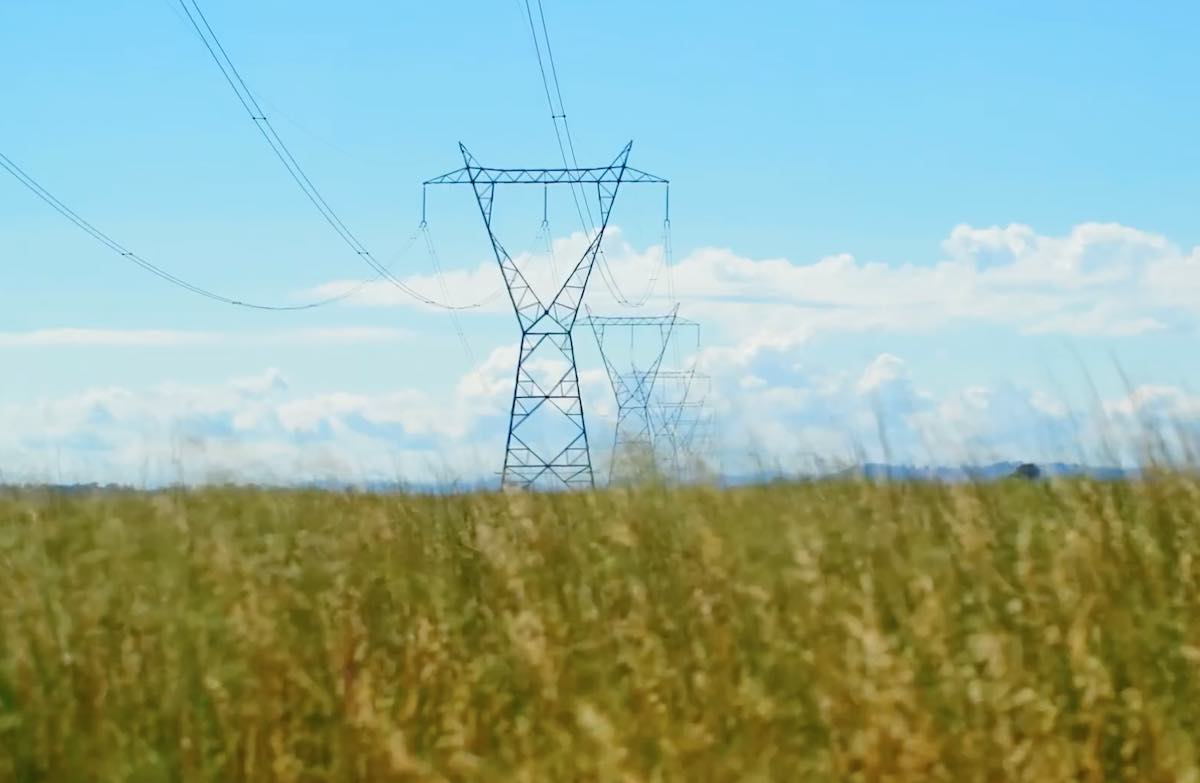
The grid connection is a deliberate part of the siting strategy. Project EnergyConnect is a 330 kV interconnector that forms part of the transmission build identified in the Australian Energy Market Operator’s Integrated System Plan. Placing the battery next to that corridor should reduce the need for new transmission lines and the clearance that goes with them. Connection assets, including the switchyard and any links to the interconnector, still form part of the assessed action. They need to be captured in the ecological survey area and the impact calculations.
Australian context
In South Australia, native vegetation clearance is regulated under the Native Vegetation Act 1991 (SA) and the Native Vegetation Regulations 2017 (SA). This approval process is separate from the EPBC Act. Clearance applications are assessed against a mitigation hierarchy of avoid, minimise, then offset. Where clearance is approved, the proponent generally has to deliver a Significant Environmental Benefit (SEB). An SEB can be provided as an on-ground offset, which is commonly secured through a Native Vegetation Heritage Agreement, or as a payment into the Native Vegetation Fund. The SEB obligation is scaled to the extent and condition of the vegetation cleared. A reduction from a solar-and-storage footprint to 49.50 hectares therefore has a direct effect on offset liability.
Development approval for the facility sits under the Planning, Development and Infrastructure Act 2016 (SA). That Act provides the assessment pathways for major and Crown-sponsored development as well as standard development applications. The Riverland BESS therefore faces three overlapping regulatory layers: federal MNES assessment, state native vegetation clearance and state development assessment. Each relies on the same ecological baseline, so survey quality and timing affect all three. In semi-arid Riverland and Murray Mallee country, flora and fauna detection often depends on season and rainfall. Survey timing can drive the overall program more than engineering design does.
Similar regimes apply in the eastern states, so the lesson carries over. In New South Wales, the Biodiversity Conservation Act 2016 and the Biodiversity Offsets Scheme turn clearance into a credit obligation calculated under the Biodiversity Assessment Method. In Victoria, native vegetation removal is controlled through Clause 52.17 of planning schemes and the state guidelines for removal, destruction or lopping of native vegetation. In Queensland, the Vegetation Management Act 1999 regulates clearing of remnant and regulated regrowth vegetation. Clearing for development is assessed under the Planning Act 2016 against the State Development Assessment Provisions, and significant residual impacts can trigger offsets under the Environmental Offsets Act 2014. In each state, cutting clearance at the layout stage reduces offset costs and survey effort as well as approval risk.
References and related sources
- Primary source: reneweconomy.com.au
- reneweconomy.com.au
- EPBC Act
How iEnvi can help
iEnvi provides specialist consulting services relevant to this topic. Our team includes CEnvP Site Contamination Specialists with experience across contaminated land, groundwater, remediation, ecology, and regulatory compliance.
- iEnvi contaminated land investigation services
- iEnvi remediation and validation services
- iEnvi expert services and independent review services
This is an iEnvi Machete news summary. Prepared by iEnvi to summarise the source article for contaminated land, groundwater, remediation, approvals and site risk professionals.
Published: 16 Nov 2026
Need advice on this topic? Speak to an iEnvi expert at info@ienvi.com.au or 1300 043 684, or contact us online.
Need advice on this issue? iEnvi provides practical, senior-led environmental consulting across contaminated land, remediation, ecology and environmental risk.
Team credentials Flora and fauna assessment Contaminated land services Remediation services Talk to iEnvi