
Overview
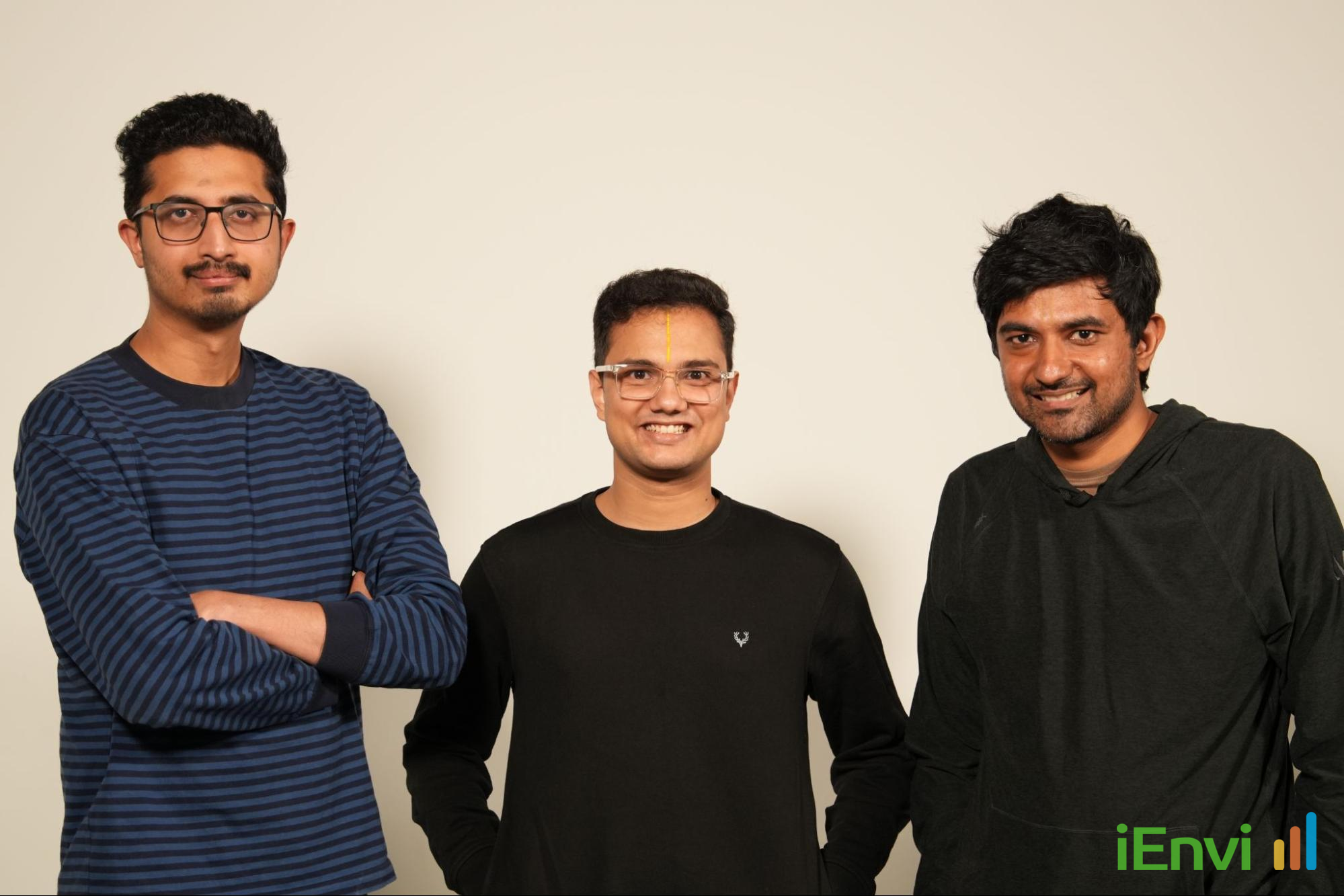
San Francisco-based startup Pramaana Labs emerged from stealth on 17 June 2026 with a USD $27 million seed round, one of the largest seed raises in enterprise AI to date. The round was led by Khosla Ventures, with participation from Accel, BoldCap, Nexus Venture Partners, Premji Invest, and Unbound. The company was co-founded by IIT Madras alumni and is led by CEO Ranjan Rajagopalan. Pramaana’s core proposition is a deterministic verification layer built on top of standard large language models (LLMs), designed to eliminate AI hallucinations in high-stakes, heavily regulated professional workflows.
The significance of this development extends well beyond the technology sector. For professional services firms operating under statutory obligations, including environmental consultants, engineers, lawyers, and auditors, the chronic unreliability of generative AI has made autonomous deployment commercially and legally untenable. A misquoted investigation level, an incorrect regulatory threshold, or a fabricated legislative reference can expose practitioners to professional indemnity claims, regulatory sanctions, and project delays. Pramaana’s approach directly targets this liability gap by shifting AI outputs from probabilistic to mathematically provable, a distinction with material consequences for how regulated industries can deploy AI in practice.
The technology draws on formal verification methods historically confined to semiconductor chip design and aerospace engineering, fields where a single calculation error can cause catastrophic failure. Applying this rigour to commercial LLM outputs at scale represents a genuine technical departure from current enterprise AI architectures, which typically rely on retrieval-augmented generation (RAG) or prompt engineering to reduce, but not eliminate, the risk of incorrect outputs.
Key details: formal verification, LEAN proof language, and the hybrid AI architecture
At the centre of Pramaana’s architecture is LEAN, an open-source formal proof language developed primarily for use by mathematicians to construct and verify mathematical proofs with absolute logical certainty. In Pramaana’s system, LEAN functions as a deterministic proof engine. When a user submits a natural language query, a conventional LLM interprets the query and generates a reasoned response. That response is then routed through the LEAN-based engine, which tests the output against a library of machine-verifiable mathematical statements derived from codified regulations and domain rules. If the AI’s reasoning chain cannot be formally proved against those codified rules, the system refuses to return an answer rather than producing a confident but incorrect one.
This architecture is technically described as a hybrid deterministic system. The probabilistic component, the LLM, handles language understanding and natural language generation. The deterministic component, the LEAN proof engine, handles logical verification and rule adherence. The two layers operate in sequence rather than in parallel, meaning the final output a user receives has passed a mathematical verification gate. This is fundamentally different from RAG-based approaches, where retrieved source material is used to inform or constrain LLM outputs but does not formally prove them. RAG reduces hallucination frequency; formal verification eliminates it within the scope of codified rules.
Pramaana is beginning with three narrow, high-stakes verticals: statutory tax law, healthcare safety and clinical protocols, and financial compliance. These domains were selected because their governing rules are extensive, precise, and codifiable into logical statements, making them tractable for formal verification at the current state of the technology. To convert ambiguous regulatory language into executable mathematical code, the company is working with elite domain advisors. These include former IRS Commissioner Danny Werfel, who is advising the tax track, and academic researchers from UC Berkeley, IIT Delhi, and IIT Madras overseeing cybersecurity and drug discovery applications. The involvement of a former national tax regulator signals the company’s intent to achieve genuine regulatory fidelity rather than approximate compliance mapping.
CEO Ranjan Rajagopalan articulated the company’s core thesis in the following terms: “AI has an accountability gap. The world’s hardest problems are not unsolvable. They are unformalized. Every domain where being wrong can cost someone their health, money, or freedom has rules. Pramaana encodes those rules into a form that a machine can reason over with certainty.” This framing is significant because it identifies the bottleneck not as AI capability but as rule formalisation, a systems engineering and domain knowledge problem rather than a model training problem. The implication is that domains with well-structured, codifiable regulatory frameworks are the most immediately addressable.

Australian context: implications for regulated professional services and environmental practice
Australia’s environmental regulatory landscape is precisely the kind of domain Pramaana’s thesis targets. The National Environment Protection (Assessment of Site Contamination) Measure 2013 (NEPM 2013) sets out health investigation levels (HILs), ecological investigation levels (EILs), and groundwater investigation levels (GILs) across hundreds of contaminants and land use scenarios. The PFAS National Environmental Management Plan (PFAS NEMP, currently version 2.0 with version 3.0 in development) specifies guideline values for PFAS compounds in soil, groundwater, and surface water. State EPA guidelines in Queensland, New South Wales, Victoria, and South Australia layer additional requirements across waste classification, site audit frameworks, and notification thresholds. The Australia and New Zealand Guidelines for Fresh and Marine Water Quality (ANZG 2018) set surface water quality criteria applied across jurisdictions for ecological and human health purposes.
References and related sources
- Primary source: www.globenewswire.com
- finsmes.com
- yourstory.com
- thesaasnews.com
- theaiworld.org
How iEnvi can help
iEnvi integrates technology and data-driven approaches into environmental consulting. We monitor AI and technology developments that affect how environmental professionals deliver services to clients.
This is an iEnvi Machete news summary. Prepared by iEnvi to summarise the source article for environmental professionals tracking AI, data, and technology developments that affect consulting and project delivery.
Published: 21 Jun 2026
Need advice on this topic? Speak to an iEnvi expert at info@ienvi.com.au or 1300 043 684, or contact us online.
Need advice on this issue? iEnvi provides practical, senior-led environmental consulting across contaminated land, remediation, ecology and environmental risk.
Environmental management plans Contaminated land advice Groundwater services Ecological assessment Talk to iEnvi