
Overview
On 22 July 2026, the Australian and Western Australian Governments jointly announced more than $3.7 million in grants to 16 regional and remote local government authorities across Western Australia. The funding is delivered through the national Recycling Modernisation Fund (RMF), a federal programme established to help Australian councils adapt to the requirements of the nation’s waste export bans. The announcement represents one of the more targeted applications of RMF funding to date, specifically addressing the physical and logistical barriers that have historically made resource recovery commercially unviable in remote parts of the country.
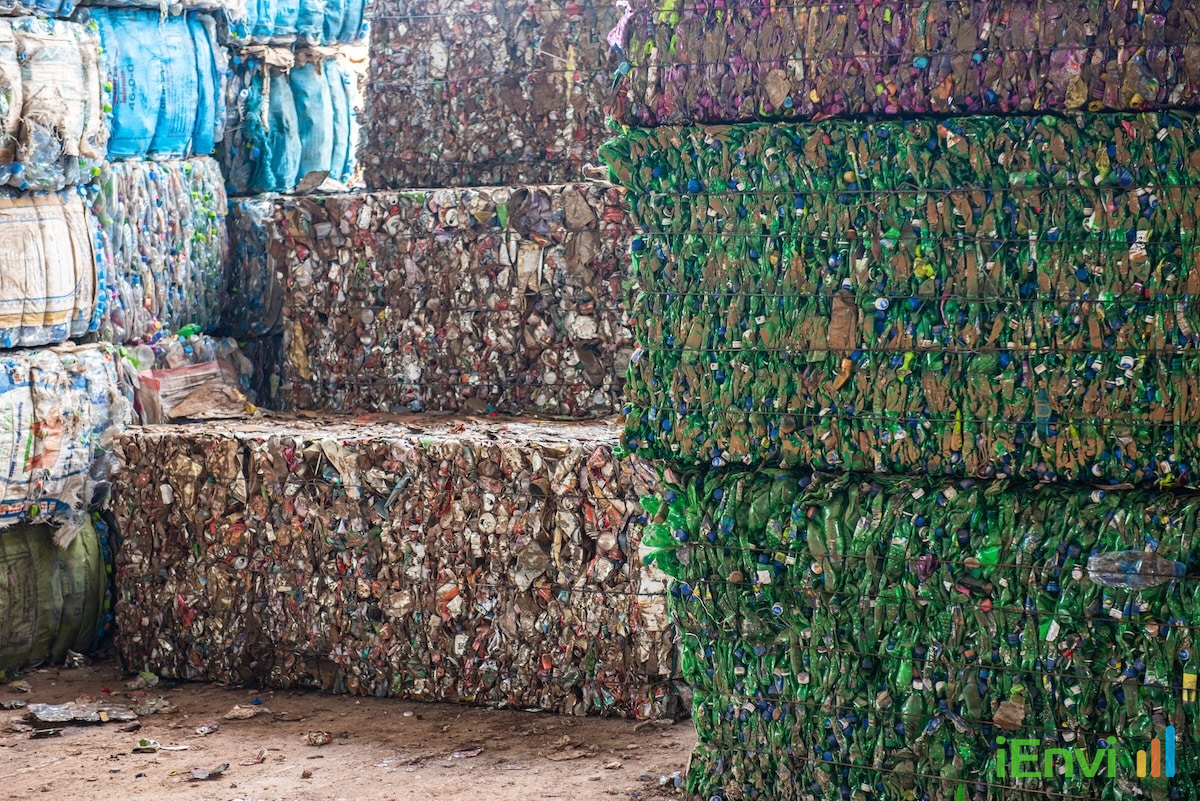
The grants cover infrastructure upgrades across a broad geographic spread, from the Kimberley and Pilbara in the north to the Great Southern and Wheatbelt regions in the south. Materials in scope include those most directly affected by Australia’s staged export bans: plastics, paper, cardboard, and whole used tyres. Each of these material streams presents distinct handling, storage, and transport challenges at remote facilities, and the funded projects reflect that diversity, covering road upgrades, baling equipment, transfer station construction, and purpose-built recycling hubs.
For environmental planners, waste management engineers, local government officers, and environmental consultants working in regional Western Australia, this announcement has layered significance. It creates a direct pipeline of infrastructure works requiring environmental authorisation, and it signals sustained government commitment to supporting regional compliance with Western Australia’s Waste Avoidance and Resource Recovery Strategy 2030. Understanding the scope of these projects, the regulatory framework they operate within, and the practical approvals pathway is essential for practitioners advising councils and private operators in the affected areas.
Key details of the $3.7 million RMF grants to regional and remote WA councils
The total funding package of $3.7 million is distributed across 16 local government authorities, with individual grant amounts varying considerably based on project scope. The largest single allocation is $576,308 to the Shire of Derby and West Kimberley, directed at upgrading Steel Street, which is the sole access road to the Derby Waste Management Facility. The upgrade will bring the road to an all-weather standard, enabling uninterrupted year-round operational access regardless of wet season conditions. In a region where the wet season can render unsealed roads impassable for weeks at a time, this is not a minor convenience improvement but a fundamental operational requirement for facility continuity.
The second largest grant of $521,664 goes to the Shire of Dowerin, which will use the funding to establish nine new waste transfer stations across seven Wheatbelt local government areas. This is a notable regional collaboration, with a single grant enabling infrastructure that will serve a cluster of councils sharing geographic proximity and logistical constraints. The Shire of Plantagenet receives $348,258 to construct a purpose-built Recycling Hub at the Mount Barker Waste Management Facility in the Great Southern region. The Shire of East Pilbara receives $333,135 to install cardboard baling infrastructure in Newman, addressing the inefficiency of transporting uncompressed cardboard over the significant distances involved in moving material from the Pilbara to processing facilities in Perth or elsewhere. The City of Albany receives $220,640 to expand regional waste processing infrastructure at the Hanrahan Road Waste Facility, with the project covering collection and processing for cardboard, plastic, and expanded polystyrene. The City of Greater Geraldton receives $117,000 to upgrade its Meru Waste Disposal Facility transfer station, specifically to double the site’s cardboard storage capacity. The Shire of Broome receives $114,330 for infrastructure upgrades at the Broome Waste Management Facility focused on improving plastic collection, recovery, storage, and transport efficiency.
The Recycling Modernisation Fund itself was established by the Australian Government to support the infrastructure investment necessary for councils and industry to comply with Australia’s waste export bans, which have progressively tightened since 2021. The export ban framework prohibits the export of mixed waste plastic, mixed paper and cardboard, whole used tyres, and glass. These bans shifted the economic equation for waste management significantly, as councils that previously relied on exporting mixed and low-grade recyclables to overseas processors were forced to find domestic alternatives. Without local sorting, baling, and consolidation infrastructure, regional councils faced a choice between sending unsorted material to landfill or absorbing prohibitive transport costs for bulky, unprocessed streams. The RMF grants are specifically designed to close that infrastructure gap.
The funded projects collectively represent a shift toward local processing and consolidation as a precondition for economically viable regional recycling. Baling cardboard in Newman before transporting it south, for example, dramatically reduces transport volume and cost per tonne. Constructing an all-weather access road to a remote facility removes a seasonal constraint that previously forced operational shutdowns. These are infrastructure-level interventions that change the unit economics of regional resource recovery in ways that minor operational improvements cannot achieve.
Australian context: waste export bans, WA regulatory framework, and regional compliance obligations
The regulatory backdrop for this funding announcement is the intersection of federal waste export ban legislation and Western Australia’s own statutory planning framework for waste. At the federal level, the Recycling and Waste Reduction Act 2020 provides the legislative foundation for Australia’s waste export bans, with the bans on mixed waste plastics, mixed paper and cardboard, whole used tyres, and glass introduced progressively from 2021 onwards. These bans were designed to stimulate domestic recycling infrastructure investment by removing the option of exporting low-grade and mixed material streams to overseas processors, predominantly in South and Southeast Asia.
In Western Australia, the primary statutory instrument governing waste management is the Waste Avoidance and Resource Recovery Act 2007, administered by the Waste Authority. The Waste Authority is responsible for the Waste Avoidance and Resource Recovery Strategy 2030, which sets out targets and policy directions for the state’s waste sector. Local government authorities in WA have obligations under this framework, including obligations relating to resource recovery rates and diversion from landfill. For remote and regional councils, meeting these obligations has been significantly complicated by the economics of distance: the cost of transporting recyclable material to metropolitan processing facilities often exceeds the value of the recovered material, making resource recovery financially unviable without either infrastructure investment or subsidy.
The RMF grants announced in July 2026 directly address this infrastructure deficit. By funding baling equipment, transfer stations, access road upgrades, and recycling hubs at the local level, the programme reduces the per-tonne cost of resource recovery sufficiently to make it commercially viable for regional operators. For environmental practitioners advising councils in the affected areas, the existence of this funded infrastructure pipeline creates a corresponding pipeline of approvals work. Transfer station construction, waste facility upgrades, and road works in regional WA will each trigger assessment requirements under the Environmental Protection Act 1986 and, depending on project scale and location, may also require referral under the Environment Protection and Biodiversity Conservation Act 1999 at the federal level.
References and related sources
- Primary source: www.wa.gov.au
- insidewaste.com.au
- www.wa.gov.au
- www.wa.gov.au
- wasteauthority.wa.gov.au
How iEnvi can help
iEnvi provides specialist consulting services relevant to this topic. Our team includes CEnvP Site Contamination Specialists with experience across contaminated land, groundwater, remediation, ecology, and regulatory compliance.
- iEnvi contaminated land investigation services
- iEnvi remediation and validation services
- iEnvi expert services and independent review services
This is an iEnvi Machete news summary. Prepared by iEnvi to summarise the source article for contaminated land, groundwater, remediation, approvals and site risk professionals.
Published: 23 Jul 2026
Need advice on this topic? Speak to an iEnvi expert at info@ienvi.com.au or 1300 043 684, or contact us online.
Need advice on this issue? iEnvi provides practical, senior-led environmental consulting across contaminated land, remediation, ecology and environmental risk.
Team credentials Contaminated land services Remediation services Groundwater services Talk to iEnvi