
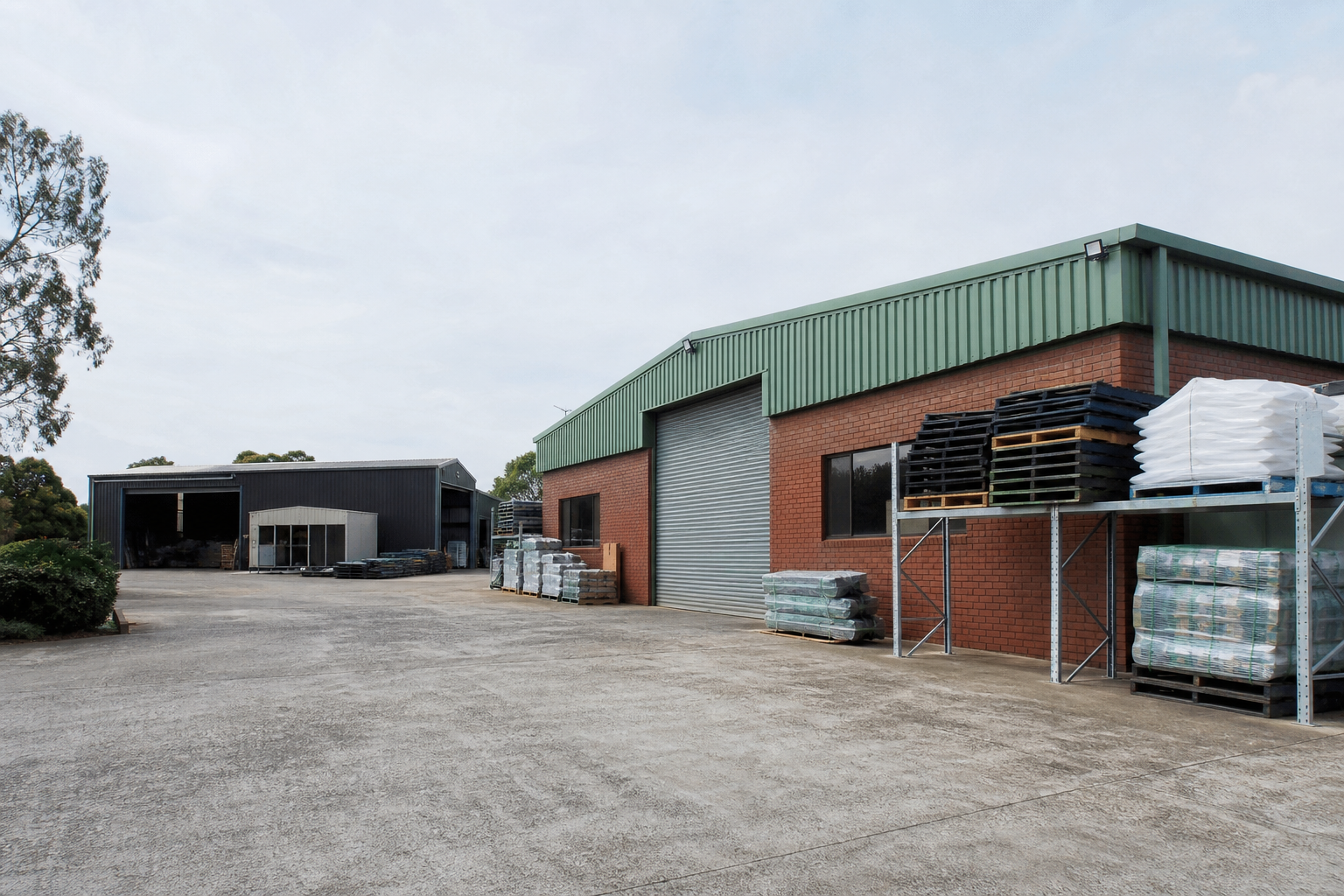
Project overview
We completed a baseline environmental due diligence assessment at St Clair, South Australia, for a pre-lease industrial plastics facility. The assessment was issued on 23 to 24 June 2026. The purpose was to establish the environmental condition of the premises before a lease commenced, so that existing contamination, hazardous building materials and related liabilities could be documented at the start of occupation.
Baseline environmental due diligence is a practical tool for industrial leasing. It separates pre-existing conditions from any change that may occur during a tenant’s occupation. Our scope covered soil, groundwater, PFAS swabs and hazardous building materials, matching the industrial plastics setting and the need for a defensible lease baseline.
What we did
We investigated soil and groundwater, collected PFAS swabs, and inspected hazardous building materials. The program was designed to capture the main environmental media and building fabric issues that commonly affect industrial leases, without expanding into work that was not required for a baseline record.
- Soil investigation, including assessment of fill and shallow hydrocarbon impacts.
- Groundwater sampling from existing or installed wells as part of the baseline program.
- PFAS swabs together with soil PFAS analysis.
- Hazardous building materials inspection, including asbestos-containing materials and lead paint.
- Lease-baseline recommendations so pre-existing conditions can be recorded in the lease file.
Findings
We identified localised shallow total recoverable hydrocarbons in fill. Concentrations were below human-health assessment levels. The hydrocarbon impact is therefore a baseline condition to record, not a driver for human-health remediation before lease occupation on the information available to this assessment.
Trace PFAS was identified in soil. One groundwater well recorded a minor PFOS exceedance of a conservative freshwater guideline. The well sits in a regional industrial catchment, which is relevant context for interpreting a modest exceedance against a guideline that is not a site-specific industrial use criterion. The result forms part of the baseline groundwater record rather than a standalone trigger for lease refusal.
Hazardous building materials comprised bonded asbestos-containing material and intact lead paint. Bonded asbestos in sound condition and lead paint that remains intact are typically managed in situ through registers, inspection and controls during maintenance or disturbance, rather than through immediate removal, unless a specific works program requires otherwise.
Lease-baseline recommendations
We provided lease-baseline recommendations so the parties can document the conditions summarised above at the start of the lease. Typical baseline practice is to attach the due diligence report, record the localised shallow hydrocarbons in fill, the trace PFAS in soil, the minor PFOS groundwater result, and the presence of bonded asbestos-containing material and intact lead paint. That record protects both lessor and lessee if conditions are later compared against the start of occupation.
The assessment does not invent a remediation program where human-health levels were not exceeded, and it does not treat a conservative freshwater guideline exceedance in a regional industrial catchment as equivalent to a human-health or potable-use failure. It does recommend that the hazardous building materials be managed through the usual registers and disturbance controls.
Talk to our team
If you need baseline environmental due diligence before an industrial lease, including soil, groundwater, PFAS and hazardous building materials, we can help. Call us on 1300 043 684 or visit https://ienvi.com.au/contact/ to discuss your premises.
Related services for this project. iEnvi links delivered project work back to the service pathways clients use for similar sites — investigation, remediation, ecology and environmental management.
Contaminated land advice Remediation services Groundwater services Asbestos in soil advice Talk to iEnvi