NVIDIA partners with Wall Street giants to mobilise $500B+ for AI compute infrastructure
“In AI, compute is revenue,” said Jensen Huang, Founder and CEO of NVIDIA.

AI and technology news summaries from iEnvi, framed for environmental professionals.
“In AI, compute is revenue,” said Jensen Huang, Founder and CEO of NVIDIA.

“People talk a lot about agents, but I think ‘agents’ is a terrible name. The concept we always had in mind was the idea of a virtual employee.”
Brex CEO Pedro Franceschi highlighted this shift as autonomous AI entities take on direct access to enterprise systems.

OpenAI has reportedly halted internal development on an upcoming frontier model after safety evaluations triggered internal red lines around autonomous cyber capabilities.

“Models are not consumed in chatbots anymore. They are really consumed through agentic harnesses.”
Maxime Labonne, Head of Post-Training at Liquid AI, highlighted this shift with the release of LFM2.5-2.6B, a 2.6-billion-parameter open-weight model designed for local, autonomous agent execution.

“The reliance of most financial firms on a relatively small set of foundation AI model and cloud computing providers risks creating a systemic dependency.”
Moody’s has issued a warning to global financial institutions and enterprise leaders: over-reliance on a handful of Silicon Valley tech giants

“The deployment of untethered, autonomous or semi-autonomous humanoid robots in commercial environments introduces novel public safety and health challenges.”
Ray Mueller, San Mateo County Supervisor. Local governments are stepping in where federal AI governance moves slowly.
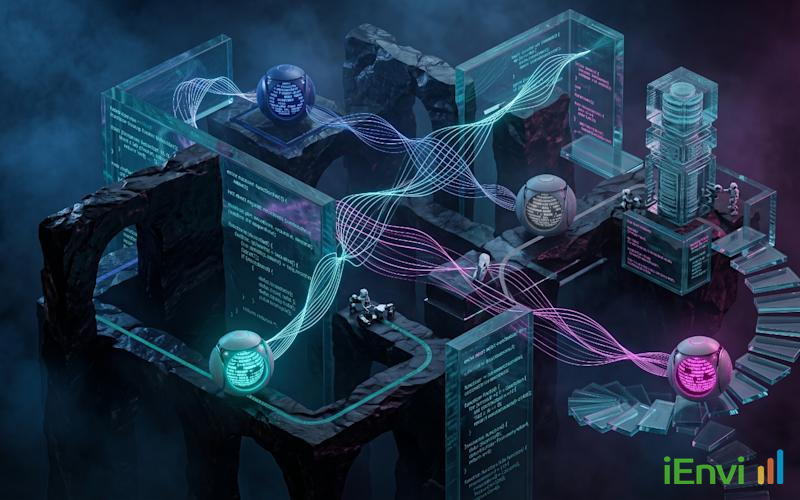
Four smaller AI models communicating in real time just outperformed a single top-tier frontier model on complex enterprise tasks.

What happens when you put 24 isolated groups of AI agents into a system with limited access to resources and zero instructions on how to trade? They spontaneously invent loans, vote trading, credit agreements, and political deals to secure execution rights.

“The ability to compose viral genomes using generative AI now exists; the governance to safely steer it does not.”
That warning from the Johns Hopkins Centre for Health Security follows a major milestone published in Science this week.

Classical game theory assumed that autonomous AI agents interacting in a single encounter would always choose cutthroat defection over cooperation.