
What does a fire risk evaluation for a metal recycling facility involve?
A fire risk evaluation for a metal recycling facility reviews stockpile configurations, drainage containment, hot works controls, and EPA compliance. In Victoria, facilities handling combustible recyclable and waste materials must meet EPA Publication 1667.3. Fire water containment must also prevent contamination of nearby waterways.
By Michael Nicholls, Managing Director, iEnvironmental Australia. CEnvP Site Contamination Specialist.
The Problem
Metal recycling facilities handle everything from cars to cables. The risks that come with the territory are real. An active Melbourne industrial site was facing EPA Improvement Notices and needed to progress a Planning Permit Application for expanded operations. The regulatory pressure was immediate. With stockpiles butting up against a creek and a manual firewater diversion system on site, the business needed an independent expert evaluation.
Project Summary
iEnvi deployed a specialist inspection team. This team paired a senior fire risk engineer with a principal environmental scientist to assess conditions against EPA Publication 1667.3 (Management and Storage of Combustible Recyclable and Waste Materials). They identified five significant risk areas.
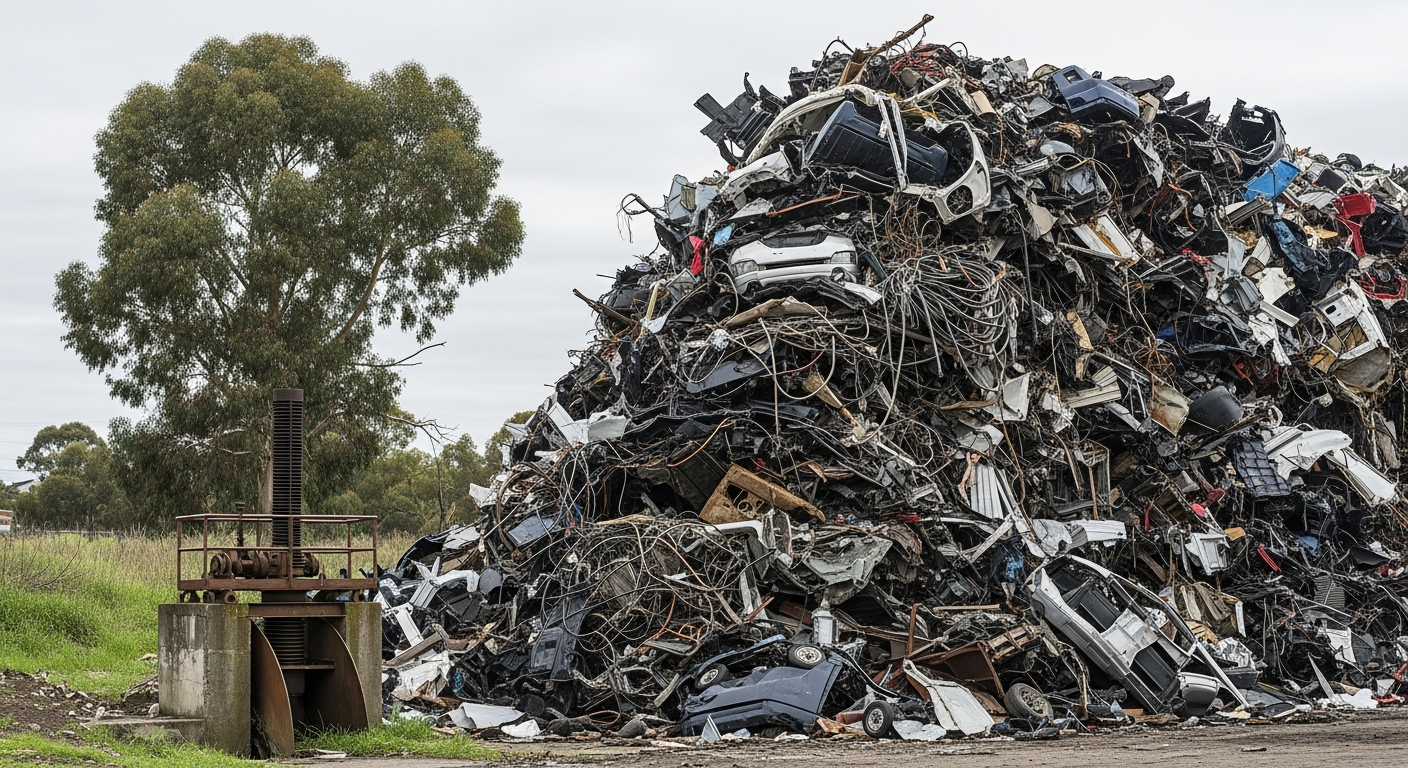
First, stockpile placement. Loose combustible material was stored within the Land Subject to Inundation Overlay, adjacent to a creek. Any stormwater or firefighting runoff would track directly into the waterway. Second, firewater containment. The site’s diversion penstock, the valve that redirects firewater away from the creek, was manually operated. Automation and a direct interlock with the fire alarm system were required. Third, multiple stockpiles exceeded the recommended 4-metre height limit. The main carbon steel pile measured approximately 8 metres at inspection. Fourth, hot works using oxy-cutters were occurring outside designated zones, significantly increasing ignition probability. Fifth, lithium-ion batteries and gas cylinders were found mixed with general scrap. Both require dedicated, separated storage under Australian Standards.
iEnvi delivered a prioritised Fire Risk Evaluation Letter and a companion Stockpile Management Plan. The plan was benchmarked against a comparable corporate compliance standard. The report was structured to directly satisfy the EPA Improvement Notices and support the Planning Permit Application.
Solution & Benefit
The client received a clear, structured compliance roadmap, organised by priority level. Immediate actions included relocating stockpiles out of the flood zone, automating the diversion penstock, and reducing pile heights. Secondary actions addressed battery segregation, formal hot works permit systems, and concrete bunker design for compliant high-volume storage. With a documented professional assessment on record, the client was equipped to demonstrate SFARP (So Far As Reasonably Practicable) compliance to the EPA. This allowed them to move the planning application forward with confidence.
Related services
Contaminated land advice | Environmental management plans | Talk to iEnvi
For innovative solutions that are focussed on giving you the very best outcome, contact our expert team of environmental consultants today.
Need advice on this issue? iEnvi provides practical, senior-led environmental consulting across contaminated land, remediation, ecology and environmental risk.
Contaminated land services Environmental management Talk to iEnvi