

Project summary: petrol station lease baseline investigation, western Sydney NSW
iEnvi was engaged by a petroleum distributor to complete a lease baseline investigation to support lease renewal and continued operation of a petrol station in western Sydney, NSW. The investigation aligned with requirements under the Protection of the Environment Operations (Underground Petroleum Storage Systems) Regulation 2014 and the NSW Contaminated Land Management Act 1997 (Section 105 reporting obligations).
What we did
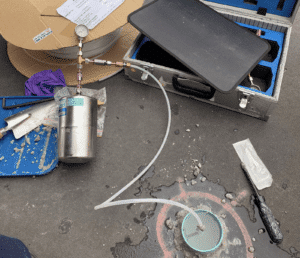
- Drilled two bores to collect soil samples and installed two additional groundwater monitoring wells as part of the existing monitoring network.
- Collected groundwater samples using a low-flow sampling method to minimise disturbance and obtain representative chemistry.
- Installed two soil vapour pins to assess potential vapour exposure risks to onsite workers and users.
- Analysed soil, groundwater and soil vapour for petroleum hydrocarbons and associated petroleum-related constituents.
Key findings
- Soil, groundwater and soil vapour results indicate the extent of contamination related to the onsite underground petroleum storage systems (UPSS) and historical site use is limited.
- Measured concentrations and the lateral extent of petroleum hydrocarbons indicate a low risk to identified onsite and offsite receptors based on the investigation data.
- Residual contamination has reduced compared with historical data.
- Based on the data presented, there was no duty to notify under Section 105 of the NSW Contaminated Land Management Act 1997 for the conditions identified at the time of reporting.
Commercial and regulatory implications
- Lease renewal: The investigation supports lease renewal and continued operation, reducing the likelihood of transaction delays associated with contamination uncertainty.
- Risk and compliance: A finding of low residual risk and no Section 105 duty-to-notify reduces immediate regulatory exposure, but ongoing compliance with UPSS regulations and monitoring obligations remains important.
- Time and cost: Targeted investigative works (two bores, two wells, vapour pins) provided the necessary evidence with minimal intrusion and cost compared with large-scale remediation. Periodic monitoring is a lower-cost option to manage long-term risk where concentrations are stable or declining.
Practical takeaways and recommendations
- Acceptability for ongoing use: The site is considered suitable for continued operation as a petrol station provided routine operational controls and UPSS management continue.
- Ongoing monitoring: Implement a proportionate monitoring program (groundwater and vapour) to confirm trends and detect any future changes. Frequency to be agreed with the site operator and regulator based on risk.
- Record-keeping: Keep the investigation report and monitoring records available to support future lease or transaction due diligence and regulatory inspections.
- Contingency planning: Maintain a planned response procedure in the event of future UPSS leaks or changes to contaminant concentrations to protect workers, the public and the environment.
Next steps
- Review the investigation report against current regulatory requirements and confirm there are no new reporting obligations (regulations and guidance can change).
- Agree a monitoring frequency and scope with the site operator; typical programs include annual groundwater sampling and periodic vapour checks, adjusted by risk.
- Contact iEnvi for a copy of the technical report, support for regulatory queries, or to design a tailored monitoring or management program.
Call iEnvi on 13000 43684 or visit our contact page to discuss monitoring, compliance or site management for petrol stations and UPSS.
Related services for this project. iEnvi links delivered project work back to the service pathways clients use for similar sites — investigation, remediation, ecology and environmental management.
UPSS investigation and validation Contaminated land services Remediation services Groundwater services Talk to iEnvi