

Project summary
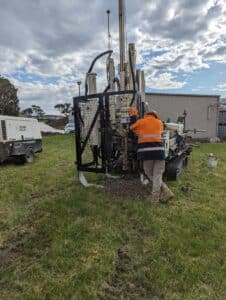
At the request of EPA Victoria, iEnvi undertook a compliance investigation at an industrial site in northern Melbourne (Victoria) to fulfil obligations under the General Environmental Duty. Field works included installation of three groundwater monitoring wells and collection of 38 soil samples from 13 locations. The investigation identified bonded asbestos in recently excavated soil stockpiles and initially elevated dissolved copper, nickel and zinc in groundwater. Further assessment showed the dissolved metal concentrations were consistent with natural site geochemistry; the immediate human‑health risk stemmed from the bonded asbestos fragments in the stockpiles.
Regulatory context (plain English)
General Environmental Duty: In Victoria, people who manage land must take reasonably practicable actions to prevent environmental harm. This is known as the General Environmental Duty. Where asbestos is present in soil, additional waste classification and handling rules apply and certain soils are treated as priority waste unless they meet criteria for safe reuse or on‑site management.
What this means for projects
- Soil containing asbestos is subject to stricter controls and tracking than ordinary excavated soil.
- To reuse excavated material as fill, the soil must meet the visual and management criteria required by EPA Victoria and not pose an unreasonable risk to health or the environment.
Investigation and key findings
- Groundwater: three monitoring wells were installed and sampled. Initial samples showed elevated dissolved copper, nickel and zinc; follow‑up sampling and interpretation indicated the concentrations were attributable to natural geochemistry rather than discrete site contamination.
- Soil: 38 soil samples were collected from 13 locations. The primary contamination of concern was bonded asbestos (i.e. asbestos contained in construction materials/fragments) present in recently excavated stockpiles.
Technical approach and remediation
iEnvi developed a site‑specific, cost‑effective remediation and verification program focused on removing visible bonded asbestos and then confirming suitability of the remaining material for beneficial reuse as clean fill. The core elements were:
- Targeted soil and groundwater sampling to define risks and to separate naturally occurring metal geochemistry from anthropogenic contamination.
- Controlled removal of visible bonded asbestos from excavated stockpiles using hand‑picking (commonly called emu‑picking) performed by competent, PPE‑equipped personnel, with asbestos fragments segregated and disposed of to an authorised asbestos waste facility.
- Post‑removal verification sampling and visual inspection to demonstrate that the retained fill met the criteria for reuse onsite as clean fill.
- Documentation and waste‑tracking for any material classified as priority waste, and a verification pack for EPA review.
What is emu‑picking?
Emu‑picking is an industry term for careful manual removal of visible bonded asbestos fragments from excavated material. When appropriately planned, executed and verified it can be an effective on‑site treatment to reduce the volume of asbestos‑containing material requiring licensed disposal.
Remediation outcome and benefits
- The remediation and verification program enabled reuse of the majority of the excavated material as clean fill on site, avoiding disposal to licensed landfill.
- Client benefit: the project approach materially reduced waste volumes requiring disposal and delivered a substantial cost saving compared with full landfill disposal.
- Regulatory outcome: EPA Victoria were satisfied with the investigation and the remediation/verification approach adopted on this project.
Practical takeaways for developers and site owners
- Early targeted investigation (DSI/PSI‑scale sampling and groundwater monitoring) quickly separates natural background geochemistry from true contamination, often narrowing remedial scope and cost.
- For sites with bonded asbestos in fill, manual removal and robust verification can allow beneficial reuse of material, but the approach must be documented, defensible and compliant with EPA waste rules.
- Keep records: chain‑of‑custody, visual inspection records, verification sampling results and waste‑tracking are essential to demonstrate to regulators that risks have been managed.
Contact iEnvi
For pragmatic, compliance‑focused solutions to contaminated‑land challenges, contact our team: 13000 43684 or visit our contact page for a confidential enquiry.
Related services for this project. iEnvi links delivered project work back to the service pathways clients use for similar sites — investigation, remediation, ecology and environmental management.
Asbestos in soil advice Remediation services Groundwater services Talk to iEnvi