
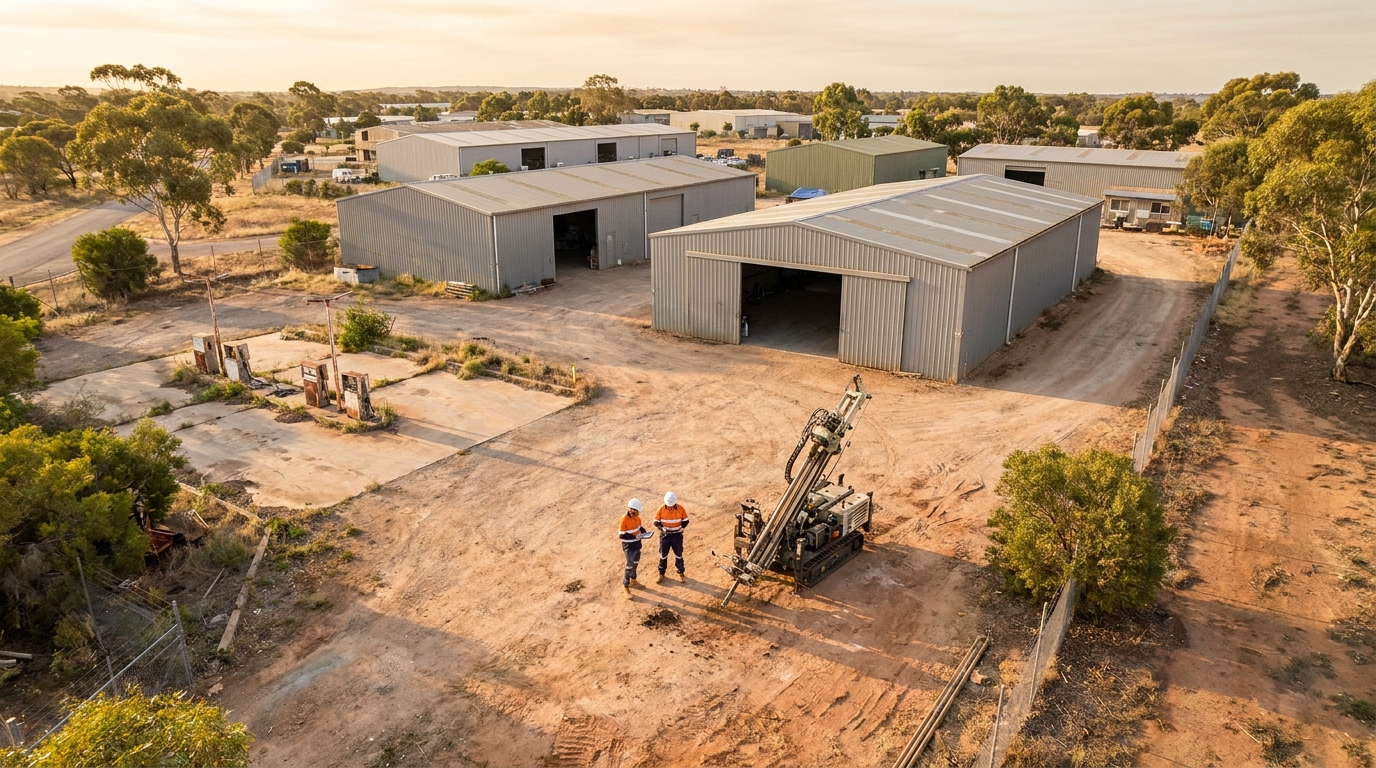
Why does environmental due diligence matter in an Australian M&A deal?
Because contaminated land liability can follow the land or the company, and it can be expensive, slow to resolve and hard to price after completion. Environmental due diligence (EDD) identifies those risks before you sign, so you can walk away, adjust the price or protect yourself through specific indemnities, warranties, escrow or conditions precedent. For sellers, good EDD supports the asking price and reduces late surprises. In Australia, site investigations follow the ASC NEPM (1999, as amended 2013), applied through each state’s own laws and guidance.
Transaction teams routinely check financial statements, contracts and tax. Environmental risk is easier to overlook because it sits underground, in old records or in a regulator’s file nobody has asked about. Yet contamination can materially change the value of a deal. A former fuel tank, a layer of uncontrolled fill, a historic chemical store or firefighting foam used years ago can turn a clean-looking industrial site into a long and costly clean-up.
This article is the first in a series on environmental due diligence for M&A in Australia. It explains why EDD matters, how findings feed into price and contract terms, and what a sensible scope looks like.
What environmental due diligence for M&A involves
Environmental due diligence is the process of finding out whether a site, portfolio or business carries environmental liabilities that could affect the deal value or create risk after completion. In Australia it usually focuses on land and groundwater contamination, but it can also cover environmental licences and approvals, regulator notices, hazardous materials and compliance history.
The technical work is guided by the National Environment Protection (Assessment of Site Contamination) Measure 1999, as amended in 2013 (the ASC NEPM). The ASC NEPM sets out a staged approach, starting with a preliminary site investigation (PSI) and moving to a detailed site investigation (DSI) where the PSI identifies potential contamination that needs to be assessed. In transaction language these stages are often called Phase 1 and Phase 2. The terms come from overseas practice, but in Australia they generally line up with the PSI and DSI.
Each state and territory then applies its own legislation, regulator guidance and site audit system on top of the ASC NEPM. EDD for a national portfolio therefore needs someone who understands how the rules differ between states.
Why environmental risk matters in an M&A transaction
Liability can follow the land or the company
In an asset sale, the buyer takes on the land but generally not the seller’s wider corporate history. The seller may stay responsible for contamination it caused, yet under several state regimes the new owner or occupier can also be required to investigate or manage contamination even if it did not cause it. In Victoria, for example, the Environment Protection Act 2017 imposes a duty on people in management or control of contaminated land to manage it. In New South Wales, the Contaminated Land Management Act 1997 allows the EPA to require owners as well as polluters to act in some circumstances. South Australia’s Environment Protection Act 1993 can also make an owner or occupier responsible in some situations, for example where the original polluter cannot be found.
In a share sale, the position can be wider. The buyer acquires the company, and the company keeps its history. That can include liabilities connected with sites it no longer owns or operates, depending on the facts and the law that applies. A target with decades of industrial operations can carry exposure that never appears on the balance sheet.
Contamination is costly and slow to fix
Remediation and long-term management costs can be significant and are hard to estimate without investigation. Timeframes also matter. Groundwater contamination in particular can require years of monitoring, and some sites need ongoing management plans that restrict how the land can be used or redeveloped.
Regulators and registers do not forget
Notices, orders and site register entries can stay attached to a property long after the original activity has stopped. Queensland has the Environmental Management Register and the Contaminated Land Register. New South Wales publishes a list of contaminated sites notified to the EPA and a record of notices issued under the Contaminated Land Management Act. Victoria has the EPA’s Priority Sites Register and Environmental Audit Overlays in planning schemes. Western Australia classifies sites under the Contaminated Sites Act 2003, and memorials for some classifications are recorded on the certificate of title. South Australia’s EPA keeps a public register that includes site contamination notifications and orders. A good EDD process checks these sources early, along with planning certificates and historical records.
Findings can trigger reporting duties
Some state laws require contamination to be reported once it is known. In New South Wales, owners and polluters have a duty to notify the EPA of certain contamination. Victoria has a duty to notify notifiable contamination, and in Western Australia owners, occupiers and polluters must report known or suspected contamination. Before intrusive work starts, agree how results will be shared and get legal advice on reporting.
Lenders, insurers and future buyers will ask
Banks and other lenders often require environmental reports before they will fund the purchase or refinancing of commercial and industrial property. Warranty and indemnity (W&I) insurance generally does not cover matters the buyer already knows about, and many policies limit or exclude pollution and contamination, particularly where due diligence has not been done to the insurer’s satisfaction. A site with an unanswered contamination question can be harder to finance, insure and later sell.
EDD as risk mitigation
For a buyer, the first purpose of EDD is to avoid paying for a problem it did not know about. The findings help answer some simple but important questions:
- Is there evidence of contamination, or of past uses that cause it?
- Could the contamination affect human health, the environment or neighbouring land?
- Is a regulator already involved, or likely to become involved?
- Would it limit the intended use or redevelopment of the site?
- What would it plausibly cost to investigate, remediate or manage, and over what period?
The answers allow a buyer to decide whether to proceed, renegotiate or walk away. Where the risk is acceptable, EDD also creates a baseline record of site condition at the time of the transaction. That baseline is valuable if a dispute later arises about whether contamination existed before completion or was caused afterwards. Our baseline environmental due diligence project in Western Adelaide and our baseline investigation for an industrial lease in Brisbane’s southern suburbs show how this kind of record is put together.
EDD as sale-price leverage
Used well, EDD is a negotiating tool for both sides of the deal.
For buyers
Clear findings, supported by a realistic estimate of investigation and remediation costs, give the buyer a basis to ask for a price reduction or a change in deal structure. Common responses include:
- Price adjustment. Reducing the purchase price to reflect the expected cost and uncertainty of remediation or management.
- Warranties. Asking the seller to warrant matters such as the absence of undisclosed notices, the accuracy of disclosed reports or compliance with licences. Warranties are usually qualified by disclosure, so they rarely protect a buyer against an issue that was disclosed in the data room.
- Specific indemnities. Requiring the seller to indemnify the buyer against defined environmental costs, such as remediation of an identified fuel tank area or a known plume. Known issues are usually dealt with this way, and an indemnity is only as good as the seller’s ability to pay.
- Escrow or retention. Holding part of the purchase price back until agreed remediation is completed and validated, or a site audit statement is issued.
- Conditions precedent. Making completion conditional on agreed matters, such as remediation, the transfer of an environmental licence or a regulatory outcome.
- Exclusions. Carving a problem site out of the deal altogether.
The strength of each request depends on the quality of the evidence. A vague concern rarely moves a price. A well-documented finding with a reasoned cost range is much harder to dismiss.
For sellers
Sellers benefit from understanding their environmental position before going to market. Vendor due diligence lets a seller identify issues early, fix what can be fixed, and present the rest with context and a defensible cost range. That reduces the chance of a late finding being used to cut the price, demand broad indemnities or delay completion. Some states also impose specific disclosure duties on sellers of land, so knowing the position early helps a seller meet them.
The legal drafting is a matter for the transaction lawyers. The environmental consultant’s role is to give them reliable facts, clear risk ratings and realistic cost estimates.
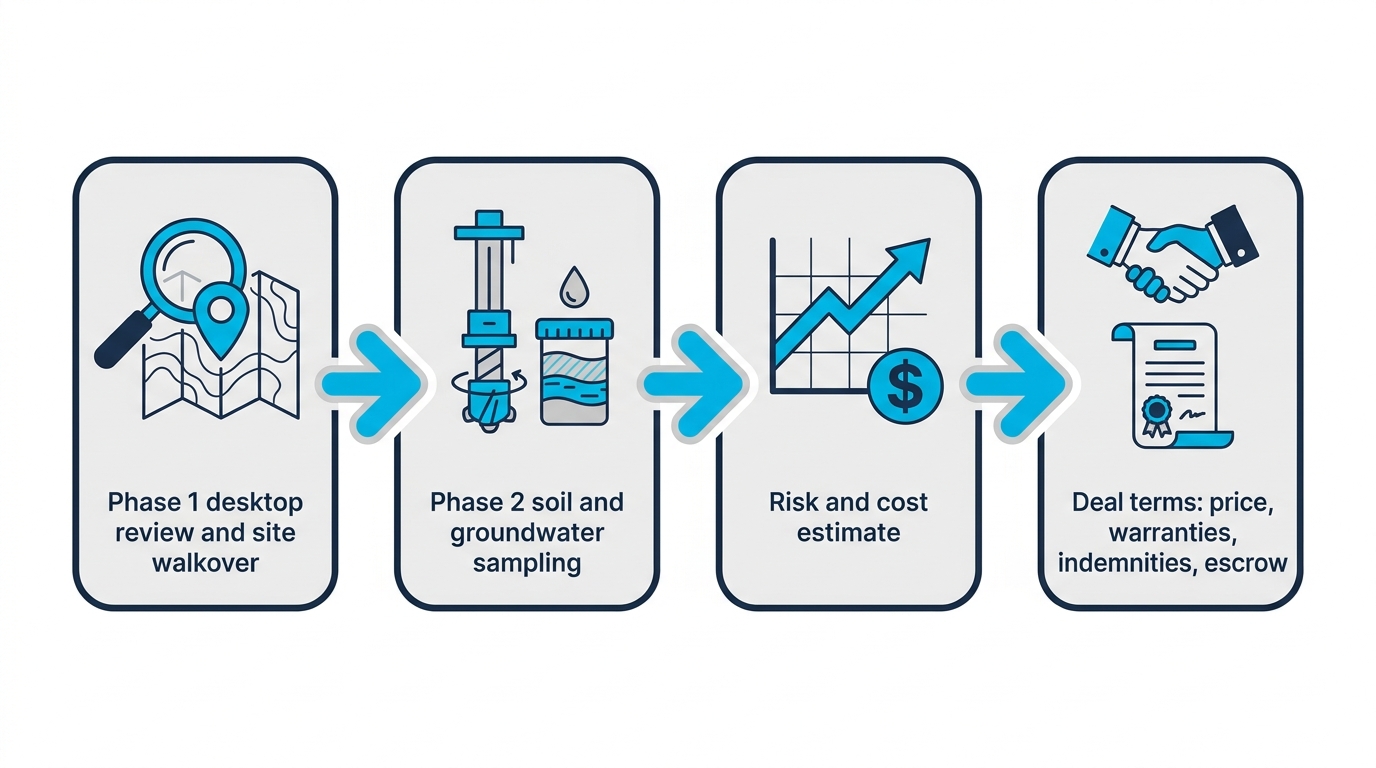
Phase 1 and Phase 2 at a glance
Most EDD programs are staged, so that money is spent only where it is needed.
Phase 1 (preliminary site investigation). A desktop review and site inspection. It usually includes historical aerial photographs and title searches, register and notice searches, planning, geology and groundwater information, a review of existing reports, a site walkover and interviews with people who know its history. The output identifies potential sources of contamination, the likely risk and recommendations. See our preliminary site investigation service for more detail.
Phase 2 (detailed site investigation). Intrusive sampling of soil, groundwater, soil vapour or other media, targeted at the areas of concern identified in Phase 1. Results are compared with the investigation and screening levels in the ASC NEPM and other relevant guidance. An exceedance of a screening level is a trigger for further assessment, not proof of unacceptable risk. The output is evidence of whether contamination is present, its nature and extent, and whether it poses an unacceptable risk for the intended land use. Our article When a PSI is not enough: Detailed Site Investigation in Australia explains this stage, and our detailed site investigation service page covers how we deliver it.
On a tight deal timetable, the two stages can be run close together, or a limited targeted Phase 2 can be scoped around the highest-risk areas while the Phase 1 is completed. A later article in this series covers when a Phase 1 alone is enough.
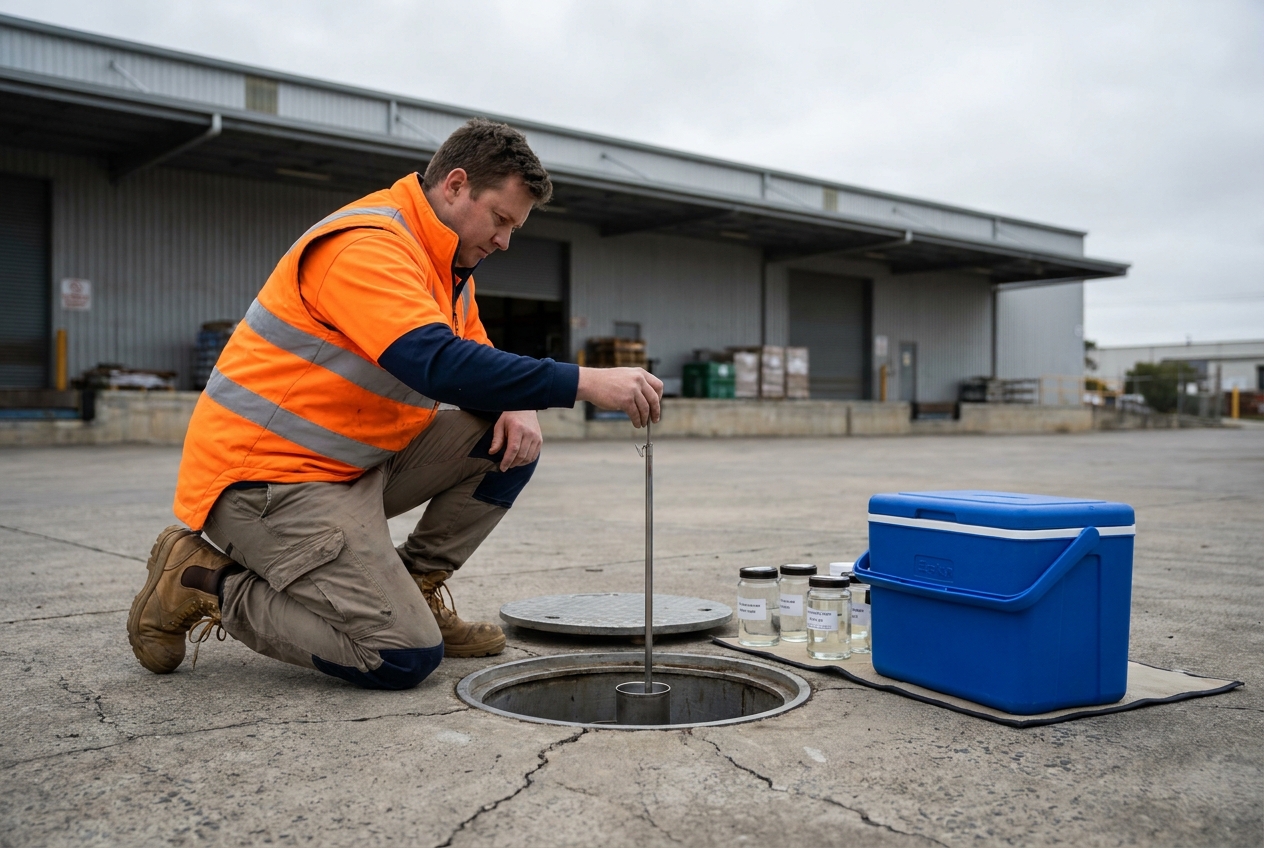
Common environmental issues in Australian deals
Certain issues come up again and again in transaction work across Australia:
- Underground petroleum storage systems (UPSS). Service stations, depots, workshops and farms often have current or former fuel tanks, and leaks or tanks never properly removed can be a surprise. In New South Wales the Protection of the Environment Operations (Underground Petroleum Storage Systems) Regulation 2019 sets specific requirements, with local councils as the regulator for most sites. See our UPSS investigation, remediation and validation service.
- PFAS. Per- and polyfluoroalkyl substances are associated with firefighting foams and some industrial processes. They are persistent and can travel in groundwater and surface water. Assessment in Australia is guided by the PFAS National Environmental Management Plan Version 3.1 (PFAS NEMP 3.1). Sites near airports, fire training areas and fuel depots deserve particular attention.
- Asbestos in soil. Demolition rubble and imported fill can contain asbestos, which affects earthworks costs, waste disposal and site management. The ASC NEPM includes health screening levels for asbestos in soil. Our guide to asbestos in soil assessment and asbestos in soil services page explain the issues.
- Fill and legacy industrial uses. Uncontrolled fill, former landfills, timber treatment, metal finishing, gasworks and chemical storage can all leave contamination behind.
- Groundwater. Groundwater contamination can migrate beyond the boundary and involve neighbours, which raises both cost and legal complexity. See our groundwater investigation and hydrogeology services.
- Regulator notices and orders. Existing clean-up notices, environmental protection orders or site management orders can come with deadlines and obligations. Depending on the state and the type of notice, these may bind a new owner or stay with the company. Our article on EPA clean-up notices and orders in each state covers how these work.
- Licences and approvals. In an asset sale, environmental authorities, licences and approvals may need to be transferred, varied or reissued, usually with regulator involvement. In a share sale they stay with the company, but compliance history can reveal operational risk.
Timing: start earlier than you think
Records searches take time to come back, site access must be arranged, drillers booked and laboratory analysis adds days. A Phase 2 can take several weeks from scoping to a reported result. Leaving EDD until late often means rushing the work or completing without the information.
Buyers should ideally start a Phase 1 as soon as there is reasonable confidence the deal will proceed, and build environmental conditions and access rights into the heads of agreement or exclusivity period. Sellers preparing for a sale should consider vendor due diligence well before the data room opens.
When a site auditor is involved
Most states have a system of accredited or appointed site auditors who independently review contamination assessments and remediation. An audit may be required by a regulator, planning authority or consent condition, or requested by a buyer, lender or seller wanting independent assurance. Audits add time and cost, but an audit statement can carry significant weight in a transaction. Deal reports should be written so they can support an audit later rather than being redone.
Why iEnvi specialises in environmental due diligence for M&A
Environmental due diligence for M&A sits where contaminated land science, regulation and commercial negotiation meet. Our work includes:
- Contaminated land assessment, preliminary and detailed site investigations, risk assessment and remediation planning under the ASC NEPM.
- Transaction-focused environmental due diligence for property transactions and M&A, including portfolio screening and vendor due diligence.
- UPSS, PFAS, asbestos in soil and groundwater assessment for industrial, commercial, rural and service station sites.
- Investigation reports written with site audit in mind, and working alongside accredited site auditors where an audit is required or requested.
- Regulator notice and order response across Australian states and territories.
Our work is led by Michael Nicholls, a Certified Environmental Practitioner and Site Contamination Specialist. You can see the team and credentials behind our reports. We write findings that lawyers and financiers can use directly: what we found, what it means for the deal, what it might cost and what to do next.
What’s coming in this series
Coming articles cover Phase 1 versus Phase 2, using findings in price and indemnity negotiation, vendor due diligence, PFAS, contaminated land registers, UPSS, asbestos, licences, remediation cost estimates, lender requirements, site auditors, post-completion obligations, data rooms, rural land and leasing.
Talk to iEnvi about your transaction
If you are buying, selling, refinancing or restructuring a business or property portfolio with any history of industrial, commercial or agricultural use, talk to us early. We can scope proportionate due diligence that fits your deal timetable. Call us on 1300 043 684 or send us a message through our contact page.
This article is general information only and is not legal or financial advice. Environmental laws differ between states and territories and change over time, so get advice that suits your transaction and sites.
References
- National Environment Protection Council. (2013). National Environment Protection (Assessment of Site Contamination) Measure 1999, as amended 2013. https://www.legislation.gov.au/F2013L00768
- Heads of EPAs Australia and New Zealand. PFAS National Environmental Management Plan, Version 3.1.
- Contaminated Land Management Act 1997 (NSW).
- Protection of the Environment Operations (Underground Petroleum Storage Systems) Regulation 2019 (NSW).
- Environment Protection Act 2017 (Vic).
- Environmental Protection Act 1994 (Qld).
- Contaminated Sites Act 2003 (WA).
- Environment Protection Act 1993 (SA).
Need advice on this issue? iEnvi provides practical, senior-led environmental consulting across contaminated land, remediation, ecology and environmental risk.
PSI services DSI services UPSS investigation and validation Environmental management plans Talk to iEnvi