NSW Waste Classification for Excavated Soil: The Six Steps, VENM and ENM Explained
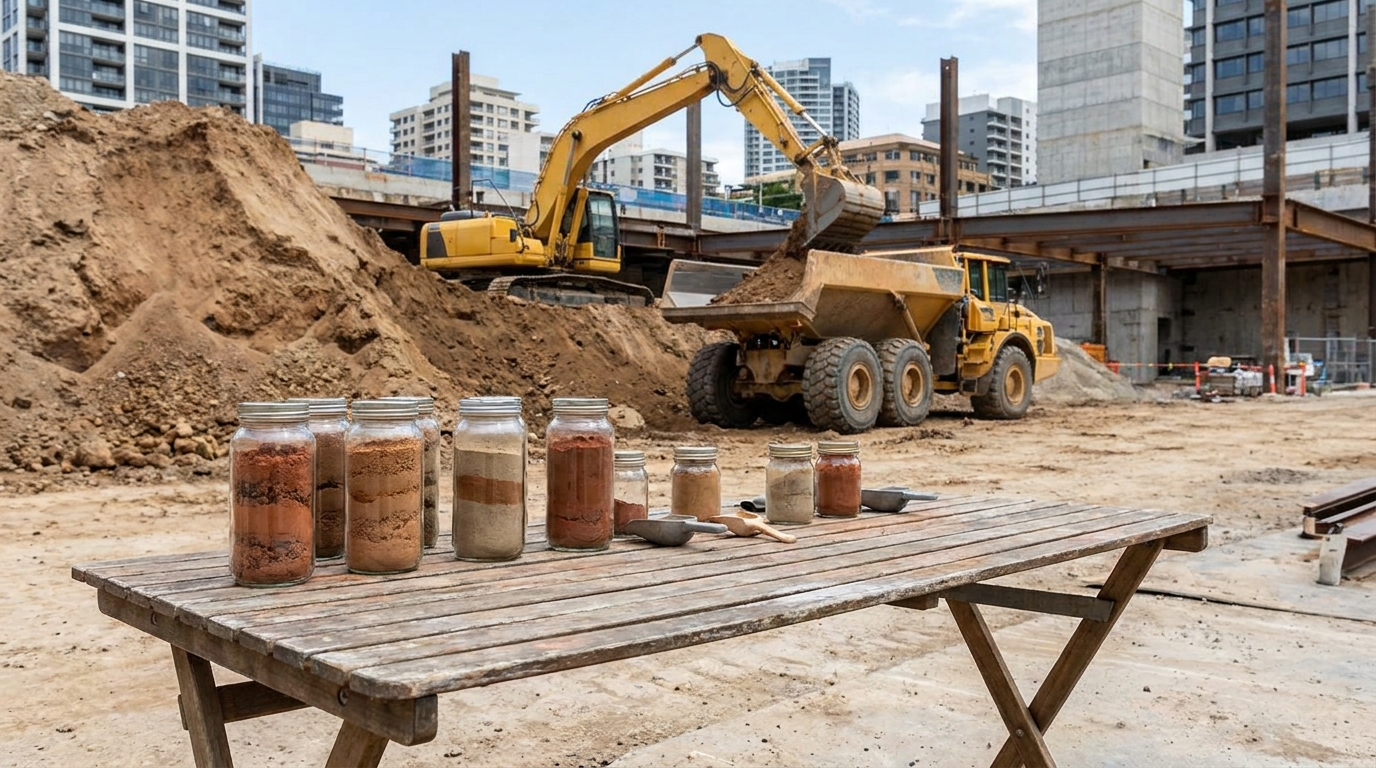
How NSW excavated soil is classified for disposal or reuse: the EPA six-step process, CT1 and CT2 thresholds, TCLP, VENM, the ENM order and common traps.
In Queensland, contaminated soil from EMR or CLR land needs a soil disposal permit, not a category 1 or 2 regulated waste classification. See how they differ.
What banks and insurers require for environmental due diligence in Australian deals: Phase 1 and 2, reliance letters, indemnities and W&I exclusions.
Industrial tenants can inherit contamination costs in Qld, NSW and Victoria. See how a baseline investigation protects you, with costs for eight scenarios.
How to apply ASC NEPM Schedule B1 HILs, HSLs, EILs, ESLs and management limits: land use, soil type, depth, media selection and common reporting errors.
How to turn contamination findings into a remediation cost estimate with low, likely and high cases, contingency and deal terms in Australian M&A.
How a vapour intrusion assessment works in Australia: NEPM screening levels, soil gas sampling, CRC CARE and enHealth guidance, and mitigation options.
How environmental licence due diligence works in Australian deals: state licences, transfers, compliance history and how findings shape price.
How asbestos due diligence works in Australian acquisitions: registers, hazmat surveys, asbestos in soil and how findings shape price, indemnities and escrow.
How UPSS due diligence works on service station and industrial sites in Australian deals, what records and sampling to ask for, and how findings shape price.